What is the alms giving ceremony in Luang Prabang and why is it important for visitors to understand its cultural and religious significance?
- What is the alms giving ceremony in Luang Prabang and why is it important for visitors to understand its cultural and religious significance?
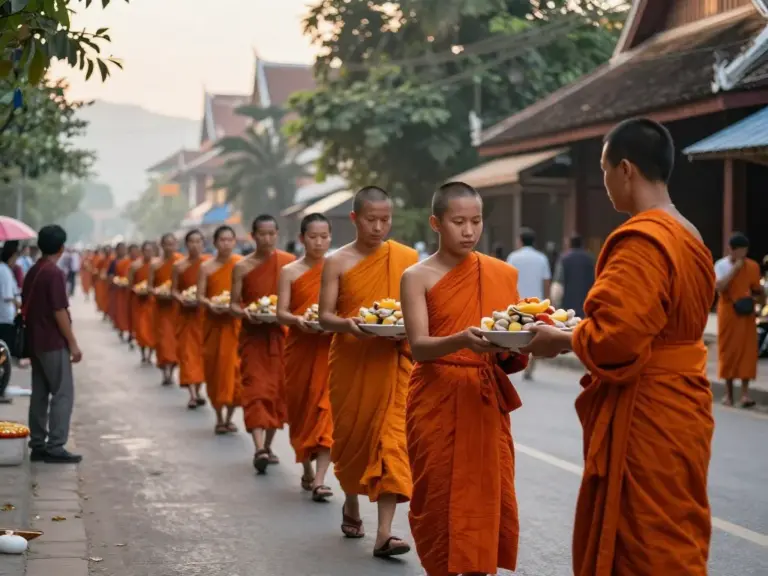
The alms giving ceremony in Luang Prabang, known locally as Sai Bat, is one of the most sacred and visually arresting religious traditions in Southeast Asia. Every morning, as the sun begins to rise over the misty Mekong River, hundreds of saffron-robed monks emerge from the city’s many temples to collect food offerings from the local community. For visitors, witnessing or participating in this ritual is often the highlight of a trip to Laos, but it requires a deep understanding of the spiritual weight it carries for the Lao people.
The Origins and Spiritual Essence of Sai Bat
At its core, the alms giving ceremony in Luang Prabang is a symbiotic relationship between the monastic community and the laypeople. Monks, who devote their lives to meditation and study, are not permitted to work for money or store food. Instead, they rely on the daily generosity of the community for their sustenance. In return, the laypeople earn ‘merit’ (Boun), which is believed to bring good karma and spiritual blessings for this life and the next. It is a profound lesson in humility, detachment, and communal support.
Why Understanding Cultural Significance is Vital for Visitors
For a traveler, the alms giving ceremony in Luang Prabang might look like a beautiful photo opportunity, but for the locals, it is a solemn act of worship. In recent years, the ceremony has faced challenges due to ‘over-tourism,’ where disrespectful behavior has disrupted the sanctity of the ritual. When visitors understand the significance, they move from being intrusive observers to respectful guests. This understanding ensures that the tradition survives for future generations without being turned into a mere tourist spectacle.
- Preserving Sanctity: Maintaining silence and keeping a respectful distance allows the monks to meditate while they walk.
- Ethical Participation: Understanding the ritual prevents the purchase of low-quality food from street vendors that can make the monks ill.
- Cultural Exchange: Respectful behavior fosters a positive relationship between the local community and international visitors.
How to Participate or Observe Respectfully
If you choose to witness the alms giving ceremony in Luang Prabang, adherence to local etiquette is mandatory. First and foremost, dress modestly; shoulders, chests, and legs should be covered. If you are not participating, keep a distance of at least several meters and avoid using camera flashes, which are highly disruptive in the low morning light. For those who wish to offer alms, it is best to prepare your own sticky rice or buy it from a reliable source recommended by your guesthouse to ensure the food is fresh and clean.
| Do’s | Don’ts |
|---|---|
| Dress modestly (shoulders and knees covered) | Do not touch the monks or their robes |
| Maintain a respectful silence | Do not use flash photography |
| Keep your head lower than the monks’ heads | Do not block the path of the procession |
The Impact of the Ceremony on Luang Prabang’s Identity
Luang Prabang is a UNESCO World Heritage site, and the alms giving ceremony is a living part of that heritage. It defines the rhythm of the city. The sight of hundreds of monks silently gliding through the streets in their vibrant robes against the backdrop of French colonial architecture and gilded temples is a testament to the enduring power of faith. By understanding the religious significance, visitors contribute to the ‘intangible heritage’ of the city, helping to protect the soul of Luang Prabang while enjoying its physical beauty.
คำถามที่พบบ่อย (FAQ)
What time does the alms giving ceremony start?
The ceremony usually begins at sunrise, around 5:30 AM in the summer and 6:00 AM in the winter. It is best to arrive 15 minutes early to find a respectful spot.
Can women participate in the alms giving?
Yes, women can participate. However, they must be careful not to touch the monks or their alms bowls. It is customary for women to remain kneeling during the offering.
What should I offer to the monks?
The most traditional offering is sticky rice. Some locals also offer fruit or traditional sweets. Avoid offering money, as monks are not supposed to handle it during the procession.
Where is the best place to watch the ceremony?
While the main street (Sisavangvong Road) is popular, it can get very crowded. For a more authentic and quiet experience, consider visiting the side streets near smaller temples away from the main tourist hub.
References
- Visit Laos: The Alms Giving Ceremony Guide
- UNESCO: Town of Luang Prabang Heritage Site
- Official Laos Tourism Board
- The Alms Giving Ceremony in Luang Prabang: A Respectful Visitor’s Guide
- When and where does the morning alms procession take place in Luang Prabang, and how can travelers plan to observe it responsibly?
- How should visitors prepare and dress appropriately for participating in or observing the alms giving—etiquette, dress code, and items to bring (offerings, photography guidelines)?