Exploring Natural Dyeing Workshops: Indigo, Plant-Based Colors, and Sustainable Craft Traditions
Laos is a land where time seems to slow down, allowing the preservation of ancient skills that have been passed down through generations. For travelers seeking more than just sightseeing, engaging in natural dyeing workshops offers a profound connection to the local culture. From the deep, hypnotic blues of fermented indigo to the earthy hues extracted from barks, roots, and leaves, these workshops are not just about learning a craft—they are an exploration of the sustainable traditions that define Lao identity.
The Significance of Natural Dyeing in Laos
Natural dyeing is deeply woven into the fabric of Lao life, particularly among ethnic groups like the Hmong, Tai Dam, and Tai Lue. Unlike synthetic dyes that rely on chemicals, natural dyeing utilizes organic materials found in the immediate environment. This practice is inherently sustainable, utilizing water-based processes and biodegradable mordants. When you participate in natural dyeing workshops, you are learning a philosophy of living in harmony with nature, where the forest provides both the medicine and the color for textiles.
The Art of Indigo: A Deep Dive
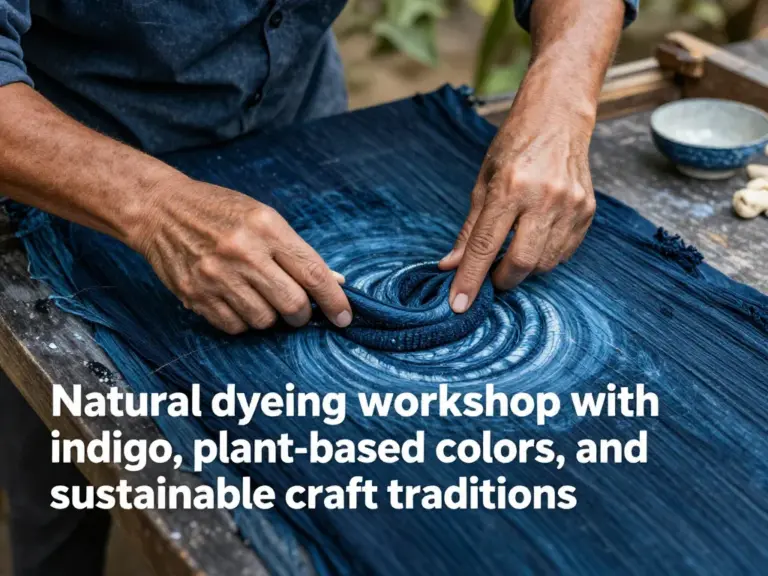
The most iconic color in the Lao textile repertoire is indigo. The process of creating an indigo vat is akin to raising a living thing. Artisans cultivate the Indigofera tinctoria plant, harvest the leaves, and ferment them in large vats. The magic happens when the fabric is dipped, oxidized, and dipped again to achieve layers of color ranging from pale sky blue to midnight navy. Many workshops offer hands-on experiences where you can learn to create these vats and practice traditional resist-dyeing techniques like shibori or tie-dye.
What to Expect from Immersive Workshops
Participating in these workshops is a multi-sensory experience. You will often start by walking through a dye garden to identify the plants used for various colors—yellows from turmeric or jackfruit wood, pinks from sappanwood, and earthy browns from ebony fruit. The process is meditative and slow, emphasizing patience over speed. You will learn to prepare the dye bath, mordant the fabric to ensure colorfastness, and finally, dye your own piece of silk or cotton to take home as a unique souvenir.
Sustainable Craft Traditions
Beyond the aesthetics, these workshops serve as vital educational hubs for sustainable tourism. They teach participants about the environmental impact of textile production and the importance of preserving biodiversity. By choosing to support these workshops, you contribute to a circular economy where traditional knowledge is valued, and the environment is protected from the toxic runoff associated with industrial dyeing.
Where to Find Workshops in Laos
While workshops can be found throughout the country, Luang Prabang and the surrounding rural villages are the primary hubs. Organizations like the Ock Pop Tok Living Crafts Centre have set the standard for high-quality, educational experiences that cater to both beginners and serious textile enthusiasts.
คำถามที่พบบ่อย (FAQ)
Q: Do I need prior experience to join a natural dyeing workshop?
A: No, absolutely not. These workshops are designed for all skill levels, from complete beginners to experienced crafters. Expert artisans guide you through every step of the process.
Q: Are the materials used in the workshops eco-friendly?
A: Yes. Natural dyeing is inherently sustainable. The workshops use plants, barks, roots, and minerals, ensuring no harmful chemicals are released into the water supply.
Q: How long do these workshops usually last?
A: Workshops range from half-day introductory sessions to multi-day immersive courses. It is recommended to book in advance to secure your spot.
Q: Can I take my creations home?
A: Yes, you will typically keep the textiles you dye during the workshop, making for a very special and personal souvenir from your time in Laos.