What is the Baci Ceremony? Origins, symbolism, and when it’s performed in Laos and Lao communities
When traveling through the serene landscapes of Laos, one of the most touching experiences a visitor can witness is the Baci Ceremony. This ancient ritual is deeply woven into the fabric of Lao identity. Unlike many religious ceremonies that are strictly Buddhist, the Baci is rooted in animist traditions that predated the arrival of Buddhism in the region. The term ‘Baci’ refers to the ceremony itself, while ‘Sou Khuan’ literally means ‘calling of the soul.’ It is a celebration of life, a gesture of hospitality, and a spiritual safeguard for those embarking on new chapters.
The Ancient Origins of the Baci
The Baci Ceremony dates back centuries, existing long before Buddhism became the dominant faith in Laos. It stems from the ancient belief in the Khuan. According to Lao folklore, the human body is a union of 32 organs, each protected by a spirit or ‘Khuan.’ These spirits are thought to be somewhat flighty; they can wander away from the body during times of illness, stress, or major life changes. When a Khuan wanders off, it is believed to lead to bad luck or sickness. The Baci is performed to call these 32 spirits back to the body, re-establishing spiritual equilibrium and harmony.
Symbolism: The Pha Khuan and the White Thread
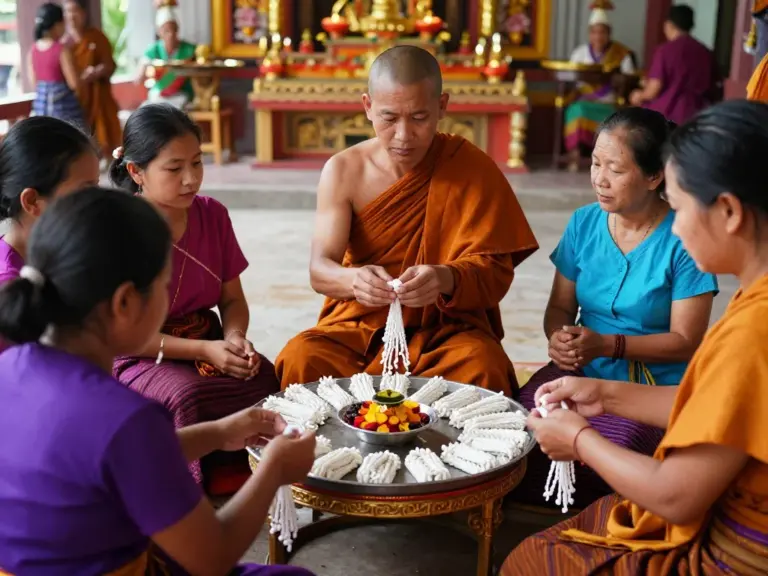
The centerpiece of any Baci Ceremony is the Pha Khuan. This is an elaborate, handmade pyramid-like structure crafted from banana leaves and decorated with bright orange marigolds, silk, and sometimes small candles. Each element of the Pha Khuan carries weight. Marigolds symbolize longevity and prosperity, while the pyramid shape represents the mountain of the gods.
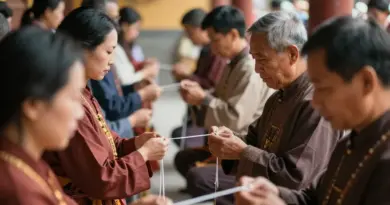
However, the most recognizable symbol is the white cotton thread. During the ceremony, participants tie these threads around each other’s wrists. The white color represents purity and peace. By tying the thread, the giver is symbolically ‘binding’ the wandering Khuan back to the recipient’s body while offering blessings of health and safety. It is customary to keep these threads on for at least three days to ensure the blessing takes full effect.
When is the Baci Ceremony Performed?
The Baci is a versatile ceremony that marks almost every significant milestone in a Lao person’s life. It is not tied to a specific lunar calendar but rather to the needs of the community and individuals. Common occasions include:
- Weddings: To unite the spirits of the couple and bless their new life together.
- Births: To welcome a new soul and protect the mother and child.
- Departures and Returns: To ensure safe travels for those leaving or to welcome home those who have been away.
- Healing: To call back spirits that may have left during a period of illness.
- Lao New Year (Pi Mai): As a communal blessing for the coming year.
The Ritual Process
The ceremony is usually led by a Mor Phone, often a respected former monk or an elder who knows the sacred chants. Participants sit on the floor around the Pha Khuan. The Mor Phone begins by chanting in a mixture of Lao and Pali, inviting the spirits to return. Once the chanting concludes, the tying of the threads begins. It is a communal affair; everyone present ties threads for one another, whispering well-wishes like ‘may you have health’ or ‘may you be happy.’ After the ritual, a feast usually follows, featuring traditional Lao dishes, sticky rice, and Lao-Lao (rice whiskey), solidifying the bond of the community.
คำถามที่พบบ่อย (FAQ)
References
UNESCO: Town of Luang Prabang Culture
- Baci Ceremony Explained: How to Join a Laotian Blessing the Right Way for Respectful Participation and Cultural Understanding
- How to Prepare to Attend a Baci: Dress, gifts, language cues, and etiquette for respectful participation
- Step-by-Step Guide to the Baci Ritual: What happens during the tying of threads, prayers, food, and roles of hosts and guests