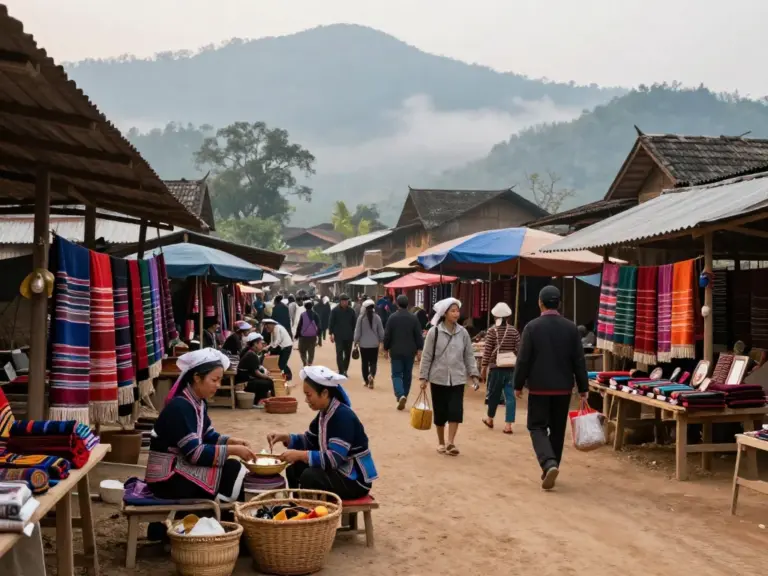
What are Hmong and Khmu market days — history, timing, and where to find them in Laos and neighboring regions
In the misty highlands of Northern Laos and the rugged borders of neighboring Vietnam and Thailand, the rhythmic beat of tradition continues through the vibrant Hmong and Khmu market days. These are not merely commercial transactions; they are the beating heart of ethnic minority social life. For travelers engaged in Laos tourism, witnessing these markets offers a rare window into an ancient world where barter, traditional dress, and community bonds remain steadfast against the tide of modernization.
The Historical Roots of Ethnic Markets
The history of Hmong and Khmu market days is deeply tied to the geography of the Annamite Range. Historically, the Hmong (Miao-Yao speakers) lived at higher altitudes, while the Khmu (Austroasiatic speakers) inhabited the mid-slopes. Because villages were isolated by dense jungle and steep terrain, designated market days became essential for survival. These gatherings allowed highlanders to trade forest products, medicinal herbs, and hand-woven textiles for salt, iron, and lowland rice.
Beyond trade, these markets served a critical social function: matchmaking. During the Hmong New Year and specific lunar market cycles, young men and women from different villages would meet, often engaging in the traditional ‘Pov Pob’ (ball-tossing) game to find potential spouses. The Khmu, known as the original inhabitants of Laos, used these days to share oral histories and maintain clan connections across the valleys.
Timing and the Lunar Calendar
Understanding the timing of Hmong and Khmu market days can be challenging for outsiders. While some markets in larger towns like Luang Prabang or Phonsavan have moved to a weekly solar calendar (often Sundays), many rural markets still follow a 5-day or 6-day lunar rotation. This means the market day shifts every week, moving through a cycle of auspicious days based on the lunar phases.
Where to Find the Most Authentic Markets
If you are seeking the true essence of Hmong and Khmu market days, you must head north. Here are the primary regions where these traditions thrive:
- Phongsaly, Laos: The northernmost province, home to the most diverse ethnic markets where you can see Phounoy, Akha, and Hmong traders.
- Muang Sing (Luang Namtha): Famous for its early morning market where Khmu and Tai Dam villagers bring fresh mountain produce.
- Oudomxay: Often called the ‘Heart of the Khmu,’ the local markets here are the best place to find Khmu basketry and traditional bamboo crafts.
- Bac Ha (Vietnam Border): Just across the border from Laos, this is perhaps the most famous Hmong market in the region, occurring every Sunday.
| Region | Dominant Groups | Best Time to Visit |
|---|---|---|
| Luang Prabang Periphery | Hmong, Khmu | Daily (Early Morning) |
| Muang Sing | Hmong, Akha, Yao | Daily (5 AM – 8 AM) |
| Xieng Khouang | Hmong | Hmong New Year (Dec/Jan) |
Etiquette and Cultural Sensitivity
When visiting Hmong and Khmu market days, remember that you are a guest in a living community space. Dress modestly, covering shoulders and knees. Always ask for permission before taking close-up photos of individuals, especially children. While bargaining is common, it should always be done with a smile; these markets represent the primary income for many families, and a few extra kips can make a significant difference to a rural household.
คำถามที่พบบ่อย (FAQ)
A1: While markets happen year-round, the most spectacular displays occur during the Hmong New Year (usually late December or early January), when everyone wears their finest traditional silver and embroidered clothing.
A2: The Khmu are master weavers. Look for ‘Khaen’ (bamboo mouth organs) or the ‘Rat-tan’ bags and baskets which are incredibly durable and beautifully crafted.
A3: Yes, but hiring a local guide is highly recommended. A guide can help translate, explain the lunar schedule, and facilitate respectful interactions with the villagers.
A4: Basic Lao phrases are helpful, but many ethnic groups speak their own languages. Gestures, smiles, and a calculator for pricing are usually enough for basic trading!
References
- Official Laos Tourism Portal
- UNESCO Cultural Diversity in Lao PDR
- Southeast Asian Historical Society: Ethnic Traditions
- Hmong and Khmu Market Days: What to Expect and What to Buy for an Authentic Cultural Experience
- What to expect at the market — cultural customs, typical stalls, bargaining etiquette, and safety tips
- What to buy: traditional textiles, silverwork, local produce, and unique souvenirs with buying tips and price expectations