Hmong and Khmu Market Days: What to Expect and What to Buy for an Authentic Cultural Experience
In the misty highlands of Northern Laos, the rhythmic sound of dawn is not marked by alarms, but by the bustling energy of local markets. For the Hmong and Khmu people—two of the largest ethnic groups in the region—market days are more than just a place to trade; they are the beating heart of social life and cultural preservation. For travelers seeking an authentic glimpse into the soul of Laos, visiting these markets offers a sensory journey through ancient traditions, intricate craftsmanship, and the warm hospitality of the highland tribes.
Understanding the Significance of Hmong and Khmu Market Days
To truly appreciate the experience, one must understand the distinct identities of these groups. The Hmong are renowned for their elaborate textiles and silverwork, often living at higher elevations. The Khmu, believed to be the indigenous inhabitants of Northern Laos, are masters of bamboo weaving and sustainable forest harvesting. Market days often align with the lunar calendar or specific weekly rotations, drawing families from remote villages who trek for hours to exchange goods and news.
What to Expect: A Sensory Explosion
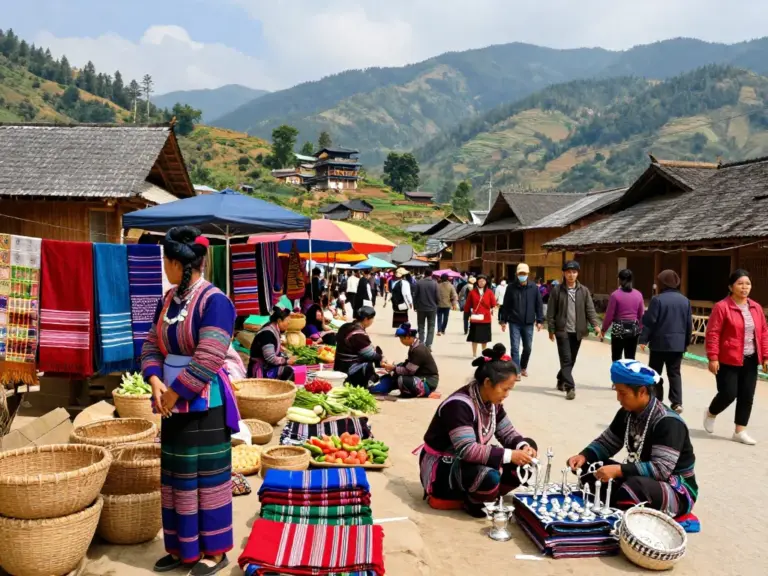
Walking into a Hmong and Khmu market is like stepping into a living gallery. You will see Hmong women in their signature pleated skirts and vibrant headwraps, while Khmu vendors might be seen with their iconic back-strap baskets. The air is filled with the scent of steaming sticky rice, grilled river fish, and fresh mountain herbs. Unlike the tourist-centric night markets in Luang Prabang, these rural markets are raw and functional, selling everything from hand-forged farm tools to medicinal roots gathered from the deep jungle.
What to Buy: Authentic Treasures
When purchasing items at these markets, you are directly supporting the local economy and the continuation of traditional skills. Here are the top items to look for:
- Hmong Batik and Embroidery: Look for hand-drawn beeswax batik patterns on hemp cloth, often dyed with natural indigo.
- Khmu Bamboo Weaving: The Khmu are famous for ‘piat’ (rattan bags) and intricate baskets that are both beautiful and incredibly durable.
- Handmade Silver Jewelry: Hmong silversmiths create stunning neck rings and earrings, though ensure you are buying from a reputable source if seeking high purity.
- Forest Honey and Spices: Organic wild honey and unique spices like ‘Mak Khen’ (wild pepper) offer a taste of the Lao wilderness.
Cultural Etiquette for Visitors
Respect is the most valuable currency you can bring. Always ask for permission before taking photos of people, especially children. Dress modestly, covering shoulders and knees, to honor local customs. While bargaining is common, do so with a smile and remember that a few extra kips can make a significant difference to a village family.
คำถามที่พบบ่อย (FAQ)
When is the best time to visit these markets?
Where are the most authentic Hmong and Khmu markets located?
Is it okay to eat the food at these markets?
References
UNESCO Bangkok – Cultural Heritage in SE Asia
- What are Hmong and Khmu market days — history, timing, and where to find them in Laos and neighboring regions
- What to expect at the market — cultural customs, typical stalls, bargaining etiquette, and safety tips
- What to buy: traditional textiles, silverwork, local produce, and unique souvenirs with buying tips and price expectations