Baci Ceremony Explained: Meaning, Cultural Significance, Etiquette, and Where to Experience It
- Baci Ceremony Explained: Meaning, Cultural Significance, Etiquette, and Where to Experience It
The Baci ceremony, known locally as *Sou Khwan* (Calling of the Soul), is arguably the most significant cultural ritual in Laos. Far more than a simple blessing, it is an ancient tradition rooted deeply in animist beliefs, woven seamlessly into the fabric of daily life, major milestones, and welcoming honored guests. For travelers seeking authentic Laos tourism experiences, understanding this ritual is essential. This detailed explanation covers its spiritual roots, the components of the ceremony, the proper etiquette for participation, and where you might have the privilege to witness it firsthand.
Understanding the Baci Ceremony: More Than Just a Ritual
The Baci ceremony is fundamentally a ritual of connection and restoration. It is performed to celebrate new beginnings, welcome visitors, wish good fortune, or mourn losses. Its purpose is to call back any wandering or lost *kwan* (souls or life forces) to the body, ensuring the individual remains whole, healthy, and lucky. While Buddhism heavily influences Laotian culture, the Baci ceremony maintains strong ties to pre-Buddhist animist and ancestor worship traditions.
The Spiritual Foundation: The Concept of *Kwan* (Souls)
The cornerstone of the Baci is the belief that a person possesses 32 *kwan*. These life spirits reside in different parts of the body, governing physical and mental well-being. If a person experiences shock, illness, travel, or major life changes, it is believed that one or more of these *kwan* might temporarily leave the body, leading to weakness or misfortune. The Baci ceremony acts as a spiritual realignment, ensuring all 32 *kwan* are present and secured within the host.
The Anatomy of the Ceremony: Key Components and Symbolism
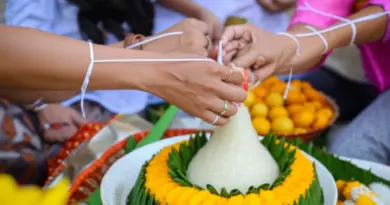
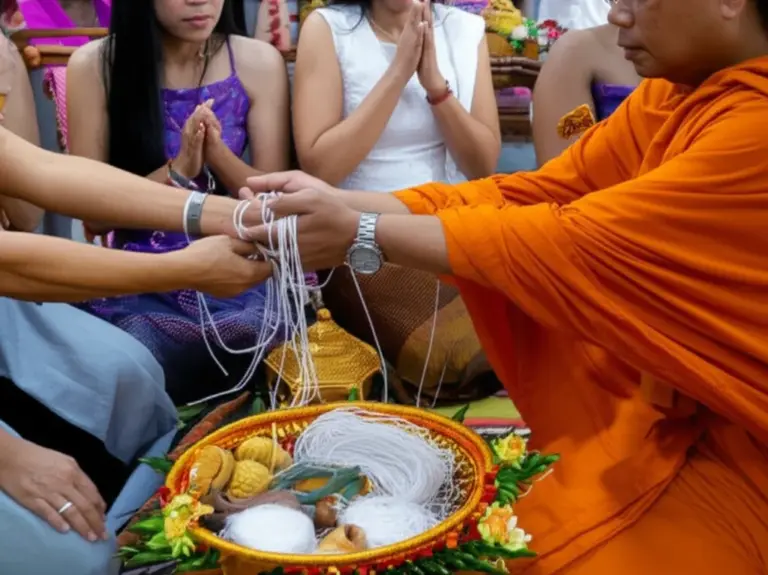
A Baci ceremony is visually striking, centered around a meticulously prepared offering tray. The entire event is characterized by its communal nature and the symbolic tying of white cotton strings around the wrists of the recipient(s).
The *Pha Kwan* (Ceremonial Tray)
The centerpiece is the Pha Kwan, often a tiered, cone-shaped arrangement placed on a large tray. This arrangement is laden with symbolic offerings:
- Flowers and Banana Leaves: Represent beauty and the continuation of life.
- Cooked Sticky Rice (*Khao Niao*): A staple food, symbolizing sustenance.
- Alcohol/Tea: Offered for celebration and conviviality.
- Candles and Incense: Used to invoke spirits and purity.
The complexity and richness of the *Pha Kwan* often reflect the importance of the occasion being celebrated.
The Role of the Officiant (*Maw Kwan*)
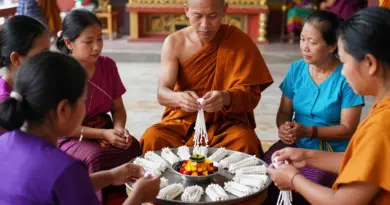
The ceremony is led by the *Maw Kwan* (Master of the Baci), usually an elder respected for their spiritual knowledge and eloquence. The officiant chants ancient prayers, invoking blessings and calling the *kwan* back to the recipient. This chanting is often rhythmic and melodic, creating a deeply meditative atmosphere. As an expert in Lao traditions, the *Maw Kwan* guides the energy of the blessing.
To give you a visual understanding of this beautiful practice, here is a short documentary clip:
Etiquette for Visitors: How to Participate Respectfully
If you are invited to a Baci ceremony, consider it a high honor. Showing respect for the customs is paramount to enjoying the experience authentically. Here is the essential etiquette you must observe.
Dress Code and Arrival
Dress modestly. While formal wear isn’t usually required, avoid shorts, revealing tops, or tank tops, especially for women. Aim for attire that covers the shoulders and knees. Upon arrival, remove your shoes before entering the space where the ceremony is held. It is polite to bring a small, modest gift, such as sweets or fruit, for the hosts.
The String Tying Ritual
This is the most interactive part. White cotton strings are tied around your wrists by participants, starting with the elders or hosts. As each string is tied, a blessing is whispered. Crucially: Do not remove the strings for at least three days, or until they naturally fall off. Removing them prematurely is considered disrespectful, as it signifies cutting off the blessings.
When receiving the blessing, sit quietly, keep your hands pressed together in the traditional Nop (or *Ngao*) gesture, and accept the blessing with humility. You may be offered a small drink or a taste of the ceremonial food afterward.
When and Where to Witness the Baci Ceremony in Laos
The Baci ceremony is a living tradition, not just a performance for tourists. It is performed anytime a significant event occurs. Understanding these contexts helps travelers appreciate its depth.
Common Occasions for a Baci
You may encounter a Baci for:
- Welcoming Guests: Especially honored visitors or family returning from afar.
- Weddings: To bless the union and ensure the couple’s shared *kwan*.
- New Businesses or Homes: To ensure good fortune and protection.
- Travel: Before embarking on a long or important journey.
- Recovery from Illness: To fully restore the patient’s spirits.
Experiencing Authenticity: Locations for Tourists
While Baci ceremonies happen privately everywhere, tourists can arrange to attend or participate through ethical means:
| Location | Experience Type | Notes |
|---|---|---|
| Luang Prabang | Organized by Guesthouses/Tour Operators | Often held for travelers; usually shorter and more generalized. |
| Vientiane | Private Home Invitations | More authentic if you have local connections or are invited by a Lao friend. |
| Rural Villages (e.g., Nong Khiaw) | Deeply traditional settings | Requires patience and respect; seek guidance from local guides. |
When booking an experience, always ask if the ceremony is staged or genuine. Ethical operators will ensure the ceremony respects tradition and benefits the local community directly.
The Enduring Heart of Lao Hospitality
The Baci ceremony encapsulates the essence of Lao culture: warmth, community, and a deep spiritual connection to life. For visitors, participating, even as an honored guest, offers a rare glimpse into the soul of the nation. It is a tangible expression of *Mekong Spirit*—a gentle, welcoming disposition that defines the Lao people. By approaching this ritual with an open heart and understanding the steps outlined in this **Baci Ceremony Explained**, you ensure your visit is marked by genuine connection and respect.
คำถามที่พบบ่อย (FAQ)
References
For deeper academic context on Lao spiritual practices, consult reputable anthropological sources regarding animism and Theravada Buddhism integration in Southeast Asia. Specifically, research on the Official Laos Tourism website can provide current visitor guidelines.
- What is the Baci Ceremony? Origins, symbolic meanings, and occasions it’s performed
- How the Baci Ritual Is Done: Step-by-step practices, key elements (soul-calling khuan), offerings, and roles of participants
- Proper Etiquette and Cultural Respect: What visitors should do and avoid, dress code, gift etiquette, and phrases to use