Proper Etiquette and Cultural Respect: What visitors should do and avoid, dress code, gift etiquette, and phrases to use
- Proper Etiquette and Cultural Respect: What visitors should do and avoid, dress code, gift etiquette, and phrases to use
- Understanding the Lao Way: Core Cultural Values
- Dress Code: Dressing with Deference at Temples and Public Spaces
- Sacred Spaces and Rituals: Temple Etiquette (Wat Etiquette)
- The Art of Interaction: Greetings, Gestures, and Body Language
- Gift Giving Etiquette in Laos
- Essential Lao Phrases for Showing Respect
- Practical Dos and Don’ts for Visitors
- คำถามที่พบบ่อย (FAQ)
Traveling to the Land of a Million Elephants—Laos—is an experience rich in serene beauty and deep-seated tradition. To ensure your journey is welcomed and respectful, understanding the nuances of Laos travel etiquette and cultural respect is paramount. The Lao people are renowned for their gentle nature and warmth, but navigating social situations correctly shows that you value their way of life. This comprehensive guide covers everything from appropriate dress to respectful interactions, ensuring you honor the local customs throughout your visit.
Understanding the Lao Way: Core Cultural Values
Lao culture is heavily influenced by Theravada Buddhism and traditional animist beliefs. This results in a society that highly values harmony, humility, and indirect communication.
The Importance of *Kreng Jai* (Consideration)
Perhaps the most crucial concept to grasp is *Kreng Jai*. This untranslatable term encompasses extreme consideration, deference, and avoiding imposition on others. It means not wanting to burden, inconvenience, or offend someone. As a visitor, this translates to being mindful of your volume, never demanding immediate service, and accepting hospitality graciously, even if it means eating more than you intended.
Respect for Elders and Hierarchy
Age and status are highly respected. Always defer to elders in conversation and physical space. When sitting in a group, the oldest person should generally be seated in the most honorable position (often furthest from the door or facing the entrance).
Dress Code: Dressing with Deference at Temples and Public Spaces
Modesty is key to showing respect in Laos. While urban areas like Vientiane are becoming more relaxed, conservative dress is the safest bet, especially outside major tourist hubs.
Temple (Wat) Attire Guidelines
When visiting Buddhist temples (*Wats*), strict adherence to dress code is required. Failure to comply can result in being denied entry or causing offense to worshippers.
- Shoulders and Chest: Must be completely covered. Tank tops, spaghetti straps, and low-cut tops are inappropriate.
- Lower Body: Shorts, mini-skirts, and overly tight trousers are unacceptable. Long skirts, trousers, or capris that reach the ankle or mid-calf are preferred. Sarongs or long scarves are often available to rent or borrow near temple entrances.
- Footwear: You must remove your shoes before entering any temple building or the main sanctuary. Wear shoes that are easy to slip on and off.
General Public Dress Code Tips
For everyday wear, light, breathable clothing is recommended due to the climate. Avoid walking around major towns shirtless or in revealing swimwear outside of designated resorts or swimming areas.
Sacred Spaces and Rituals: Temple Etiquette (Wat Etiquette)
Temples are active places of worship, not just tourist sites. Approaching them with reverence is essential for demonstrating cultural respect.
Entering and Behaving Inside a Wat
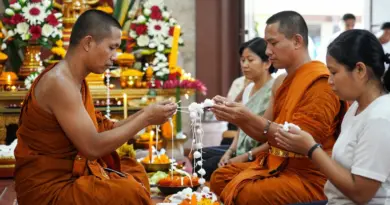
Before entering the main prayer hall (Sim), always remove your shoes and hat. Never point your feet directly at a Buddha image or a monk, as the feet are considered the lowest and dirtiest part of the body. Always walk clockwise around important religious objects (like stupas or Buddha statues).
Interacting with Monks
Monks hold the highest spiritual status in Lao society. Women must never touch a monk or hand anything directly to them. If a woman needs to give something to a monk, she should place it on a table or on the floor near him, or pass it through a male intermediary. Men should offer items with their right hand or both hands.
To show deep respect, men can briefly kneel when speaking to a senior monk. Never point at a monk or show irritation towards them.
Visual Guide to Lao Customs
The Art of Interaction: Greetings, Gestures, and Body Language
Non-verbal communication is vital in Lao culture. Learning the correct greetings and gestures demonstrates immediate respect and opens doors to genuine connection.
The *Nop* (Lao Greeting)
The traditional Lao greeting is the Nop, similar to the Thai *Wai*. It involves placing the palms together in a prayer-like gesture and bowing slightly. The height of the hands indicates the level of respect:
- Fingertips touching the nose (highest respect, reserved for monks or highly revered elders).
- Fingertips touching the forehead (used for monks, royalty, or very senior people).
- Fingertips touching the chin or chest (standard polite greeting for peers or strangers).
As a visitor, offering a simple *Nop* with hands at chest level when greeted is always appreciated. If someone offers you a higher *Nop*, return it at chest level; you are not expected to match the height of an elder’s gesture.
Head and Feet: Understanding Body Hierarchy
The head is considered the most sacred part of the body, while the feet are the lowest. Never touch anyone’s head, even a child’s, as this is seen as deeply insulting. Conversely, avoid pointing your feet at people, religious icons, or doorways. When sitting on the floor, tuck your feet underneath you or to the side (the ‘mermaid’ position) rather than pointing them out.
Gift Giving Etiquette in Laos
Gift-giving is a wonderful way to express gratitude, particularly if you are invited into a local home or wish to thank a guide. However, the presentation matters as much as the gift itself.
What to Give and How to Present It
Appropriate gifts include small tokens from your home country (like good quality sweets or small crafts), high-quality stationery, or practical items like fruit for a host family. Avoid giving alcohol unless you are certain the recipient drinks, and never give gifts that feature Buddha images as they are considered sacred and should not be used decoratively.
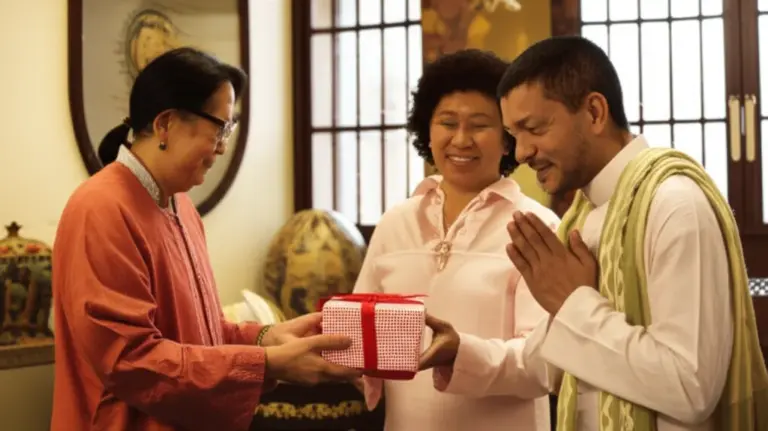
Always present and receive gifts using both hands, or your right hand if one hand is occupied. Gifts should be presented subtly, not in a grand, attention-seeking manner.
Receiving Gifts Gracefully
If you are given a gift, accept it with both hands and thank the giver. It is customary, due to *Kreng Jai*, for the recipient to politely refuse a gift once or twice before accepting it. Do not open the gift immediately in front of the giver unless explicitly encouraged to do so; this avoids any potential embarrassment if the gift is deemed unsuitable by local standards.
Essential Lao Phrases for Showing Respect
Learning a few words in Lao (Laotian) is the fastest way to earn smiles and goodwill. Remember that Lao is a tonal language, so pronunciation is tricky, but effort is what counts!
| English Phrase | Lao (Approximate Pronunciation) | Usage Note |
|---|---|---|
| Hello / Goodbye | Sabaidee (Sa-bai-dee) | Always add the polite particle at the end. |
| Thank You (Male Speaker) | Khop Jai (Kop Jai) + *Kop Chai* | *Kop Chai* (Male) / *Kop Jai* (Female) |
| Thank You (Female Speaker) | Khop Jai (Kop Jai) + *Kop Jao* | *Kop Chai* (Male) / *Kop Jao* (Female) |
| Yes / No | Dao / Bo (Dau / Baw) | Simple affirmations. |
| Excuse me / Sorry | Khor Thot (Kaw Tote) | Use before interrupting or bumping into someone. |
Crucial Note on Particles: Lao speakers add a polite particle based on gender at the end of most sentences. Men use Kop Chai (for thank you) or Kop Bau (for no), while women use Kop Jao (for thank you) or Kop Bau. Always use the appropriate particle after common phrases like ‘Sabaidee’.
Practical Dos and Don’ts for Visitors
To summarize the key elements of Laos travel etiquette and cultural respect, here is a quick reference table:
| DO | AVOID |
|---|---|
| Remove shoes before entering homes, temples, and some small shops. | Pointing your feet at people, Buddha images, or doorways. |
| Keep your voice low and speak gently. | Showing public displays of affection (PDA) or overt anger. |
| Use both hands when giving or receiving objects of value. | Touching a Lao person’s head, even in jest. |
| Ask permission before photographing people, especially monks. | Insisting on haggling aggressively in markets; be fair and polite. |
| Dress modestly when visiting religious sites (shoulders/knees covered). | Interrupting a ceremony or walking in front of someone praying. |
คำถามที่พบบ่อย (FAQ)
References
For further reading on maintaining cultural sensitivity during your trip:
- Baci Ceremony Explained: Meaning, Cultural Significance, Etiquette, and Where to Experience It
- What is the Baci Ceremony? Origins, symbolic meanings, and occasions it’s performed
- How the Baci Ritual Is Done: Step-by-step practices, key elements (soul-calling khuan), offerings, and roles of participants