How to Find the Best Eco-Lodge: Comparing Locations, Amenities, and Eco-Certifications along the Nam Ou
The Nam Ou River is one of the most important and scenic waterways in Laos, snaking through dramatic limestone karsts and remote villages. For the conscious traveler, finding the Best Eco-Lodge along the Nam Ou isn’t just about a place to sleep; it’s about finding a sanctuary that respects the delicate balance of nature and local culture. As tourism in Laos evolves, the northern reaches of the Nam Ou have become a primary destination for those seeking authenticity combined with environmental responsibility.
Choosing the Right Location: From Nong Khiaw to Muang Ngoy
The Nam Ou stretches hundreds of kilometers, but most eco-conscious travelers focus on the stretch between Luang Prabang and Phongsaly. Selecting the right base is the first step in finding the Best Eco-Lodge along the Nam Ou. Nong Khiaw offers the most developed infrastructure, making it ideal for those who want eco-luxury with easy road access. Conversely, Muang Ngoy, accessible only by boat, offers a deeper sense of isolation and a closer connection to traditional Lao river life.
Further north lies Muang Khua, a gateway to the rugged mountains of Phongsaly. Lodges here tend to be more basic but offer unparalleled access to primary forests and ethnic minority villages. Your choice of location should depend on your desired balance between comfort and adventure. While Nong Khiaw has 24-hour electricity, smaller villages further upriver might rely on solar power or limited generator hours.
Essential Amenities for a Sustainable Stay
What separates a standard guesthouse from the Best Eco-Lodge along the Nam Ou? It comes down to the details of their operations. True eco-lodges prioritize low-impact living without sacrificing the guest experience. Look for the following amenities when comparing options:
- Renewable Energy: Many lodges now use solar water heaters and PV panels to minimize their carbon footprint.
- Waste Management: Look for lodges that provide refillable glass bottles instead of single-use plastic and have an active composting system.
- Farm-to-Table Dining: The best lodges maintain their own organic gardens or source 100% of their ingredients from neighboring river villages.
- Water Conservation: Greywater recycling systems for gardening are a hallmark of high-level eco-management.
Decoding Eco-Certifications in Laos
Greenwashing is a global challenge, and Laos is no exception. To ensure you are staying at the Best Eco-Lodge along the Nam Ou, check for official recognitions. The most prestigious local standard is the “Lasting Laos” certification, which evaluates businesses on environmental, social, and economic sustainability. Additionally, the ASEAN Green Hotel Standard is a reliable indicator of quality across Southeast Asia.
| Certification | Focus Area | Reliability |
|---|---|---|
| Lasting Laos | Local Social Impact & Environment | High (Local Context) |
| Travelife Gold | Global Sustainability Standards | Very High (International) |
| ASEAN Green Hotel | Resource Efficiency | Medium-High (Regional) |
If a lodge doesn’t have a formal certification, look at their community involvement. Do they employ local guides? Do they fund local school projects? Often, the most authentic eco-lodges along the Nam Ou are those deeply integrated into the village structure, even if they lack an expensive international badge.
Comparison of Top Eco-Lodge Profiles
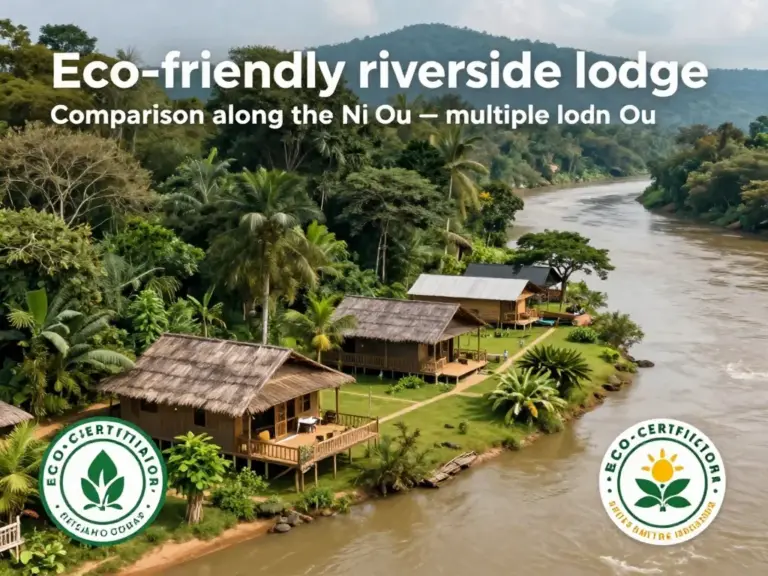
When searching for the Best Eco-Lodge along the Nam Ou, you will likely encounter three main styles of accommodation. First are the Riverside Retreats in Nong Khiaw, which offer stunning balcony views of the limestone peaks and high-end comfort. Second are the Village Homestay-Style Lodges in Muang Ngoy, where the focus is on cultural immersion and simplicity. Finally, there are the Jungle Eco-Camps, which are often located several kilometers from the nearest town and focus entirely on trekking and wildlife observation.
How to Support Local Communities While Visiting
Responsible tourism goes beyond just choosing a green hotel. To truly find the Best Eco-Lodge along the Nam Ou, seek out establishments that empower their neighbors. This includes lodges that offer tours led by local villagers who receive a fair wage, and those that encourage guests to shop at local markets rather than importing goods from Luang Prabang or Thailand. By spending your Kip locally, you ensure that the beauty of the Nam Ou remains preserved for future generations.
คำถามที่พบบ่อย (FAQ)
Q1: What is the best time of year to visit eco-lodges along the Nam Ou?
A1: The best time is from November to February when the weather is cool and dry. However, the lush green landscapes of the rainy season (June to October) are stunning if you don’t mind occasional showers.
Q2: Do I need to book eco-lodges in advance?
A2: For popular spots in Nong Khiaw and Muang Ngoy, booking in advance is highly recommended, especially during the peak winter months, as the best eco-friendly options fill up quickly.
Q3: Is there Wi-Fi available in remote Nam Ou lodges?
A3: Most lodges in Nong Khiaw offer Wi-Fi, but as you move further upriver to Muang Ngoy or remote jungle camps, connectivity becomes limited or non-existent, offering a perfect chance for a digital detox.
Q4: How do I verify if a lodge is truly eco-friendly?
A4: Look for detailed descriptions of their waste management, energy sources, and community projects on their website. You can also check for the “Lasting Laos” certification logo.