Best Places to Watch Traditional Laotian Music and Dance — Luang Prabang Temples, Vientiane Cultural Centers, and Provincial Festivals
The soul of Laos is best expressed through the rhythmic grace of its performing arts. Traditional Laotian music and dance are not merely entertainment; they are a profound tapestry of history, spirituality, and community identity. For travelers seeking an authentic cultural immersion, knowing where to witness these performances is essential. From the serene, candlelit courtyards of Luang Prabang temples to the sophisticated stages of Vientiane and the raw energy of rural festivals, the opportunities to experience Lao heritage are as diverse as the landscapes themselves.
The Royal Heritage: Traditional Laotian Music and Dance in Luang Prabang
Luang Prabang, a UNESCO World Heritage site, remains the heart of Lao high culture. Historically the seat of the monarchy, the city has preserved the ‘Phalak Phalam’—the Lao version of the Ramayana epic—with meticulous care. The Royal Ballet Theatre, located within the grounds of the National Museum (formerly the Royal Palace), offers the most prestigious setting to witness traditional Laotian music and dance. Here, dancers in shimmering silk costumes and ornate golden masks perform episodes of ancient legends to the accompaniment of a live ‘Piphat’ orchestra.
Beyond the formal theatre, several temples occasionally host performances during religious ceremonies. Watching a traditional dance under the shadow of the gilded Wat Xieng Thong is a spiritual experience. The slow, deliberate movements of the dancers, known as ‘Lam Vong,’ reflect the Buddhist values of patience and mindfulness that permeate Lao society.
Vientiane Cultural Centers: Modern Hubs for Ancient Arts
As the capital city, Vientiane serves as a bridge between tradition and modernity. The Lao National Cultural Hall is a landmark venue that hosts large-scale productions involving national troupes. These performances often showcase a variety of regional styles, including the energetic bamboo dance of the northern tribes and the soulful ‘Khaen’ (bamboo pipe) music that is the hallmark of Lao identity. The Khaen is so central to the culture that it has been recognized by UNESCO as Intangible Cultural Heritage.
For a more intimate experience, the Garavek Storytelling center or various dinner-show venues in Vientiane provide a platform where music accompanies the oral traditions of the country. These settings allow visitors to see the instruments up close, such as the ‘Lanat’ (xylophone) and the ‘Khong Vong’ (gong circles), while learning about the folklore that inspires the choreography.
Provincial Festivals: Where the Community Dances
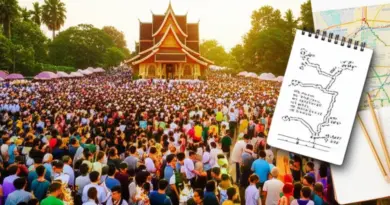
While city venues offer polished performances, the true spirit of traditional Laotian music and dance is found in provincial festivals. The Boun Bang Fai (Rocket Festival), celebrated in various villages across the country, features vibrant processions where locals dance in the streets to drive away evil spirits and call for rain. The music here is loud, rhythmic, and infectious, often featuring the ‘Mor Lam’ style—a form of rhythmic folk singing that is both witty and emotive.
| Festival Name | Location | Key Performance |
|---|---|---|
| Boun Pi Mai (Lao New Year) | Nationwide / Luang Prabang | Nang Sangkhane Procession & Lam Vong |
| Boun That Luang | Vientiane | Traditional Music & Religious Chants |
| Wat Phou Festival | Champasak | Classical Dance at Khmer Ruins |
In the south, the Wat Phou Festival in Champasak provides a hauntingly beautiful backdrop for traditional arts. Set against the ancient Khmer temple ruins, the combination of classical dance and the atmospheric lighting of thousands of candles creates an unforgettable spectacle that connects the present-day performers with their ancestral roots.
คำถามที่พบบ่อย (FAQ)
Q: What is the most famous traditional instrument in Laos?
A: The Khaen, a mouth organ made of bamboo pipes, is the most iconic instrument in traditional Laotian music. It is often played solo or to accompany Mor Lam singers.
Q: Is there a specific dress code for attending dance performances?
A: For theatre performances, smart-casual is fine. However, if the performance is at a temple or during a religious festival, you must cover your shoulders and knees. Wearing a traditional Lao ‘Sinh’ (sarong) is highly appreciated.
Q: Can tourists participate in the dancing?
A: Yes! During the ‘Lam Vong’ (circle dance), which is common at weddings and festivals, locals often invite guests to join. The steps are simple and focus on graceful hand movements.
Q: Where can I see the Royal Ballet in Luang Prabang?
A: Performances are typically held at the Royal Palace Museum theatre on Monday, Wednesday, Friday, and Saturday evenings, though schedules may vary seasonally.
References
- Music and Dance in Laos: Where to See Traditional Performances and What to Expect
- When to Visit: Festival Calendar, Seasonal Performances, and Best Times for Authentic Shows in Laos
- Types of Performances and Cultural Context — Phra Lak Phra Lam, Lam Vong, Khone Mask Dance, and Traditional Musical Instruments