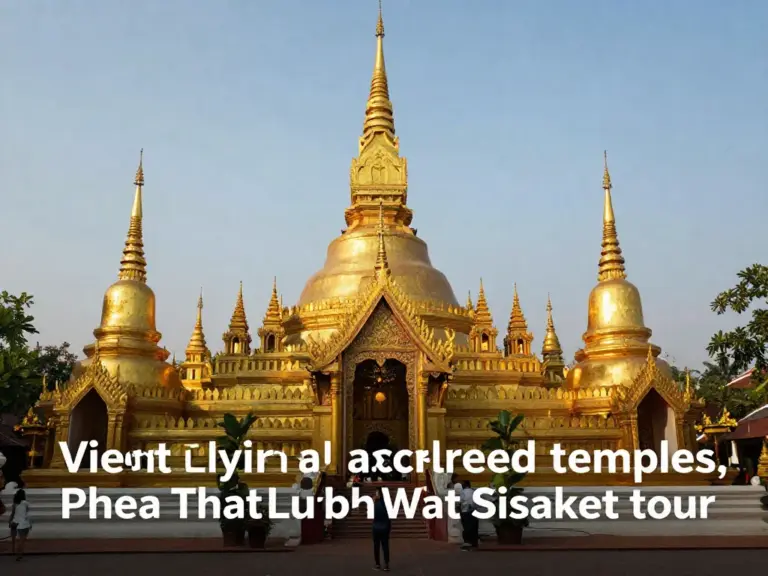
H1: Vientiane’s Sacred Sites: A Complete Tour of Pha That Luang and Wat Sisaket
Vientiane, the serene capital of Laos, is a city where time seems to slow down. For travelers seeking spiritual connection and architectural beauty, Vientiane’s sacred sites are not just tourist attractions; they are the living history of a nation. Among these, the golden majesty of Pha That Luang and the ancient, quiet charm of Wat Sisaket stand out as essential stops for any itinerary. This guide takes you through these iconic landmarks, helping you understand their cultural significance and how to make the most of your visit.
The Golden Icon: Pha That Luang
No visit to the capital is complete without witnessing Pha That Luang, or the ‘Great Stupa.’ Considered the most important national monument in Laos, this golden-covered structure is a symbol of both the Buddhist religion and Lao sovereignty. The stupa’s history dates back to the 3rd century, though the current structure reflects the mid-16th century restoration ordered by King Setthathirat.
Exploring the Grounds
The complex is surrounded by high walls, creating a peaceful courtyard that houses smaller temples and statues. As you walk the perimeter, take note of the intricate architectural details that blend traditional Lao style with influences from nearby cultures. The stupa is not just a building; it is a pilgrimage site, and you will often see locals offering prayers and merit-making.
The Silent Sanctuary: Wat Sisaket
Contrasting the soaring height of Pha That Luang, Wat Sisaket offers an intimate, reflective experience. Built in 1818, it is famously known as the oldest temple in Vientiane that remains in its original form. While other temples were destroyed during the Siamese conflict in 1828, Wat Sisaket was spared, likely due to its distinct Siamese architectural style.
The most captivating feature here is the cloister walls, which house thousands of small Buddha statues in various postures. It is a humbling sight that showcases the deep devotion of the Lao people throughout the centuries. Visitors are encouraged to walk quietly through the corridors, observing the craftsmanship of the wooden ceilings and the faded murals that tell stories of the Buddha’s life.
Travel Tips for Vientiane’s Sacred Sites
| Site | Dress Code | Best Time to Visit |
|---|---|---|
| Pha That Luang | Modest (Shoulders/Knees covered) | 08:00 – 10:00 AM |
| Wat Sisaket | Modest (Shoulders/Knees covered) | Early Morning |
คำถามที่พบบ่อย (FAQ)
1. Is there an entrance fee for Pha That Luang?
Yes, there is a nominal entrance fee for international tourists to enter the main courtyard of the stupa, which helps maintain the site.
2. Can I take photos inside Wat Sisaket?
You may take photos of the architecture and the cloisters, but it is strictly prohibited to take photos of the Buddha images inside the main hall.
3. What is the best way to travel between these temples?
The most convenient way to visit these sites is by renting a tuk-tuk for the day or using a ride-hailing app, which allows you to move easily between the city center and the outskirts.