Types of Performances and Cultural Context — Phra Lak Phra Lam, Lam Vong, Khone Mask Dance, and Traditional Musical Instruments
- Types of Performances and Cultural Context — Phra Lak Phra Lam, Lam Vong, Khone Mask Dance, and Traditional Musical Instruments
The cultural landscape of Laos is a vibrant tapestry woven with ancient traditions, spiritual devotion, and artistic expression. For travelers engaged in Laos tourism, understanding the Types of Performances and Cultural Context is essential to appreciating the nation’s soul. From the epic storytelling of the Phra Lak Phra Lam to the social harmony of the Lam Vong, Laotian performing arts offer a window into a world where the sacred and the celebratory coexist beautifully.
Phra Lak Phra Lam: The Lao Ramayana
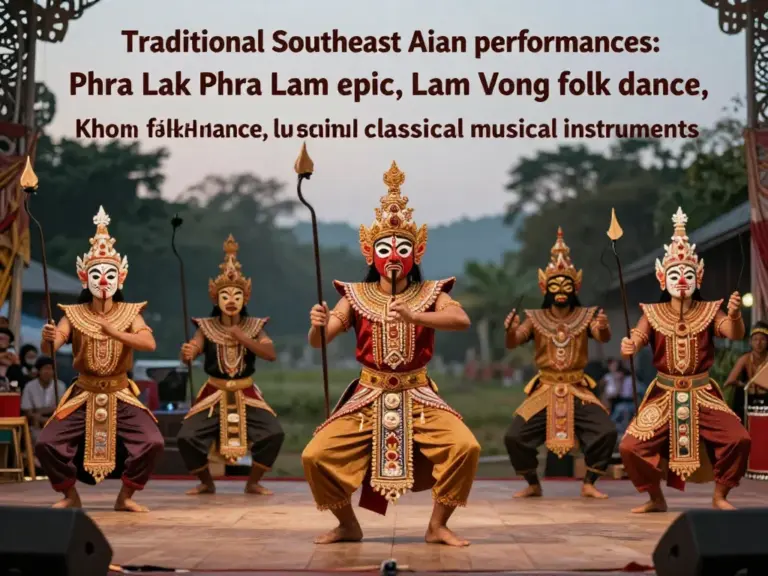
The Phra Lak Phra Lam is the national epic of Laos, a localized version of the Indian Ramayana. Unlike the original, the Lao version emphasizes Buddhist virtues and local geography. The performance is more than just entertainment; it is a moral compass for the community. The characters—Phra Lak (Lakshmana) and Phra Lam (Rama)—embody the struggle between good and evil, while the graceful movements of the dancers convey deep emotional narratives.
Lam Vong: The Heartbeat of Lao Social Life
If you visit a festival or a wedding in Laos, you will inevitably witness the Lam Vong. This circular dance is the quintessential social performance of the country. Dancers move slowly in a circle, using delicate hand gestures to express beauty and respect. The beauty of Lam Vong lies in its inclusivity; locals and tourists alike are encouraged to join the circle. It represents the harmony and simplicity of the Lao way of life, making it a highlight of the Types of Performances and Cultural Context found throughout the provinces.
Khone Mask Dance: A Royal Tradition
The Khone is a stylized form of masked drama that was historically performed in the royal courts of Luang Prabang. Performers wear elaborate, colorful masks representing gods, demons, and monkeys. This art form requires immense physical discipline, as the dancers must communicate character and emotion through body language and precise steps, as their faces are hidden. The Khone typically depicts scenes from the Phra Lak Phra Lam, bringing the epic to life with stunning visual grandeur.
Traditional Musical Instruments: The Soul of the Sound
No performance is complete without the hauntingly beautiful sounds of traditional Lao instruments. The most iconic is the Khaen, a bamboo mouth organ recognized by UNESCO as Intangible Cultural Heritage. Its polyphonic sound provides the melodic backbone for most Lao folk music. Other essential instruments include:
- Khaen: The signature bamboo pipe instrument of Laos.
- Kong: Various types of drums used to provide rhythmic structure.
- Lanat: A wooden xylophone that adds a bright, percussive melody.
- Khim: A hammered dulcimer that produces ethereal, shimmering tones.
Cultural Context and Modern Preservation
The Types of Performances and Cultural Context in Laos are inextricably linked to the seasons and the Buddhist calendar. Performances often coincide with ‘Boun’ (festivals), such as Pi Mai (Lao New Year) or Boun Bang Fai (Rocket Festival). Today, organizations like the Royal Ballet Theatre in Luang Prabang work tirelessly to preserve these ancient arts, ensuring that future generations and visitors can continue to experience the magic of Lao heritage.
คำถามที่พบบ่อย (FAQ)
What is the most famous traditional instrument in Laos?
Can tourists participate in the Lam Vong dance?
Where can I watch the Phra Lak Phra Lam performance?
What is the difference between Lao Khone and Thai Khon?
References
UNESCO: Music of the Khaen
Official Laos Tourism Portal
Luang Prabang Cultural Guide
- Music and Dance in Laos: Where to See Traditional Performances and What to Expect
- Best Places to Watch Traditional Laotian Music and Dance — Luang Prabang Temples, Vientiane Cultural Centers, and Provincial Festivals
- When to Visit: Festival Calendar, Seasonal Performances, and Best Times for Authentic Shows in Laos