Choosing Routes and Difficulty Ratings: Multi-pitch, Sport, and Trad Routes with Long-tail Tips for Beginners and Advanced Climbers
- Choosing Routes and Difficulty Ratings: Multi-pitch, Sport, and Trad Routes with Long-tail Tips for Beginners and Advanced Climbers
- Understanding Climbing Disciplines
- Demystifying Difficulty Ratings
- Long-Tail Tips for Route Selection and Progression
- Climbing in Laos: A Unique Adventure
- Safety First: Essential Considerations
- Conclusion: Embrace the Vertical Journey
- คำถามที่พบบ่อย (FAQ)
- What is the main difference between sport and trad climbing?
- Which climbing grade system is most common in Laos?
- Is Laos suitable for beginner climbers?
- What safety precautions should I take when multi-pitch climbing?
- How do I choose the right route difficulty for my skill level?
Welcome to the Vertical World!
Embarking on a rock climbing adventure, especially in a breathtaking destination like Laos, requires more than just physical prowess. A crucial aspect of a safe and enjoyable experience is understanding how to select appropriate routes and interpret their difficulty ratings. Whether you’re a curious beginner or an experienced climber looking to push your limits, this guide will illuminate the nuances of multi-pitch, sport, and trad routes, offering tailored tips to enhance your vertical journey. We’ll delve into the art of Choosing Routes and Difficulty Ratings: Multi-pitch, Sport, and Trad Routes, ensuring you’re well-equipped for the diverse challenges awaiting in the limestone karsts of Laos.
Understanding Climbing Disciplines
Rock climbing isn’t a monolithic activity; it encompasses several distinct disciplines, each with its own gear, techniques, and philosophy. Knowing these differences is fundamental to Choosing Routes and Difficulty Ratings: Multi-pitch, Sport, and Trad Routes effectively.
Sport Climbing: The Accessible Ascent
Sport climbing is arguably the most popular and accessible form of rock climbing. Routes are equipped with fixed anchors (bolts) drilled into the rock, allowing climbers to focus primarily on movement and technique rather than placing protection. This discipline is characterized by its emphasis on athletic performance and the relative ease of setting up safety systems. Sport climbing routes are typically single-pitch, meaning they can be completed with one rope length.
| Key Feature | Description |
|---|---|
| Protection | Pre-placed bolts and anchors |
| Focus | Physical movement, technique, endurance |
| Ideal For | Beginners, those seeking physical challenge |
For beginners in Laos, sport climbing offers an excellent entry point. Areas like Thakhek and Vang Vieng boast numerous well-bolted routes suitable for learning. Guides are readily available to teach the fundamentals, ensuring a safe and enjoyable introduction to the sport.
Traditional (Trad) Climbing: The Art of Placement
Trad climbing, short for traditional climbing, is where the climber places all protective gear (cams, nuts, hexes) into natural features of the rock as they ascend. This gear is then removed by the second climber. It demands a deep understanding of gear placement, judgment, and risk assessment. Trad climbing is often seen as the purest form of the sport, emphasizing self-reliance and adventure.
Advanced climbers looking for a significant challenge in Laos might find limited dedicated trad routes compared to sport, but the principles of trad climbing are essential for understanding multi-pitch routes that may incorporate both fixed and natural protection. Mastering trad requires extensive practice and mentorship.
Multi-pitch Climbing: The Grand Adventure
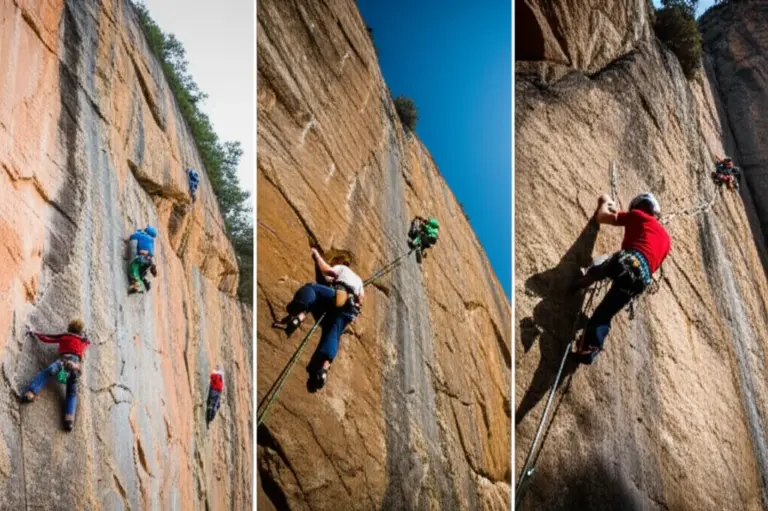
Multi-pitch climbing involves ascending routes that are longer than a single rope length, requiring climbers to stop at intermediate anchor points (belay stations) to bring up their partner before continuing. This discipline can be either sport, trad, or a mix of both (‘mixed’ multi-pitch). It offers breathtaking exposure, stunning views, and a profound sense of accomplishment.
Watch this video to get a clear introduction to sport climbing, a great starting point for any aspiring climber.
Laos, with its towering limestone formations, is an ideal playground for multi-pitch adventures. The sheer scale of some of the cliffs, particularly around Thakhek, makes multi-pitch an unforgettable experience. It requires excellent communication, efficient rope management, and a high level of trust between partners.
Demystifying Difficulty Ratings
Difficulty ratings are a climber’s language, providing a standardized way to assess the challenge of a route. However, different regions and climbing styles use various systems. Understanding these is crucial for Choosing Routes and Difficulty Ratings: Multi-pitch, Sport, and Trad Routes that match your skill.
Yosemite Decimal System (YDS)
Predominantly used in the United States and Canada, the YDS classifies climbs from Class 1 (walking) to Class 5 (technical rock climbing). Within Class 5, grades range from 5.0 (easiest) to 5.15 (hardest), often with letter suffixes (a, b, c, d) to further subdivide the difficulty (e.g., 5.10c). Trad routes often incorporate a ‘R’ or ‘X’ rating to denote runout or dangerous protection.
French Grading System
Widely used in Europe, including popular climbing destinations like Laos, the French system uses numbers followed by letters (a, b, c) and sometimes a ‘+’ sign for further distinction (e.g., 6a, 6a+, 6b). Lower numbers indicate easier climbs, with grades typically starting around 3 and extending into the 9s. This system tends to be more granular for harder climbs.
Long-Tail Tips for Route Selection and Progression
Smart route selection is key to enjoyment and progression. Here are tips tailored for different experience levels, especially when Choosing Routes and Difficulty Ratings: Multi-pitch, Sport, and Trad Routes in a place like Laos.
For Beginners: Building a Strong Foundation
- Start with Sport: Focus on easier sport routes (French 4 to 5c, YDS 5.6 to 5.9). This allows you to develop technique without the added complexity of gear placement.
- Seek Mentorship: Hire a local climbing guide in Laos. They offer invaluable knowledge of local routes, safety protocols, and will accelerate your learning.
- Prioritize Technique: Don’t just pull with your arms. Learn footwork, balance, and body positioning. Watch experienced climbers.
- Understand the Basics: Master knots (figure-eight, clove hitch), belaying techniques, and basic rope management before attempting anything challenging.
- Practice Falling: Learn to fall safely on sport routes. It builds confidence and reduces fear.
For Advanced Climbers: Pushing Your Limits Safely
- Transition to Trad: If you’re strong in sport, consider learning trad climbing with an experienced mentor or course. Start on easy trad routes in a familiar area.
- Projecting Routes: Select a route slightly above your current ability (a ‘project’) and work on it. This builds strength, endurance, and problem-solving skills.
- Multi-pitch Strategy: For multi-pitch, focus on efficient transitions at belay stations, clear communication, and understanding retreat options. Practice in less committing environments first.
- Advanced Gear Knowledge: Deepen your understanding of specialized gear, rescue techniques, and anchor building.
- Read Guidebooks Critically: For Laos, local guidebooks often provide crucial beta on rock quality, sun exposure, and specific hazards.
Climbing in Laos: A Unique Adventure
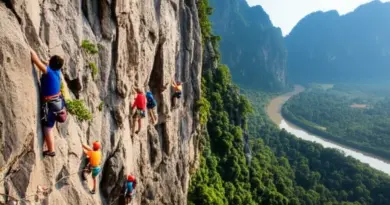
Laos offers a truly unique climbing experience. The towering limestone karsts of Thakhek and Vang Vieng are world-renowned, primarily for sport climbing. Multi-pitch options are also available, offering breathtaking views of the lush landscape.
Embrace Local Expertise
Consider engaging with local climbing schools and guides. Not only do they provide essential safety and technical instruction, but they also offer insights into local culture, hidden gems, and responsible tourism practices. Their expertise is invaluable for Choosing Routes and Difficulty Ratings: Multi-pitch, Sport, and Trad Routes that align with local conditions and your skill level.
The climbing season generally runs from October to April, avoiding the heaviest monsoon rains. Always be prepared for heat and humidity, and ensure you have adequate hydration and sun protection. Respect local customs and the pristine natural environment.
Safety First: Essential Considerations
Regardless of the route type or your experience level, safety should always be your top priority. Always perform thorough gear checks, communicate clearly with your climbing partner, and be aware of changing weather conditions. Carry a first-aid kit and know basic rescue techniques. Never hesitate to retreat if conditions feel unsafe or beyond your capabilities.
Conclusion: Embrace the Vertical Journey
Understanding the distinctions between multi-pitch, sport, and trad routes, coupled with a solid grasp of difficulty ratings, empowers you to make informed decisions and safely explore the vertical world. Laos offers a magnificent backdrop for climbers of all levels. By applying these long-tail tips and prioritizing safety, you’re set to enjoy an unforgettable climbing adventure. So, pack your gear, choose your route wisely, and prepare to be inspired by the stunning landscapes and challenging climbs that await!
คำถามที่พบบ่อย (FAQ)
References
- Rock Climbing in Vang Vieng: Ultimate Guide to Top Crags, Difficulty Levels, and Local Guide Services
- Best Climbing Areas in Vang Vieng: Overview of Phou Khao Khouay, Nam Song Canyon, and Hidden Crags for All Skill Levels
- Hiring a Local Guide in Vang Vieng: How to Find Certified Guides, Price Expectations, Safety Standards, and Recommended Guiding Companies