How Eco-Lodges Support Local Communities: Community-Based Tourism, Cultural Experiences, and Fair Employment
- How Eco-Lodges Support Local Communities: Community-Based Tourism, Cultural Experiences, and Fair Employment
- The Foundation: Defining Community-Based Tourism (CBT)
- Economic Empowerment Through Fair Employment Practices
- Preserving Heritage: Eco-Lodges as Cultural Curators
- Video Integration: Seeing CBT in Action
- The Ripple Effect: Environmental Stewardship and Local Governance
- Case Context: The Impact in Regions like Laos
- Conclusion: Investing in Authentic Travel
- คำถามที่พบบ่อย (FAQ)
The rise of sustainable travel has placed a spotlight on accommodations that do more than just offer a comfortable bed; they actively contribute to the places they inhabit. Central to this movement is understanding exactly how eco-lodges support local communities. These establishments, particularly those operating in ecologically sensitive and culturally rich areas like those found across Laos, are pioneering a model that moves beyond simple philanthropy toward genuine partnership. By embedding principles of Community-Based Tourism (CBT), offering transparent fair employment, and acting as stewards of local culture, these lodges redefine the relationship between traveler and host, ensuring that the economic benefits of tourism are distributed equitably and sustainably.
The Foundation: Defining Community-Based Tourism (CBT)
Community-Based Tourism (CBT) is the operational philosophy underpinning the success of supportive eco-lodges. It is not merely about hiring local guides; it is about empowering the community to own, manage, and benefit directly from the tourism activity. In regions highly dependent on natural resources, like the mountainous areas of Northern Laos, CBT provides a viable, non-extractive economic alternative to logging or industrial agriculture. When implemented correctly, CBT ensures that tourism revenue circulates within the local economy, strengthening resilience against external economic shocks.
Shifting Power Dynamics from External Investors to Local Stakeholders
Traditional mass tourism often sees profits repatriated to international headquarters, leaving local populations with low-wage, seasonal employment. Eco-lodges committed to CBT actively work to reverse this trend. This involves establishing transparent governance structures, often through village trusts or cooperative models, where local leaders have a substantive voice in operational decisions, pricing, and profit allocation. This shift in power is crucial for long-term success and genuine local ownership.
Economic Empowerment Through Fair Employment Practices
One of the most tangible ways to measure how eco-lodges support local communities is by examining their employment policies. Fair employment goes beyond minimum legal requirements; it is a commitment to dignity and professional growth for staff members drawn from neighboring villages.
Beyond Entry-Level: Training and Career Progression
A supportive lodge invests heavily in capacity building. Instead of limiting local staff to housekeeping or basic guiding roles, they implement structured training programs in hospitality management, advanced guiding techniques, accounting, and digital marketing. This strategy ensures that local individuals can eventually step into supervisory, managerial, and even ownership roles, creating a sustainable pipeline of local leadership rather than relying on expatriate managers indefinitely.
Fair Wages and Local Procurement Chains
Fair wages are non-negotiable. Lodges adhering to best practices pay a living wage—one that allows families to thrive, not just survive. Furthermore, they prioritize local procurement. This means sourcing food from local farmers, purchasing textiles from local weavers, and contracting local craftspeople for maintenance and construction. This creates powerful multiplier effects throughout the regional economy.
| Economic Impact Area | Traditional Tourism | CBT Eco-Lodge Model |
|---|---|---|
| Profit Retention | Less than 10% | 50% – 80% |
| Supply Chain | Imported/External | Locally Sourced & Certified |
| Staff Advancement | Limited to basic roles | Management training offered |
Preserving Heritage: Eco-Lodges as Cultural Curators
For travelers visiting destinations like Laos, the desire for authentic cultural exchange is high. Eco-lodges facilitate this by acting as bridges, ensuring cultural interactions are respectful, educational, and mutually beneficial, rather than exploitative.
Authentic Cultural Immersion vs. Commodification
The line between showcasing culture and commodifying it can be thin. Responsible eco-lodges work with community elders to design experiences—such as traditional cooking classes, village storytelling nights, or weaving workshops—where the community sets the terms of engagement and receives fair compensation for sharing their traditions. This validates cultural practices as valuable assets.
Supporting Traditional Crafts and Knowledge Transfer
Many lodges create dedicated marketplaces or consignment arrangements for local artisans, ensuring they receive 100% of the sale price for their crafts, bypassing middlemen entirely. This economic incentive directly supports the continuation of traditional skills that might otherwise be lost in the face of globalization.
Video Integration: Seeing CBT in Action
To truly grasp the impact of these integrated models, visual evidence is compelling. The following video demonstrates how community partnerships foster sustainable livelihoods in Southeast Asian tourism settings, illustrating the very principles discussed above.
The Ripple Effect: Environmental Stewardship and Local Governance
The ‘Eco’ in eco-lodge implies environmental responsibility, but sustainability is incomplete without social responsibility. When locals benefit directly from the pristine nature surrounding them, their motivation to protect it skyrockets. This is the ultimate answer to how eco-lodges support local communities: by aligning conservation goals with economic survival.
Conservation Funding Driven by Tourism Revenue
Many successful community lodges dedicate a percentage of their nightly rates or profits directly into community-managed conservation funds. These funds might support anti-poaching patrols, reforestation initiatives, or water source protection, turning tourism dollars into measurable conservation outcomes.
Local Decision-Making and Ownership Models
In the most advanced models, the land use surrounding the lodge is governed by community consensus, often formalized through local government or customary law. This ensures that tourism development is scaled appropriately and respects local carrying capacity, preventing the environmental degradation often associated with unchecked development.
Case Context: The Impact in Regions like Laos
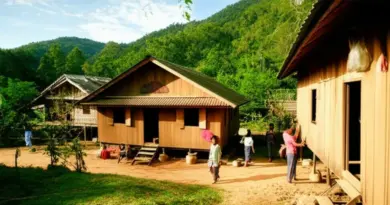
In Laos, where rural livelihoods are often precarious, community-based eco-lodges represent a vital pathway to modernization without cultural erosion. These lodges serve as models for how remote ethnic minority groups can engage with the global tourism market on their own terms, using their unique cultural identity and natural surroundings as their greatest assets. They offer travelers a deep, responsible connection to the land and its people that generic hotel chains simply cannot replicate.
Conclusion: Investing in Authentic Travel
Ultimately, understanding how eco-lodges support local communities reveals a powerful truth: responsible tourism is smart business. By prioritizing CBT, ensuring fair employment, and respecting cultural authenticity, these lodges offer travelers meaningful experiences while building robust, self-sustaining local economies. Choosing to stay at such an establishment is a direct investment in a more equitable and sustainable future for global destinations.
คำถามที่พบบ่อย (FAQ)
-
What is the primary difference between an eco-lodge and a standard resort in terms of community support?
The primary difference lies in ownership structure and profit distribution. True eco-lodges prioritize Community-Based Tourism (CBT) models where a significant portion of revenue remains local, funding community projects and ensuring equitable employment, rather than profits flowing solely to external corporations.
-
How do eco-lodges actively promote cultural preservation in places like Laos?
They do this by ensuring cultural exchanges are authentic and respectful. This includes hiring local storytellers, sourcing traditional building materials, supporting local artisans directly, and involving community elders in designing visitor experiences, thereby valuing intangible heritage.
-
What role does fair employment play in the success of community-based eco-lodges?
Fair employment moves beyond just providing jobs; it involves capacity building, offering training for management roles, paying living wages significantly above local minimums, and establishing transparent career pathways, ensuring locals become owners and decision-makers over time.
-
Are eco-lodges always financially sustainable without external aid?
While initial setup might require investment, successful CBT eco-lodges often achieve long-term financial sustainability because they offer unique, high-value experiences that travelers actively seek out, leading to higher occupancy rates and strong local buy-in for conservation efforts.
References
- Sustainable Tourism and Community Development Frameworks
- Best Practices in Community-Based Ecotourism in Southeast Asia
- Green Stays in Laos: Eco-Lodges from Nong Khiaw to the Four Thousand Islands — Sustainable Stays, Local Impact, and How to Plan Your Responsible Trip
- Why Choose Eco-Lodges in Laos? Benefits for Travelers, Communities, and the Environment
- Top Eco-Lodges and Green Stays from Nong Khiaw to Si Phan Don: Features, Pricing, and Booking Tips