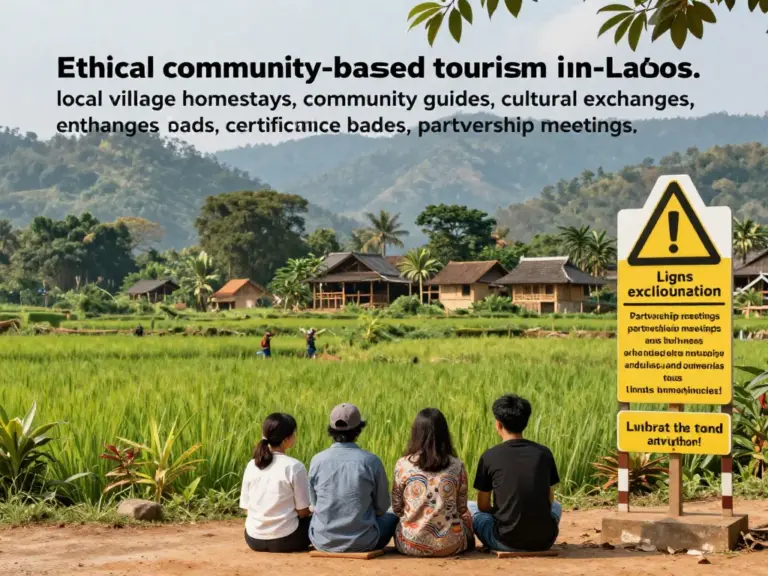
How to Choose Ethical Community-Based Tours in Laos: Certifications, Local Partnerships, and Red Flags
- How to Choose Ethical Community-Based Tours in Laos: Certifications, Local Partnerships, and Red Flags
- Understanding Ethical Community-Based Tours in Laos
- Key Certifications and Standards to Look For
- Evaluating Local Partnerships and Ownership
- Red Flags: What to Avoid
- Questions to Ask Your Tour Operator
- คำถามที่พบบ่อย (FAQ)
- How do I know if a tour is truly community-based?
- Is it okay to give money or gifts to children in Lao villages?
- Are there specific ethical elephant sanctuaries in Laos?
Laos, the land of a million elephants, is increasingly becoming a hotspot for travelers seeking authentic cultural immersion. As the demand for authentic experiences grows, so does the prevalence of Community-Based Tourism (CBT). However, not all tours labeled as “community-based” are created equal. Finding truly Ethical Community-Based Tours in Laos requires a discerning eye, an understanding of local dynamics, and a commitment to ensuring your travel dollars directly benefit the people you visit. This guide will walk you through the essential certifications, the importance of local partnerships, and the critical red flags to avoid when planning your sustainable adventure in Laos.
Understanding Ethical Community-Based Tours in Laos
Ethical Community-Based Tours in Laos are designed to empower local ethnic groups, preserve traditional heritage, and protect the pristine environment. Unlike mass tourism, where profits often leak out of the country to foreign corporations, CBT aims to keep the economic benefits within the village. In regions like Luang Namtha or Phongsaly, ethical tours provide vital income that supports education, healthcare, and infrastructure. When you choose an ethical tour, you aren’t just a spectator; you become a partner in the community’s sustainable development.
Key Certifications and Standards to Look For
While Laos is still developing its national certification framework, several international and regional standards can help you identify responsible operators. Look for these badges of honor when researching Ethical Community-Based Tours in Laos:
- Travelife for Tour Operators: An internationally recognized certification system for sustainability in the travel industry.
- The Lasting Laos Certified: A local initiative supported by the European Union that promotes sustainable consumption and production in the Lao tourism sector.
- ASEAN Community-Based Tourism Standard: A regional framework that ensures CBT projects meet specific criteria regarding environmental management and social welfare.
Evaluating Local Partnerships and Ownership
A key indicator of an ethical tour is the depth of the partnership between the tour operator and the local village. Ask the operator direct questions before booking. Who decided which stories to tell? Who receives the payment? In a truly ethical model, the village council or a local committee is involved in the decision-making process. For instance, in the Nam Et-Phou Louey National Park, the “Night Safari” is a world-class example where the community receives a financial bonus for every wildlife sighting, directly incentivizing conservation over poaching.
| Feature | Ethical CBT Model | Mass Tourism Model |
|---|---|---|
| Decision Making | Community-led | Operator-led |
| Profit Distribution | Direct to village funds | Retained by agencies |
| Cultural Impact | Preserves traditions | Commodifies culture |
| Environmental Focus | Conservation-based | Resource-heavy |
Red Flags: What to Avoid
To ensure you are participating in Ethical Community-Based Tours in Laos, you must be aware of common industry pitfalls. One of the biggest red flags is “Orphanage Tourism.” Many children in Lao orphanages actually have living parents; these institutions often exploit children to solicit donations from well-meaning tourists. Similarly, avoid any tours that promote intrusive photography of ethnic minorities without consent, or those that feature exploitative wildlife interactions, such as riding elephants without proper sanctuary credentials.
Questions to Ask Your Tour Operator
Before you sign up, send a quick email to the provider. Their transparency will tell you a lot about their ethics. Consider asking:
- What percentage of the tour price goes directly to the host community?
- Do you provide training or capacity building for the local guides?
- How does this tour contribute to the long-term conservation of the local environment?
- Is there a community fund that supports local schools or health clinics?
คำถามที่พบบ่อย (FAQ)
References
- Travelife for Tour Operators Official Website
- Nam Et-Phou Louey National Park Conservation Tours
- Lasting Laos Sustainable Tourism Initiative
- Community-Based Tourism in Laos: How Your Trip Can Support Local Villages and Preserve Culture
- Why Community-Based Tourism Matters in Laos: Benefits for Villagers, Travelers, and Conservation
- What to Expect on a Community-Based Tourism Experience: Activities, Homestays, and Cultural Exchange Etiquette