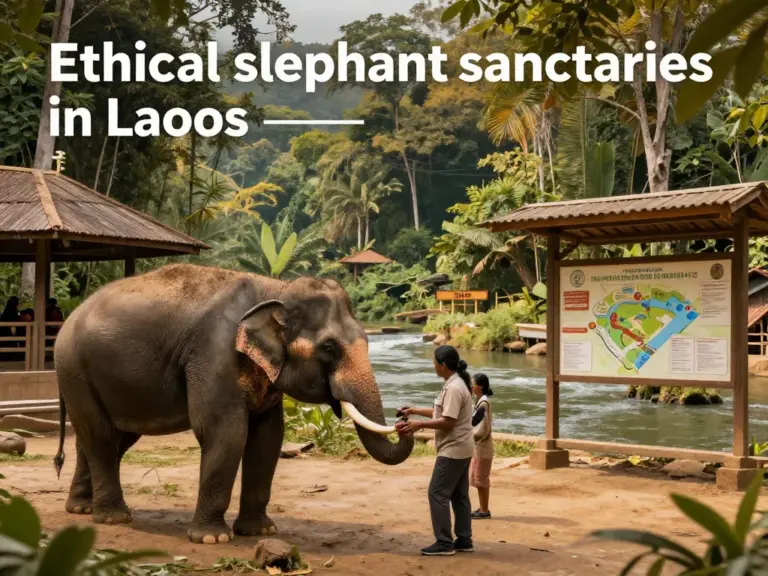
Top ethical elephant sanctuaries in Laos — detailed profiles, location, what to expect, admission policies, and conservation impact
Laos, historically known as the ‘Land of a Million Elephants’ (Lane Xang), holds a deep cultural and spiritual connection to these majestic creatures. However, the modern reality for Asian elephants in Laos is precarious. As logging industries decline, many captive elephants face an uncertain future. Choosing to visit ethical elephant sanctuaries in Laos is one of the most impactful ways travelers can contribute to the survival of the species while ensuring these animals live a life free from labor and abuse.
1. Elephant Conservation Center (ECC) – Sayaboury
The Elephant Conservation Center (ECC) is widely regarded as the gold standard for elephant welfare in Southeast Asia. Located on the banks of the Nam Tien Lake, it serves as a hospital, breeding center, and retirement home for elephants rescued from the logging industry.
- Location: Sayaboury Province (accessible via Luang Prabang).
- What to Expect: A focus on observation. Visitors can watch elephants socializing, bathing, and roaming in a vast protected forest. The center also features the only elephant hospital in Laos.
- Admission Policy: Mandatory 2-day or 3-day stays to minimize turnover stress on animals. No day trips.
- Conservation Impact: ECC runs an active breeding program and a rewilding project aimed at releasing elephants back into the wild.
2. Mandalao Elephant Conservation – Luang Prabang
Mandalao offers a non-intrusive way to interact with elephants just outside of Luang Prabang. This sanctuary focuses on the ‘therapeutic’ aspect of walking alongside elephants through their natural habitat, rather than forcing them into unnatural behaviors.
- Location: Luang Prabang.
- What to Expect: Guided treks through jungles and rice paddies following the elephants’ lead. You will learn about elephant communication and foraging habits.
- Admission Policy: Half-day and full-day tours available. Strict ‘no riding’ and ‘no bathing with elephants’ policy (to prevent skin infections and water contamination).
- Conservation Impact: Mandalao works with local communities to reduce human-elephant conflict and provides high-quality veterinary care for rescued individuals.
3. MandaLao’s Outreach and the Future of Laos Elephants
The transition from logging to tourism is a complex economic shift for mahouts (elephant owners). Ethical elephant sanctuaries in Laos provide these owners with a sustainable income that doesn’t involve overworking the animals. By visiting these sites, you are directly funding the food, medicine, and land required to keep these giants safe.
| Sanctuary Name | Primary Focus | Best For |
|---|---|---|
| ECC Sayaboury | Science & Breeding | Deep educational immersion |
| Mandalao | Ethical Interaction | Day trips from Luang Prabang |
| Lao Elephant Care | Retirement Care | Small group experiences |
คำถามที่พบบ่อย (FAQ)
Q: Why is riding elephants considered unethical?
A: Riding elephants requires a process called ‘the crush’ to break their spirit. Additionally, an elephant’s spine is not designed to carry the weight of heavy chairs (howdahs) and multiple humans, leading to long-term physical injury.
Q: How can I tell if a sanctuary in Laos is truly ethical?
A: A truly ethical sanctuary will not offer rides, shows, or force elephants to interact with tourists. They prioritize the elephant’s freedom of movement and natural social structures.
Q: Is bathing with elephants okay?
A: Many leading experts now discourage bathing with elephants because it can be stressful for the animal and poses hygiene risks. Observation of elephants bathing themselves is the preferred ethical practice.
References
- Elephant Conservation Center Official Website
- Mandalao Elephant Conservation
- World Animal Protection – Wildlife Tourism Guidelines
- Ethical Elephant Sanctuaries in Laos: Where to See and Support Rescued Elephants
- Why visit ethical elephant sanctuaries in Laos — understanding sanctuary principles, animal welfare standards, and how to identify responsible operations
- How to plan your visit — best seasons, responsible visitation practices, volunteer options, and budgeting for ethical experiences