Vang Vieng, nestled amidst the dramatic limestone karsts and the serene Nam Song River, has firmly established itself as the adventure capital of Laos. Once known primarily for its vibrant party scene, this picturesque town has undergone a remarkable transformation, now drawing thrill-seekers and nature enthusiasts alike. If you’re looking to combine exhilarating outdoor activities with breathtaking natural beauty, then immersing yourself in the world of kayaking and caving in Vang Vieng is an absolute must. This guide will provide you with all the essential information to plan a safe, exciting, and truly memorable adventure.
Understanding Vang Vieng’s Allure
Vang Vieng’s landscape is a masterpiece of nature, characterized by towering limestone formations that seem to pierce the sky, lush green rice paddies, and the gentle flow of the Nam Song River. This unique topography creates a playground for a myriad of outdoor pursuits, from rock climbing and zip-lining to the ever-popular tubing. What truly sets Vang Vieng apart is its ability to offer both adrenaline-pumping activities and moments of serene contemplation, all within a compact and easily accessible area. The town’s shift from a party hub to an adventure tourism hotspot means better-regulated activities and a greater emphasis on safety, making it an increasingly attractive destination for conscientious travelers. [2, 9, 23]
Kayaking the Nam Song River
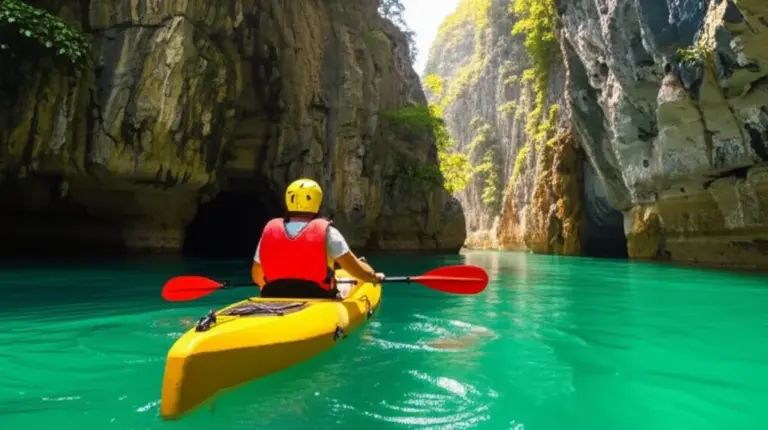
The Nam Song River is the lifeblood of Vang Vieng’s outdoor scene, offering a tranquil yet engaging kayaking experience. The river meanders through stunning scenery, with karsts rising majestically on either side and local life unfolding along its banks. Most kayaking tours typically begin a few kilometers north of Vang Vieng, allowing for a leisurely paddle downstream back towards the town. [10, 12, 14]
Choosing Your Kayaking Adventure
You’ll find various tour options catering to different preferences. Half-day tours are popular, often combining kayaking with other activities like caving or tubing. Full-day tours might include more extensive paddling, visits to multiple caves, and lunch stops. Many tour operators will pick you up from your accommodation and provide all necessary equipment, including kayaks, paddles, and life vests. [10, 14, 17]
Safety First: Kayaking Tips
Your tour guide will provide essential safety instructions and paddling techniques before you set off. Always listen carefully and follow their advice. Wear clothes you don’t mind getting wet, and consider water shoes. Sunscreen, a hat, and sunglasses are highly recommended due to the strong tropical sun. Keep your valuables in a waterproof bag. [12, 14]
Exploring Vang Vieng’s Mystical Caves
The limestone karsts surrounding Vang Vieng are honeycombed with hundreds of caves, each offering a unique subterranean adventure. These caves range from vast chambers with impressive stalactites and stalagmites to water caves where you can tube or swim through. Exploring these natural wonders is an integral part of the kayaking and caving in Vang Vieng experience. [3, 21]
Popular Caving Destinations
- Tham Phu Kham (Blue Lagoon 1 Cave): Often combined with a visit to the popular Blue Lagoon, this cave houses a reclining Buddha statue and offers opportunities for exploration, though it can be slippery. [3, 4]
- Tham Nam (Water Cave): A unique experience where you float through the cave on an inner tube, pulling yourself along a fixed rope. It’s an adventurous and often muddy journey. [3, 16, 23]
- Tham None (Sleeping Cave): One of the largest caves in Vang Vieng, historically used as a shelter during the Indochina War. It’s vast and requires a good light source. [17, 18]
- Tham Chang Cave: Known for its beautiful formations and a spring-fed pool at its entrance. [3]
Caving Safety and Essentials
Caving requires careful preparation. Always wear sturdy, closed-toe shoes with good grip, as cave floors can be uneven, rocky, and extremely slippery, especially after rain or due to dampness. A reliable headlamp or flashlight is essential, as many caves are completely dark inside. Some tour operators provide these, but a personal, more powerful one is always a good idea. Be prepared to get muddy and possibly wet. It’s highly recommended to go with an experienced local guide who knows the terrain and can ensure your safety. [3, 19]
For a visual taste of the adventure awaiting you, check out this video exploring Vang Vieng’s activities:
Planning Your Adventure
Careful planning ensures a smooth and enjoyable trip to Vang Vieng.
Best Time to Visit
The dry season, from November to April, is generally considered the best time for kayaking and caving in Vang Vieng. During these months, the weather is sunny and warm with lower humidity and less rainfall, providing ideal conditions for outdoor activities. November to February offers particularly pleasant temperatures. While the wet season (May to October) brings lush green landscapes and full rivers, it also means muddy trails and potential heavy rainfall which can affect some activities. [4, 7, 11]
Booking Tours and Guides
Vang Vieng has numerous tour agencies offering combined kayaking and caving packages. It’s advisable to book with reputable operators who prioritize safety and provide experienced English-speaking guides. You can often book tours directly through your guesthouse or at one of the many agencies in town. Prices can vary, so it’s worth comparing a few options. [13]
What to Pack
- Clothing: Lightweight, quick-drying clothes you don’t mind getting wet and dirty. Swimwear for Blue Lagoons or water caves.
- Footwear: Sturdy water shoes or sandals with good grip for kayaking; closed-toe shoes or hiking sandals for caving.
- Sun Protection: Sunscreen, hat, sunglasses.
- Hydration: Reusable water bottle (stay hydrated!).
- Essentials: Small backpack, waterproof dry bag for electronics and valuables, insect repellent.
- Lighting: A personal headlamp or flashlight for caves (even if provided by tour).
- First Aid: Basic personal first-aid kit.
Local Tips for a Memorable Experience
Beyond the main activities, embrace the local culture and surroundings.
- Respect Local Customs: Laos is a conservative country. Dress modestly, especially when visiting villages or religious sites.
- Stay Hydrated: The tropical climate can be draining. Drink plenty of water throughout the day.
- Support Local: Choose local tour operators and eat at local restaurants to contribute to the community.
- Bamboo Bridges: Be cautious when crossing the iconic bamboo bridges. They can be slippery and are often designed for one person at a time. [19]
- Explore Beyond: Consider renting a bicycle or scooter to explore the surrounding countryside, including the various Blue Lagoons and viewpoints. Always wear a helmet if riding a scooter. [3, 4]
Here’s a map to help you visualize the region:
In conclusion, kayaking and caving in Vang Vieng offer an unparalleled adventure for those seeking a blend of natural beauty and thrilling activities. By planning ahead, prioritizing safety, and embracing local tips, you’re set for an unforgettable journey in the heart of Laos’s adventure paradise. Enjoy the stunning landscapes, the rush of the river, and the mystery of the caves – Vang Vieng truly delivers an ultimate adventurer’s experience.
คำถามที่พบบ่อย (FAQ)
References
- Discover Vang Vieng: 10 Adventures You Can’t Miss
- Vang Vieng: travel guide to adventure destination in Laos – Pin Your Footsteps
- The Most Beautiful Things to do in Vang Vieng, Laos – Backpack Adventures
- Vang Vieng: Nam Song River Kayak Tour – Traveler’s Universe
- Best Time to Visit Vang Vieng – Ideal Seasons and Travel Tips
- Vang Vieng Walking Safety Guide: Explore Laos on Foot – Kayra Tours
- Vang Vieng Adventure – More Than Just River Tubing – World Nomads
- Vang Vieng Travel Guide: How This Former Party Town Became Adventure Paradise
- Vang Vieng Kayaking Tours on Nam Song River to Villages – VietLong Travel
- Nam Song River, Vientiane Prefecture – Book Tickets & Tours | GetYourGuide
- Why Vang Vieng Is a Kayaker and Caver’s Paradise — Best Seasons, Access, and What to Expect
- Planning Your Trip: Top Kayaking Routes, Caving Spots, What to Pack, and Guided vs. Independent Tours
- Safety, Conservation, and Local Regulations: River Conditions, Cave Hazards, Permits, and Responsible Adventure Practices