Day 3 — Cultural Activities and Slow Travel: Temples, Local Markets, and Child-Friendly Tours
- Day 3 — Cultural Activities and Slow Travel: Temples, Local Markets, and Child-Friendly Tours
Welcome to the third day of your immersive journey into the heart of Southeast Asia. When exploring laos Tourism, Day 3 is traditionally dedicated to the philosophy of ‘Slow Travel.’ This approach encourages travelers to move at a relaxed pace, focusing on deep cultural connections rather than ticking off a long list of landmarks. Today, we delve into the spiritual serenity of ancient temples, the vibrant pulse of local markets, and curated activities designed to keep even the youngest travelers engaged and inspired.
Embracing the Spiritual Morning: Temple Etiquette and Exploration
The morning in Laos, particularly in UNESCO World Heritage sites like Luang Prabang, begins with the soft ringing of temple bells. For those interested in laos Tourism, visiting temples (Wats) is not just a sightseeing activity; it is a lesson in mindfulness. Start your day at Wat Xieng Thong, the ‘Temple of the Golden City.’ Built in 1560, this temple represents classical Laotian architecture with its low-sweeping roofs and intricate ‘Tree of Life’ glass mosaic.
Child-Friendly Temple Tips
Traveling with children to spiritual sites requires a bit of preparation. To make it a ‘child-friendly tour,’ turn the visit into a scavenger hunt. Ask them to find the different animals depicted in the mosaics or count the number of Buddha statues. This keeps them engaged while respecting the quiet atmosphere of the site.
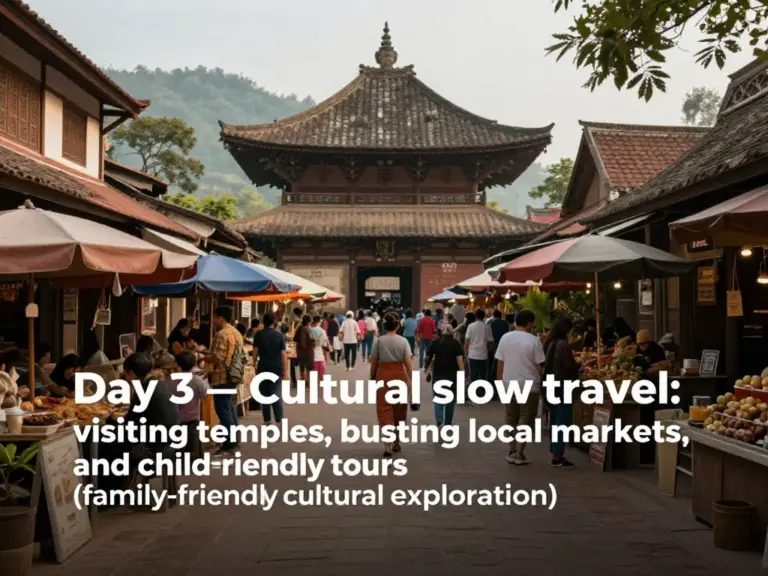
After a peaceful morning, transition to the sensory-rich environment of a local market. The Phosi Market or the morning fresh markets offer a glimpse into the daily lives of the Lao people. Here, slow travel means stopping to talk to vendors (often through smiles and gestures) and trying local delicacies that you won’t find in tourist restaurants.
| Market Type | Best Time to Visit | What to Look For |
|---|---|---|
| Morning Market | 6:00 AM – 9:00 AM | Fresh herbs, local snacks, and traditional coffee. |
| Handicraft Market | 5:00 PM – 10:00 PM | Indigo-dyed textiles, handmade paper, and silver jewelry. |
| Phosi Market | All Day | Authentic household goods and bulk spices. |
For families, the Night Market is particularly appealing. It is less chaotic than the morning markets and offers a safe space for children to see local artisans at work. Many stalls sell hand-painted shirts and traditional toys that make for excellent, sustainable souvenirs.
Slow Travel and Child-Friendly Tours: Engaging the Senses
Slow travel is about quality over quantity. Instead of visiting five different sites, spend the afternoon at a traditional craft center. Organizations like Ock Pop Tok or the Traditional Arts and Ethnology Centre (TAEC) offer workshops that are perfect for families. Children can learn the basics of silk weaving or bamboo weaving, providing a hands-on connection to Lao culture.
Recommended Slow Travel Itinerary for Day 3
- Early Morning: Witness the Alms Giving Ceremony (Tak Bat) with respect and silence.
- Mid-Morning: Guided tour of Wat Mai and the Royal Palace Museum.
- Lunch: A slow riverside lunch featuring ‘Khao Poon’ (spicy rice noodle soup).
- Afternoon: Hands-on craft workshop or a slow boat ride on the Mekong.
- Evening: Exploration of the Night Market and street food tasting.
Sustainable Tourism and Respectful Engagement
As part of the laos Tourism experience, it is vital to practice responsible travel. When visiting temples, ensure shoulders and knees are covered. When interacting with locals at markets, always ask for permission before taking photos. Slow travel naturally supports sustainability because it reduces the carbon footprint associated with rapid transport and encourages spending in local, small-scale businesses.
คำถามที่พบบ่อย (FAQ)
Is Laos a good destination for families with small children?
Yes, Laos is very family-oriented. The culture values children, and locals are generally very welcoming. The slow pace of life makes it easier to manage schedules with kids without feeling rushed.
What should I wear when visiting temples in Laos?
Visitors should dress modestly. This means covering shoulders and knees. Carrying a ‘Sinh’ (traditional Lao skirt) or a sarong is a great way to be prepared for temple entries.
How can I ensure my travel is ‘Slow’ and sustainable?
Focus on staying in one location for longer, using local transport like tuk-tuks or bicycles, supporting local artisans, and avoiding plastic waste by carrying a reusable water bottle.
Are the local markets safe for tourists?
Absolutely. Lao markets are generally safe and friendly. However, like any crowded place, keep an eye on your belongings and be prepared for a vibrant, busy atmosphere.