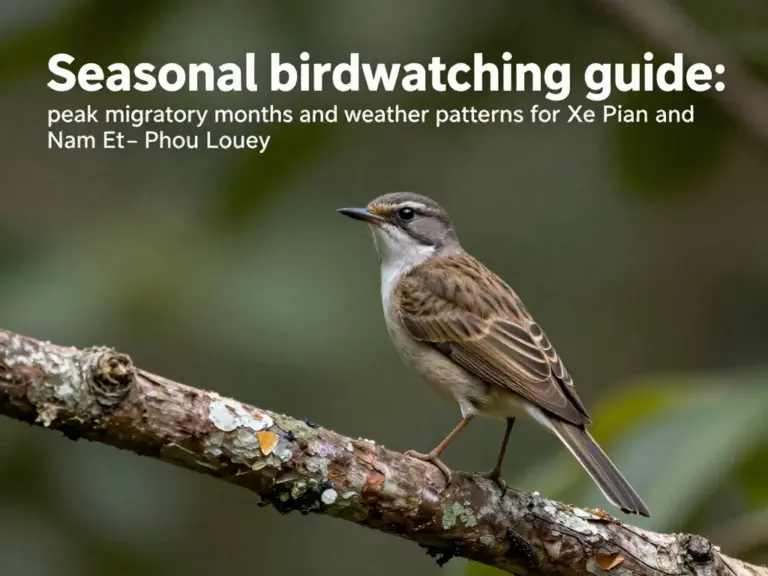
When to Visit: Seasonal Patterns, Peak Birding Months, and Weather Considerations for Xe Pian and Nam Et–Phou Louey
Deciding When to Visit: Seasonal Patterns, Peak Birding Months, and Weather Considerations for Xe Pian and Nam Et–Phou Louey is the first step toward an unforgettable Laotian adventure. These two protected areas offer some of the most pristine wilderness in Southeast Asia. Xe Pian, located in the south, is a mosaic of wetlands and forests, while Nam Et–Phou Louey in the north is mountainous and home to rare carnivores. Understanding the climate cycles of Laos is crucial for maximizing your wildlife sightings and ensuring a comfortable trek through these diverse landscapes.
Seasonal Weather Patterns in Laos
The climate in Laos is tropical and influenced by monsoons. In Xe Pian National Protected Area, the weather is generally warmer and more humid due to its southern location and lower elevation. In contrast, Nam Et–Phou Louey features rugged mountains where temperatures can drop significantly, especially during the winter months.
- Cool Dry Season (November – February): The most popular time for general tourism. Temperatures are pleasant, and the skies are clear.
- Hot Dry Season (March – April): Temperatures can soar above 35°C, making strenuous trekking difficult, though wildlife often congregates around remaining water sources.
- Wet Season (May – October): The landscape turns lush and green. While rain can make trails slippery, it is a vibrant time for flora and certain bird species.
Peak Birding Months in Xe Pian
Xe Pian is a haven for birdwatchers, particularly those seeking the Giant Ibis and White-shouldered Ibis. The best time for birding here is from December to March. During these months, water levels in the wetlands begin to recede, concentrating birds in specific foraging areas. Migratory species from the north are also present during this window, adding to the biodiversity.
Wildlife Watching in Nam Et–Phou Louey
Nam Et–Phou Louey is famous for the ‘Nam Nern Night Safari.’ The best time for this experience is the dry season (November to May). During the dry months, the river levels are stable, and animals like Sambar deer, otters, and various civets are more likely to be seen along the riverbanks at night. For birders in the north, the breeding season typically begins in late February, offering excellent opportunities to hear and see songbirds.
| Month | Xe Pian (South) | Nam Et–Phou Louey (North) | Activity Level |
|---|---|---|---|
| Nov – Feb | Cool, dry, excellent birding | Cold nights, clear days, best for safari | High |
| Mar – May | Very hot, dry wetlands | Warm, good for spotting mammals | Medium |
| Jun – Oct | Lush, wet, difficult access | Rainy, misty mountains, green scenery | Low |
Weather Considerations and Packing Tips
When planning When to Visit: Seasonal Patterns, Peak Birding Months, and Weather Considerations for Xe Pian and Nam Et–Phou Louey, you must pack for variety. In Nam Et–Phou Louey, night temperatures in December can dip to 5°C, requiring warm layers. In Xe Pian, lightweight, breathable clothing is essential to handle the humidity. Regardless of the season, sturdy waterproof boots are a must for the varied terrain.
คำถามที่พบบ่อย (FAQ)
References
- Lao National Tourism Administration
- Official Website of Nam Et-Phou Louey National Park
- BirdLife International – Laos Program