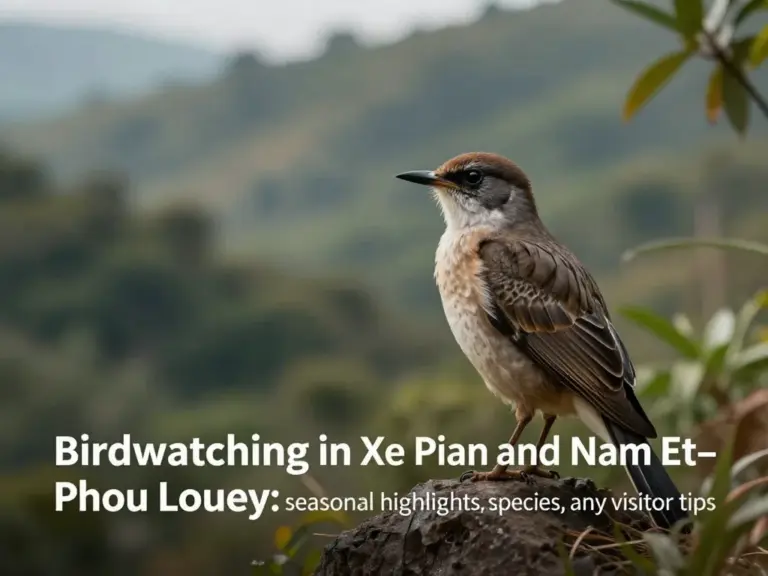
Birdwatching in Xe Pian and Nam Et–Phou Louey: Best Seasons, Top Species, and Practical Guides for Visitors
Laos is rapidly becoming a premier destination for avian enthusiasts, offering some of the most pristine habitats in Southeast Asia. For those seeking the ultimate experience, Birdwatching in Xe Pian and Nam Et–Phou Louey represents the pinnacle of biodiversity. These two National Biodiversity Conservation Areas (NBCAs) provide vastly different ecosystems, from the wetlands and lowland forests of the south to the rugged, evergreen mountains of the north. Whether you are a casual observer or a dedicated lister, this guide will help you navigate the best seasons and species in these spectacular regions.
Why Choose Xe Pian and Nam Et–Phou Louey?
Xe Pian NBCA, located in Champasak and Attapeu provinces, is characterized by its expansive wetlands and semi-evergreen forests. It is home to several globally threatened species. In contrast, Nam Et–Phou Louey (NEPL) in the north is the largest protected area in Laos, famous for its ‘Nam Nern Night Safari’ and high-altitude birding opportunities. Together, they offer a comprehensive look at the avian diversity of the Indochinese peninsula.
Top Bird Species to Spot
The variety of birds across these two regions is staggering. Below are some of the most sought-after species for visitors:
- Giant Ibis: Extremely rare and found in the dry forests of Xe Pian.
- White-winged Duck: One of the rarest waterfowl in the world, occasionally sighted in Xe Pian’s secluded pools.
- Rufous-necked Hornbill: Often spotted in the higher elevations of Nam Et–Phou Louey.
- Sarawak Honeyguide: A cryptic species that rewards the patient birder in Northern Laos.
| Region | Key Habitat | Target Species |
|---|---|---|
| Xe Pian | Lowland Forest & Wetlands | Giant Ibis, Siamese Fireback |
| Nam Et–Phou Louey | Montane Evergreen Forest | Beautiful Nuthatch, Silver Pheasant |
Best Seasons for Birdwatching
Timing is everything when planning your trip. The dry season (November to April) is generally the best time for Birdwatching in Xe Pian and Nam Et–Phou Louey. During these months, birds are more active, and the lack of rain makes forest trails more accessible. Specifically, the period between January and March is excellent as many species begin their breeding displays, and migratory birds from the north are still present.
The Impact of Monsoon
The wet season (May to October) can be challenging due to leeches and difficult road conditions. However, it is also the time when the landscape is most lush, and certain resident species are highly vocal. If you choose to visit during this time, focus on the accessible fringes of Xe Pian.
Practical Guide for Visitors
To make the most of your birding adventure, follow these practical steps:
- Gear Up: Bring high-quality binoculars (8×42 is ideal), a spotting scope for wetlands, and neutral-colored clothing.
- Health & Safety: Ensure you have malaria prophylaxis if recommended, and use high-strength insect repellent.
- Booking Tours: For Nam Et–Phou Louey, book through the official eco-tourism office to ensure funds support local conservation.
- Ethics: Avoid using playback recordings excessively, as this can stress endangered birds like the Giant Ibis.
คำถามที่พบบ่อย (FAQ)
What is the best time for Birdwatching in Xe Pian and Nam Et–Phou Louey?
The best time is during the dry season, from November to April, when weather conditions are stable and birds are most active.
Are there any endangered species in these areas?
Yes, both areas host endangered species, including the Giant Ibis in Xe Pian and the Rufous-necked Hornbill in Nam Et–Phou Louey.
Do I need a permit to visit these conservation areas?
Visitors generally need to be part of an organized tour or accompanied by authorized local guides to enter the core zones of these NBCAs.
What should I pack for a birding trip to Laos?
Essential items include binoculars, a field guide to the birds of Southeast Asia, lightweight long-sleeved clothing, and sturdy hiking boots.
References
- BirdLife International – Conservation Profiles
- Nam Et-Phou Louey National Park Official Site
- Official Laos Tourism Portal