Wildlife and conservation impact: species spotted, eco-tourism benefits, and ethical concerns of night safaris
- Wildlife and conservation impact: species spotted, eco-tourism benefits, and ethical concerns of night safaris
- Spotlight on Laos: Unique Nocturnal Species to Discover
- The Economic Engine: Eco-Tourism Benefits of Night Safaris
- The Ethical Crossroads: Balancing Tourism Demand with Animal Welfare
- Case Study: Assessing Conservation Impact in Southeast Asia
- Conclusion: Charting a Sustainable Future for Nocturnal Tourism in Laos
- คำถามที่พบบ่อย (FAQ)
- What is the best time of year for night safaris in Laos?
- Are night safaris safe for tourists in Laos?
- How does night safari tourism directly fund conservation in Laos?
The world after dusk holds a unique mystique, especially in biodiversity hotspots like Laos. Night safaris offer tourists an unparalleled glimpse into the hidden lives of creatures that shun the daylight. However, this burgeoning sector of eco-tourism presents significant challenges regarding wildlife disturbance, habitat integrity, and conservation funding. For stakeholders in Laos Tourism, understanding the full spectrum—from the thrilling species spotted to the deep ethical concerns—is paramount to developing a sustainable model for **ethical night safaris in Laos**.
Spotlight on Laos: Unique Nocturnal Species to Discover
Laos, characterized by its dense forests and karst landscapes, is home to a rich tapestry of nocturnal fauna. While daytime safaris focus on larger mammals, night excursions reveal an entirely different cast of characters. The ability to spot these creatures directly translates into the perceived value of the tourism product.
Key Species Identified During Night Safaris
Responsible operators focus on species that are less susceptible to human presence or whose viewing can be managed strictly. In the protected areas surrounding areas like Nam Et-Phou Louey National Protected Area, tourists might be fortunate enough to observe:
- **Slow Lorises:** These shy primates are often targeted by illegal wildlife trade, making ethical viewing crucial for conservation awareness.
- **Owls and Nightjars:** Observing specialized avian predators like the Collared Owlet in their element is a highlight for birdwatchers.
- **Nocturnal Snakes and Lizards:** Identifying species such as the Flying Dragon (Draco spp.) or various pit vipers requires highly trained guides.
- **Insects and Amphibians:** The sheer diversity of bioluminescent insects and rare frogs often forms the core of the ecological educational experience.
The success of spotting these animals heavily relies on the guide’s skill in using minimal lighting and understanding animal behavior, a key component of ethical operation.
The Economic Engine: Eco-Tourism Benefits of Night Safaris
When managed correctly, night safaris serve as a powerful economic driver for remote communities in Laos. Unlike high-volume daytime tourism, specialized activities like night spotting often command premium pricing, directly benefiting conservation budgets. The justification for strict regulations often rests on proving that the revenue generated outweighs the potential ecological cost.
Revenue Generation for Local Conservation Efforts
A well-structured eco-tourism framework ensures that a significant portion of the fees collected for nocturnal tours is reinvested into anti-poaching patrols, habitat monitoring, and community development projects. This linkage creates a tangible incentive for local populations to become stewards of the wildlife rather than exploiters of it. The model supports diversification beyond traditional trekking, attracting niche, high-value tourists interested in biodiversity.
| Metric | Benefit Area |
|---|---|
| Increased Park Entry Fees | Direct funding for ranger salaries |
| Demand for Specialized Guides | Local employment and skill development |
| Extended Stay Length | Increased overall regional economic activity |
This economic viability is the strongest argument supporting the continuation of controlled night viewing, provided strict ethical boundaries are maintained.
The Ethical Crossroads: Balancing Tourism Demand with Animal Welfare
The primary challenge in any night safari operation, particularly in sensitive environments like those in Laos, is the potential for negative behavioral alterations in wildlife. The core tenet of ethical tourism demands that the experience must not compromise the long-term health or reproductive success of the animals observed.
The Impact of Artificial Lighting and Noise Pollution
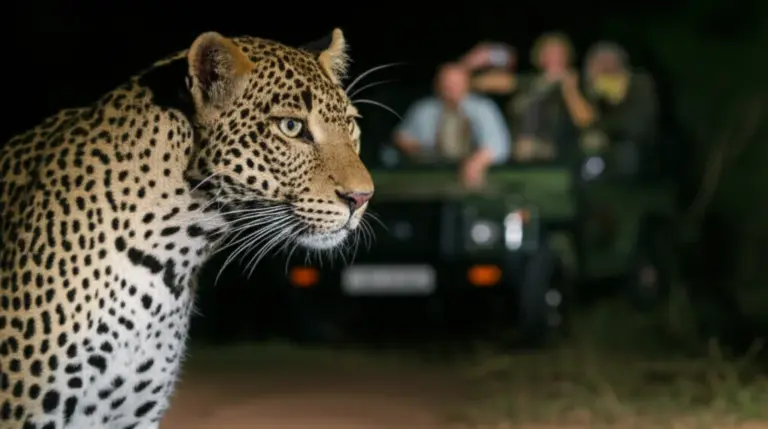
Artificial light, even low-intensity red light favored by some operators, can disrupt the foraging patterns of nocturnal insects, which in turn affects insectivorous predators. Furthermore, consistent vehicle noise or human chatter can cause animals to abandon prime feeding or breeding grounds. For species like the endemic Laotian Rock Rat (though rarely seen by tourists), habitat disturbance can be catastrophic.
To mitigate this, robust training for guides on light discipline is non-negotiable. Guides must understand that the goal is observation, not interaction or guaranteed sighting. This adherence to observation protocols is what separates genuine eco-tourism from harmful commercial exploitation.
We must acknowledge the inherent stress tourism places on wildlife. To truly practice **ethical night safaris in Laos**, operators must commit to low visitor density and strict distance requirements.
Best Practices for Responsible Night Safari Operations
Establishing clear, enforced guidelines is the cornerstone of sustainability. These guidelines should cover:
- Strict group size limits (e.g., maximum 4 tourists per vehicle/group).
- Mandatory use of non-disruptive lighting (red spectrum or very dim white light, only when necessary).
- Zero tolerance for feeding, touching, or approaching wildlife.
- Use of established, existing trails only to minimize habitat degradation.
- Regular monitoring by conservation scientists to track animal behavior changes.
Case Study: Assessing Conservation Impact in Southeast Asia
While specific long-term data for Laos is still developing, regional studies from Thailand and Vietnam show that poorly regulated night viewing often leads to habituation, where animals lose their natural fear of humans, increasing their vulnerability to poaching or road accidents. Conversely, well-monitored programs, often in partnership with NGOs, have successfully used night viewing revenue to fund crucial wildlife corridor protection. The difference lies in governance and scientific oversight.
Conclusion: Charting a Sustainable Future for Nocturnal Tourism in Laos
The potential for night safaris to bolster conservation funding and provide unique experiences for visitors to Laos is undeniable. However, the pursuit of revenue cannot override the responsibility to protect the very assets tourists come to see. Success hinges entirely on prioritizing scientific understanding and strict regulation to ensure that **ethical night safaris in Laos** remain a net positive for the region’s incredible biodiversity. The future depends on collaboration between government agencies, tourism operators, and conservationists to set global benchmarks for responsible nocturnal engagement.