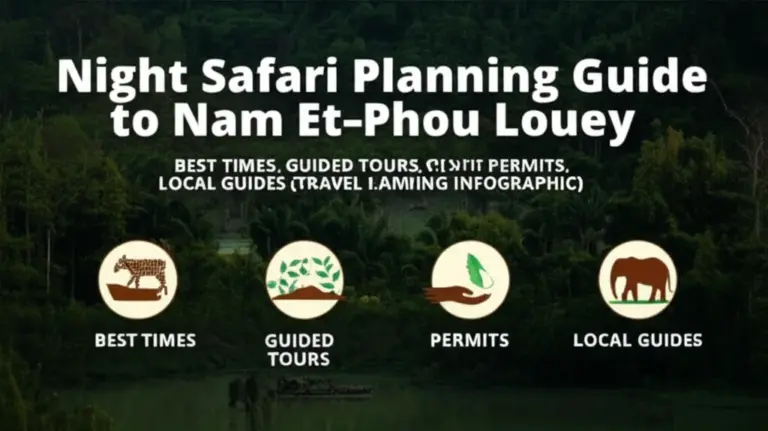
How to plan your trip to Nam Et–Phou Louey Night Safari: best times, tours, permits, and local guides
- How to plan your trip to Nam Et–Phou Louey Night Safari: best times, tours, permits, and local guides
- Understanding the Nam Et–Phou Louey Night Safari Experience
- When to Visit: Best Times and Seasonal Considerations
- Securing Your Adventure: Permits, Bookings, and Essential Paperwork
- Choosing Your Nam Et–Phou Louey Night Safari Tour Package
- The Crucial Role of Local Guides and Community Tourism
- Essential Packing List for the Jungle
- คำถามที่พบบ่อย (FAQ)
The Nam Et–Phou Louey Night Safari represents one of the most authentic and thrilling wildlife experiences in Southeast Asia. Located in the northern Lao PDR, this protected area offers unparalleled opportunities to spot nocturnal species. Successfully planning your Nam Et–Phou Louey Night Safari requires diligence regarding permits, timing, and guide selection. This comprehensive guide covers every crucial step to ensure your jungle adventure is unforgettable and responsible.
Understanding the Nam Et–Phou Louey Night Safari Experience
Nam Et–Phou Louey National Protected Area (NPA) is Laos’ largest protected area, a vital sanctuary for endangered species like the Red-shanked Douc Langur and various civets. The Night Safari component, largely managed through Community-Based Ecotourism (CBET) projects, is designed to be low-impact yet high-reward. Unlike typical tourist attractions, this is genuine wilderness tracking. Visitors follow local experts deep into the forest after dusk, relying solely on headlamps and trained ears to locate wildlife. Expertise in this environment is paramount, setting the stage for why planning is so critical.
When to Visit: Best Times and Seasonal Considerations
Timing your visit directly impacts animal sightings and the comfort of your trek. The climate in Northern Laos is distinctly divided into wet and dry seasons, which dictates trail conditions and animal behavior.
The Dry Season Advantage (October to April)
The optimal time to visit is during the dry season, generally running from October through April. During these months, humidity drops, temperatures are more manageable for strenuous hiking, and trails are less likely to be flooded or excessively muddy. Animals tend to congregate near reliable water sources, potentially increasing your chances of spotting elusive nocturnal mammals.
The wet season brings heavy rainfall, making the jungle dense, trails slippery, and hiking significantly more challenging. While wildlife might be more active near temporary pools, the overall experience can be hampered by constant rain and high insect activity. Tours may be canceled or altered due to safety concerns. If you must travel during this time, ensure your guide is experienced in managing these conditions.
Securing Your Adventure: Permits, Bookings, and Essential Paperwork
Unlike many tourist sites in Laos, the Nam Et–Phou Louey Night Safari operates under strict conservation mandates. Planning ahead for logistics is mandatory, not optional.
The Permit Process Explained
Access to the core wildlife viewing areas requires official authorization from the Provincial Department of Forestry and the National Protected Area management. These permits are generally secured *through* your registered tour operator or the local CBET office in Viengxai or Houaphanh Province. Attempting to self-organize entry without the proper paperwork is strictly prohibited and puts both you and the local conservation efforts at risk. Always verify that your booking explicitly includes all required government fees and permits.
Booking Official Tours vs. Independent Arrangements
We strongly advise against independent arrangements. The entire system is built around supporting local communities who act as stewards of the forest. Book through recognized tour agencies that have direct partnerships with the CBET project. This ensures the revenue directly benefits local patrols, anti-poaching efforts, and guide training, upholding the E-E-A-T principles of responsible travel.
Choosing Your Nam Et–Phou Louey Night Safari Tour Package
Tours vary significantly in duration and intensity. Your choice should align with your physical fitness and desired level of immersion.
Day Treks vs. Overnight Expeditions
What to Expect on a Guided Night Walk
The night walk is a sensory experience. Guides move slowly and silently. You will be listening for movements in the undergrowth or calls in the canopy. Common sightings include various species of deer, civets, loris, and a vast array of amphibians and owls. Visibility is low, which is why the expertise of your local guide is non-negotiable.
A glimpse into the dense canopy environment you will explore.
The Crucial Role of Local Guides and Community Tourism
The success of the Nam Et–Phou Louey Night Safari is intrinsically linked to the local communities living near the protected area, particularly those from the Hmong ethnic group who possess generations of jungle knowledge.
Why Local Expertise is Non-Negotiable
A foreign guide cannot replicate the tracking skills of a local expert. They know the subtle signs—a broken twig, a specific scent, or the faint sound of an animal moving through dense foliage—that signal a rare sighting. Trust their judgment regarding safety, trail difficulty, and animal distance. This deep, lived experience is what transforms a standard walk into a world-class wildlife expedition.
Supporting Community-Based Ecotourism (CBET)
The CBET model is designed to provide sustainable income streams that incentivize local people to protect the forest rather than exploit it through hunting or logging. By participating in the safari, you are directly contributing to anti-poaching patrols and the long-term viability of this crucial ecosystem. This commitment to ethical travel aligns perfectly with modern sustainable tourism practices.
Essential Packing List for the Jungle
Preparation is key, especially for night excursions where conditions can change rapidly. Pack light, but pack smart.
- Footwear: Sturdy, waterproof hiking boots are essential. Trails can be extremely uneven.
- Clothing: Long sleeves and long trousers made of quick-drying, light material to protect against insects and scratches. Avoid bright colors.
- Insect Repellent: High DEET content repellent is highly recommended for night treks.
- Lighting: Bring a reliable headlamp with extra batteries. Guides provide some light, but personal backup is crucial.
- Hydration: Water is heavy, but necessary. Plan to carry at least 2 liters per person for longer treks.
คำถามที่พบบ่อย (FAQ)
Here are answers to the most common logistical questions regarding the safari experience.
Is it safe to travel to the Nam Et-Phou Louey area for the night safari?
Yes, the area managed by the CBET project is considered safe for tourists when following the instructions of the officially assigned guides. The primary risks are environmental (insects, uneven terrain), which are mitigated by proper gear and expert guidance.
Can I see tigers or leopards during the Nam Et–Phou Louey Night Safari?
While Nam Et–Phou Louey is home to Indochinese Tigers and Clouded Leopards, sightings are extremely rare, especially during the short night tours. The safari focuses on reliable sightings of medium-sized mammals, civets, and diverse birdlife.
How far in advance do I need to book my tour?
It is highly recommended to book at least 4 to 6 weeks in advance, especially if traveling during the peak dry season (November to February), as capacity for guided groups is intentionally limited to maintain the low-impact nature of the tour.
Are the guides fluent in English?
The primary guides are local experts who speak Lao, but most recognized tour operators ensure that the accompanying English-speaking liaison or secondary guide is proficient enough to communicate safety information and answer general wildlife questions.
References