Appropriate Dress Codes Explained: Clothing Guidelines for Men, Women, and Children (Including Long-tail Tips for Hot Weather)
- Appropriate Dress Codes Explained: Clothing Guidelines for Men, Women, and Children (Including Long-tail Tips for Hot Weather)
- Understanding the Cultural Context of Laos
- Appropriate Dress Codes Explained for Men
- Appropriate Dress Codes Explained for Women
- Clothing Guidelines for Children
- Long-tail Tips for Hot Weather and Humidity
- Special Requirements for Temples and Sacred Sites
- คำถามที่พบบ่อย (FAQ)
- Can I wear shorts in Laos?
- Do I need to wear a ‘Sinh’ as a female tourist?
- What is the best fabric for the Lao climate?
When planning a trip to the beautiful, serene land of Laos, understanding the local customs is as important as booking your flights. Appropriate Dress Codes Explained is not just a guide for fashion, but a roadmap for showing respect to a culture deeply rooted in Buddhist traditions and modesty. Whether you are wandering through the night markets of Luang Prabang or visiting the sacred Pha That Luang in Vientiane, your choice of attire will significantly influence your interactions with the local community.
Understanding the Cultural Context of Laos
Laos is a conservative country where modesty is highly valued. The local people generally dress neatly and conservatively. While the younger generation in cities like Vientiane might embrace modern trends, the overall expectation for tourists remains one of modesty. When Appropriate Dress Codes Explained are followed, travelers find that locals are more welcoming and helpful. Dressing inappropriately, particularly at religious sites, can be seen as a sign of disrespect and may even result in being denied entry.
Appropriate Dress Codes Explained for Men
For men, the guidelines are relatively straightforward but firm regarding certain environments. In casual settings, t-shirts and shorts are acceptable, provided the shorts are not too short (ideally reaching the knee). However, when visiting government offices or formal establishments, a collared shirt (like a polo or button-down) and long trousers are preferred.
- Lightweight linen or cotton trousers
- Polo shirts or short-sleeved button-downs
- Sleeveless tank tops (singlets) in public spaces
Appropriate Dress Codes Explained for Women
Women’s clothing guidelines in Laos emphasize covering the shoulders and knees. This is particularly crucial when entering temples (Wats). The traditional Lao skirt, known as a ‘Sinh’, is a beautiful wrap-around garment made of silk or cotton. While tourists are not required to wear a Sinh everywhere, wearing one when visiting temples is a wonderful gesture of cultural appreciation.
| Setting | Recommended Attire |
|---|---|
| Temples | Shoulders covered, long skirt or trousers |
| City Walking | T-shirts, capris, or midi-dresses |
| Rural Areas | Modest clothing, avoid bikinis or short shorts |
Clothing Guidelines for Children
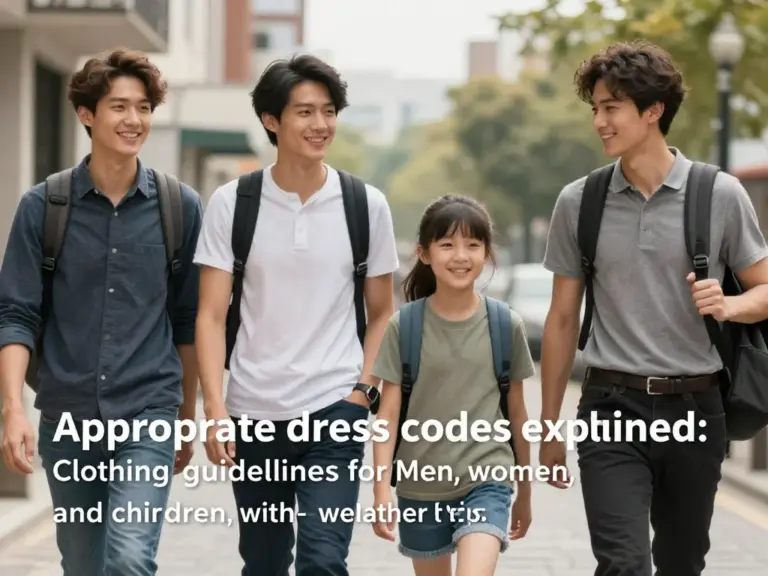
Children have more flexibility, but it is still wise to dress them modestly to set a good example. For young children, breathable cotton outfits are best to manage the heat. As children reach their teenage years, they should begin to follow the adult guidelines for Appropriate Dress Codes Explained, especially in religious contexts.
Long-tail Tips for Hot Weather and Humidity
Laos can be incredibly hot and humid, especially from March to May. To stay comfortable while adhering to Appropriate Dress Codes Explained, focus on fabric choice. Natural fibers like cotton, linen, and hemp allow for better air circulation and moisture-wicking than synthetic materials. Light colors reflect the sun’s rays, keeping you cooler than dark shades. Additionally, a wide-brimmed hat and UV-protective sunglasses are essential for outdoor exploration.
Special Requirements for Temples and Sacred Sites
Temples are the heart of Lao community life. When entering a temple complex:
1. Remove your shoes and hat before entering the inner sanctuary.
2. Ensure your shoulders and knees are covered (both men and women).
3. Avoid clothing with offensive graphics or slogans.
4. If you are wearing a sleeveless top, carry a light scarf or sarong to wrap around your shoulders.
คำถามที่พบบ่อย (FAQ)
References
Official Laos Tourism Portal
Lonely Planet: Laos Etiquette and Dress