What to Expect Inside: cave formations, river passages, wildlife encounters, photography tips, and interpreting karst features for travelers
- What to Expect Inside: cave formations, river passages, wildlife encounters, photography tips, and interpreting karst features for travelers
Laos, renowned for its dramatic limestone karst topography, offers some of Southeast Asia’s most breathtaking underground adventures. Understanding Laos cave exploration expectations is key to transforming a simple tour into an immersive geological and ecological journey. From the massive chambers of Tham Kong Lor to hidden jungle grottos, this guide prepares you for what lies beneath the surface.
This exploration is not just about viewing rocks; it’s about reading the history written in stone, navigating subterranean rivers, and respecting the unique ecosystems that thrive in perpetual twilight. We dive deep into the formations, the wildlife, and the technical skills needed to capture these hidden wonders.
The Majesty of Laos’ Karst Landscape
The bedrock of much of central and northern Laos is dominated by karst—a landscape formed from the dissolution of soluble rocks such as limestone, dolomite, or gypsum. This process creates dramatic sinkholes, towering pinnacles, and, most importantly for travelers, extensive cave systems. These systems are living geological laboratories, constantly shaped by water over millions of years.
Delving Deep: Understanding Cave Formations
When you enter a Lao cave, you are stepping into an environment where water is the primary architect. Recognizing the formations you see enhances your appreciation exponentially.
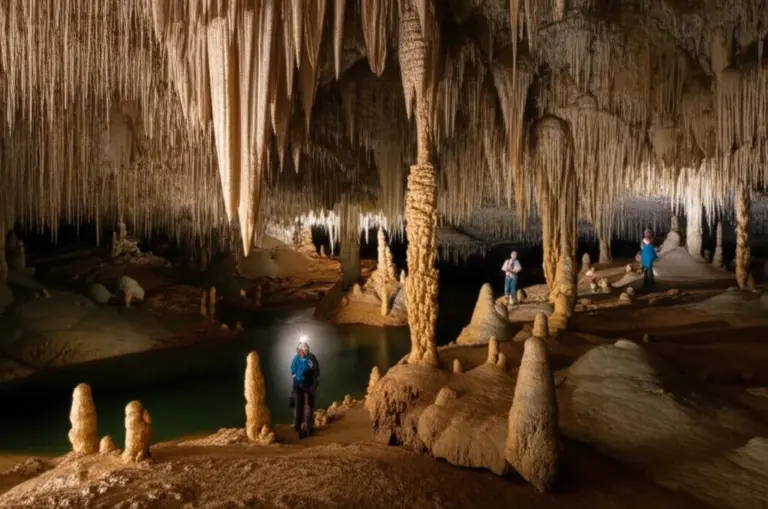
Stalactites, Stalagmites, and Flowstone
These are the iconic speleothems:
- Stalactites: Formations that hang from the ceiling, created as mineral-rich water drips slowly.
- Stalagmites: Formations that grow upwards from the floor, built up by the deposits left by dripping water.
- Flowstone: Sheets of calcite that cascade down walls or slopes, resembling frozen waterfalls.
The speed of formation is incredibly slow—often less than a millimeter per century—making every visible structure a testament to deep time.
Interpreting Karst Features for Travelers
Look for evidence of past water levels. High-water marks on the walls indicate ancient flood stages, while ‘gours’ (rimstone dams) show where water pooled and deposited minerals over time. Understanding these features helps you mentally reconstruct the cave’s history.
Perhaps the most thrilling aspect of caves like Tham Kong Lor in Khammouane province is the subterranean river passage. Navigating these requires specific preparation. You will typically travel by small, sturdy motorized longtail boat or canoe, guided by local experts.
Expect the air temperature to drop slightly and humidity to increase significantly once you move away from the cave entrances. The soundscape shifts entirely to the gentle lapping of water and the occasional echo of the boat engine. Visibility can be near zero without artificial light, emphasizing the importance of your guide and your headlamp.
For a visual guide to the incredible scale of these river caves, watch this immersive tour:
Wildlife Encounters: What Lurks in the Darkness
The cave ecosystem supports specialized life adapted to low-light environments. While large mammals are rare deep inside, the diversity of invertebrates and specialized vertebrates is fascinating.
The most common and visible residents are bats. Caves in Laos often serve as crucial roosting sites for hundreds or thousands of individuals. While fascinating, remember to keep a respectful distance, as disturbing large colonies can impact their fragile environment.
Deeper within the river passages, you might spot specialized fish or blind cave shrimp, which have adapted over millennia to life without sight. Always follow the guidance of your local operator regarding interaction with wildlife.
Mastering Cave Photography in Low Light
Capturing the grandeur of these subterranean halls requires technical skill, especially when dealing with the dynamic range between bright daylight at the entrance and near-total darkness inside. Good photography is essential to document your Laos cave exploration expectations.
Essential Gear and Settings
Do not rely solely on your phone camera. Professional or dedicated enthusiast gear is recommended:
- Tripod: Non-negotiable. Long exposures (several seconds) are required.
- Fast Lens: An aperture of f/2.8 or wider helps gather maximum light.
- External Light Source: A small LED panel or speedlight, used sparingly and indirectly, can highlight specific formations without washing out the scene.
- RAW Format: Shooting in RAW allows you to recover detail from the deep shadows during post-processing.
When photographing the river passages, be mindful of moisture. Use protective bags for your electronics when not in use.
Planning Your Laos Cave Exploration Excursion
Successful caving in Laos hinges on choosing the right operator and respecting local customs. Always book through reputable, locally-based tour companies that prioritize safety and environmental stewardship. They possess the necessary permits and local knowledge.
| Preparation Aspect | Recommendation |
|---|---|
| Footwear | Sturdy, waterproof hiking boots or reliable water shoes. |
| Lighting | Bring your own high-lumen, waterproof headlamp, even if the tour provides one. |
| Environment | Never touch formations; natural oils halt mineral growth. Pack out all trash. |
By setting realistic Laos cave exploration expectations—embracing the dark, respecting the geology, and preparing for wet conditions—you ensure a safe and profoundly rewarding adventure into the heart of the Lao karst landscape.
คำถามที่พบบ่อย (FAQ)
References
For further reading on the geology and conservation efforts in the region, consult local geological surveys and reputable Laos tourism portals. Official Laos Tourism Portal
- Caving Adventures: Exploring Tham Kong Lor and Vang Vieng’s Karst Systems — Ultimate Guide for Explorers and Conservationists
- Overview of Tham Kong Lor and Vang Vieng Karst Landscapes: geology, history, and why these caves matter for tourism and biodiversity
- Planning Your Trip: best seasons, guided tours, safety tips, permits, and local operator recommendations for Tham Kong Lor and Vang Vieng cave excursions