Carbon-Light Laos: How the China–Laos Railway Cuts Emissions and Transforms Sustainable Transport
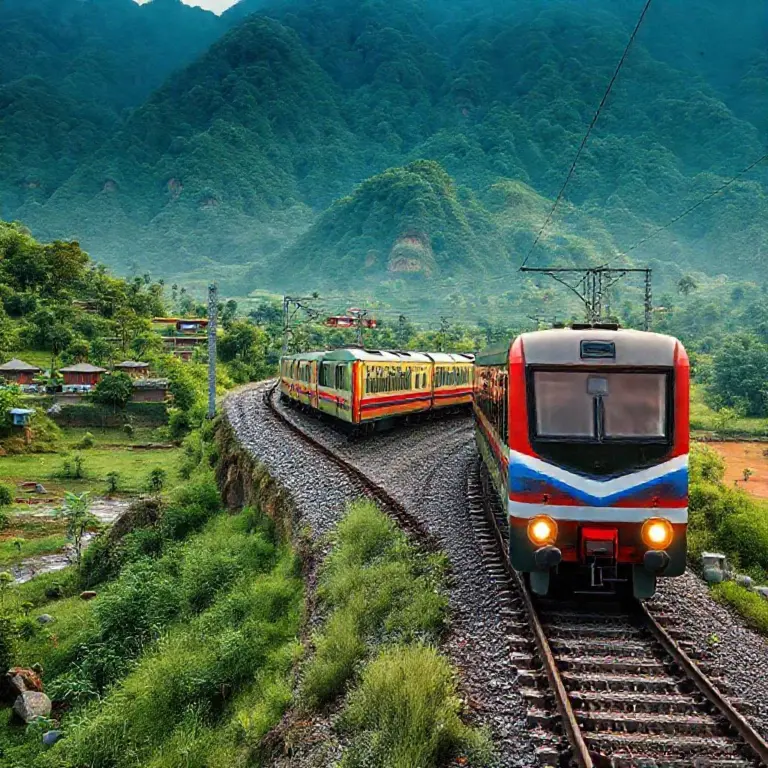
The opening of the China–Laos Railway (also known as the Kunming–Vientiane Railway) marks a monumental shift not just for regional connectivity, but also for Laos’s environmental aspirations. For a nation prioritizing green development, the introduction of this high-speed electric rail line presents a powerful, tangible path toward a China–Laos Railway Cuts Emissions future. As Laos welcomes a surge in visitors keen to explore its natural beauty, understanding how this infrastructure project champions sustainability is crucial for the modern eco-conscious traveler. This railway is more than just steel and concrete; it is the backbone of a greener Lao PDR.
The Environmental Imperative: Why Rail Matters in Laos
Laos, often referred to as the ‘Battery of Southeast Asia’ due to its hydropower resources, is deeply committed to sustainable development goals. Historically, the movement of goods and people relied heavily on aging road networks, leading to significant localized pollution, high fuel consumption, and increased road maintenance demands. The shift to electrified rail directly addresses these challenges.
Quantifying the Carbon Reduction
While precise, real-time data is proprietary, the general principles of electric rail versus diesel trucking offer compelling figures. A single electric train can replace hundreds of heavy-duty trucks. When the electricity powering the train comes from Laos’s extensive hydropower resources—which account for nearly 90% of its domestic electricity generation—the operational carbon footprint approaches zero. This is the core mechanism by which the China–Laos Railway Cuts Emissions in the logistics sector.
- Reduced Fuel Dependency: Decreases the need to import fossil fuels.
- Lower Localized Emissions: Eliminates tailpipe emissions (NOx, SOx, particulate matter) along the transport corridor.
- Energy Efficiency: Rail transport is inherently more energy-efficient per ton-kilometer than road transport.
Transforming Tourist Mobility and Experience
For Laos tourism, the railway is a game-changer. It connects the capital, Vientiane, to the northern tourism hubs like Vang Vieng and Luang Prabang in a fraction of the time previously required by road. This efficiency doesn’t just save time; it promotes more sustainable travel choices for visitors. Tourists prioritizing lower-impact travel now have a viable, comfortable alternative to long bus journeys, directly supporting the nation’s green branding.
The Vang Vieng and Luang Prabang Effect
Vang Vieng, once infamous for its high-speed adventure tourism, is now more accessible for those seeking its stunning karst landscapes in a more relaxed manner. Similarly, the UNESCO World Heritage city of Luang Prabang is now only a few hours from Vientiane. This accessibility encourages travelers to spend more time in the region rather than rushing through, potentially fostering deeper engagement with local, sustainable tourism operators.
Travel Time Comparison
| Route | Road (Approx.) | Rail (Approx.) |
|---|---|---|
| Vientiane to Vang Vieng | 4–5 hours | 1.5 hours |
| Vientiane to Luang Prabang | 8–10 hours | 3 hours |
E-Tourism Potential
The railway opens up previously remote areas to controlled, high-volume, low-impact tourism. By concentrating passenger flow onto the rail corridor, pressure on peripheral road infrastructure and sensitive natural sites can be managed more effectively.
Integrating Green Infrastructure and Future Development
The commitment to a carbon-light future extends beyond just the train tracks. The construction itself adhered to modern environmental standards, minimizing habitat disruption where possible, and the stations are being developed as integrated transport hubs designed for energy efficiency. Furthermore, the railway facilitates the transport of green energy components, such as turbines or solar panels, aiding Laos’s transition to renewable energy production.
The Role of Hydropower in Rail Electrification
Laos’s abundant water resources are the silent partner in this emission reduction strategy. The electricity consumed by the railway is overwhelmingly generated domestically from clean sources. This synergy between infrastructure investment and renewable energy production is a world-class example of how developing nations can leapfrog past heavy carbon reliance. The continuous operation of the China–Laos Railway Cuts Emissions daily by keeping diesel trucks off the road, powered instead by the country’s own clean energy reserves.
To showcase the integration of this modern marvel with the natural landscape, here is a visual representation of the Vientiane station area, a gateway to the South and the core of the Lao transportation network.
Experience the Journey
Witness the scale and modernity of the railway system and its impact on the Lao landscape. This video provides insight into the engineering achievement and the passenger experience that defines low-carbon travel in the region.
The long-term vision for Laos involves leveraging this rail corridor not just for current traffic, but for future green freight operations, potentially including the export of low-carbon hydropower products to neighboring countries. This solidifies the railway’s role as an enduring pillar of sustainable economic transformation.
คำถามที่พบบ่อย (FAQ)
References
For further reading on Laos’s sustainability commitments and infrastructure projects, please explore official reports from the Lao Ministry of Natural Resources and Environment and regional economic development reports.
Asian Development Bank Report on Regional Connectivity
International Renewable Energy Agency (IRENA) Data on Hydropower
- How the China–Laos Railway Reduces Carbon Footprint — analysis of modal shift, freight vs. road emissions, and lifecycle emissions of rail infrastructure
- Economic and Environmental Co-benefits for Laos — impacts on local industries, job creation, and incentives for low-carbon development
- Integration with Regional Green Corridors and Supply Chains — connectivity with Belt and Road, cross-border logistics, and opportunities for decarbonized trade routes