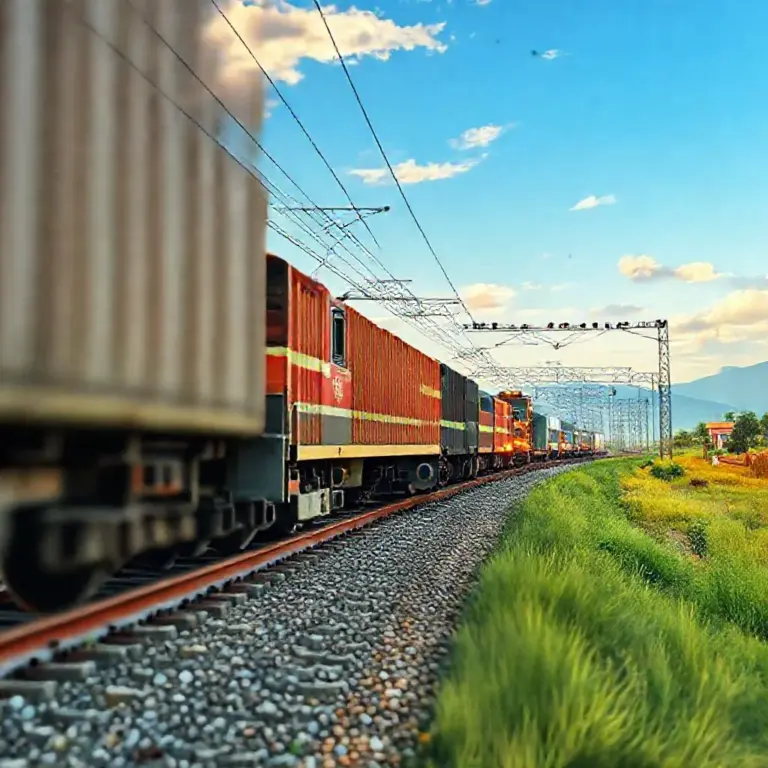
How the China–Laos Railway Reduces Carbon Footprint — analysis of modal shift, freight vs. road emissions, and lifecycle emissions of rail infrastructure
- How the China–Laos Railway Reduces Carbon Footprint — analysis of modal shift, freight vs. road emissions, and lifecycle emissions of rail infrastructure
The opening of the China–Laos Railway (also known as the Kunming-Vientiane Railway) marked a monumental shift in regional connectivity, but its significance extends far beyond mere travel time reduction. For Laos, a nation increasingly focused on sustainable development and eco-tourism, understanding How the China–Laos Railway Reduces Carbon Footprint is crucial. This analysis dives deep into the environmental benefits derived from modal shift, the stark contrast in emissions between rail freight and road transport, and the broader lifecycle implications of this massive infrastructure project. Tourists and stakeholders alike are keen to see how this modern marvel aligns with a greener future for the Lao PDR.
The primary environmental advantage of modern electric rail systems lies in their energy efficiency per tonne-kilometer or passenger-kilometer. When cargo and travelers transition from carbon-intensive road transport—namely diesel trucks and older buses—to the electrified railway, the immediate reduction in greenhouse gas (GHG) emissions is substantial. This transition is the cornerstone of the railway’s contribution to a lower carbon economy for Laos.
The Power of Modal Shift: From Road to Rail
Modal shift refers to the reallocation of traffic from one mode of transport to another. In the context of Laos, the shift is overwhelmingly from heavy-duty trucking along the challenging mountainous highways to the high-capacity, high-efficiency railway. This shift yields immediate, measurable environmental returns.
Freight Emissions Comparison: Truck vs. Train
Road freight in Southeast Asia is notoriously carbon-intensive. Trucks burn significant amounts of fossil fuels, often operating inefficiently due to traffic congestion, steep gradients, and poor road conditions. In contrast, the China-Laos Railway is primarily electric-powered, drawing energy that is increasingly sourced from regional hydropower projects.
Studies comparing standard diesel truck transport versus electrified rail consistently show that rail can reduce CO2 emissions by 75% or more for equivalent freight volumes. For Laos, this means that moving essential goods, agricultural products, and construction materials via rail immediately removes thousands of truck journeys from the road network annually, directly mitigating local air pollution and reducing national transport sector emissions.
- Energy Efficiency: Electric trains require significantly less energy per unit of freight moved compared to internal combustion engines.
- Reduced Congestion: Fewer trucks on major routes like Route 13 lead to smoother traffic flow, reducing idling time and associated fuel wastage for the remaining road traffic.
- Safety & Infrastructure Wear: While not strictly carbon-related, reduced heavy vehicle traffic lessens road degradation, reducing the need for frequent, emission-heavy road repair projects.
Passenger Travel: A Greener Way to See Laos
While the environmental impact of passenger cars and buses is lower than heavy freight, the sheer volume of potential tourists utilizing the railway makes a difference. Modern high-speed electric trains offer superior energy consumption per passenger compared to conventional diesel buses, especially when operating at high occupancy. This makes the railway an essential tool for managing the growing environmental impact of tourism growth in key northern destinations like Vang Vieng and Luang Prabang.
The railway not only connects people but also connects them to the environmental narrative of Laos. Responsible tourism operators are already leveraging the railway as a selling point for low-impact travel itineraries.
Lifecycle Emissions Analysis of Rail Infrastructure
Assessing the true carbon footprint requires looking beyond daily operations and considering the entire lifecycle—from construction to decommissioning. This includes the ’embodied carbon’ in the massive amounts of concrete, steel, and machinery required to build thousands of kilometers of track, tunnels, and bridges.
Construction Phase Embodied Carbon
The construction phase of any major infrastructure project inevitably generates high emissions. For the China-Laos Railway, the scale of tunneling through karst landscapes and building elevated viaducts meant significant upfront carbon expenditure. However, this initial outlay must be weighed against the operational lifespan, which is projected to be 100 years or more.
The long operational life is what ultimately amortizes the construction carbon debt. Since the operational phase (powered by relatively clean electricity) is so low-emission compared to continuous road construction and maintenance cycles, the railway is expected to achieve a net carbon payback within a few decades.
Operational Energy Sources: The Electrification Advantage
The key determinant in the railway’s long-term success in reducing the carbon footprint is the source of its electricity. Laos has vast hydropower potential, and much of the energy supplied to the line is generated domestically from clean, renewable sources. This contrasts sharply with road transport, which is entirely dependent on imported, refined petroleum products.
| Factor | Road Freight (Diesel) | Rail Freight (Electric) | Environmental Benefit |
|---|---|---|---|
| Fuel Source | Fossil Fuels (Imported) | Hydropower (Domestic/Regional) | Reduced reliance on oil, lower lifecycle emissions. |
| Energy Conversion Efficiency | Low (Engine Heat Loss) | High (Electric Motor Efficiency) | Less primary energy needed per ton-km. |
| Local Air Quality | High SOx, NOx, Particulates | Negligible at point of use | Improved Vientiane/Luang Prabang air quality. |
The Role of Rail in Sustainable Tourism Planning
For Laos Tourism, the railway offers a unique narrative: accessible modern travel that respects the environment. Promoting this aspect is vital for attracting the high-value, environmentally conscious traveler. The railway bypasses environmentally sensitive corridors that road construction might have otherwise encroached upon, consolidating traffic onto a single, optimized corridor.
Furthermore, by facilitating quicker, more reliable transport of goods, the railway can potentially reduce the need for localized, high-emission transport in remote areas, supporting local producers more efficiently.
Conclusion: A Green Corridor for Laos’s Future
The analysis confirms that How the China–Laos Railway Reduces Carbon Footprint is primarily achieved through the decisive modal shift away from diesel trucking and the utilization of electric traction powered by renewable energy. While the upfront embodied carbon of construction is significant, the projected operational lifespan ensures that this infrastructure will serve as a long-term decarbonization asset for the Lao economy and its burgeoning tourism sector. Embracing this green corridor is key to balancing rapid development with environmental stewardship.
คำถามที่พบบ่อย (FAQ)
This section addresses common queries regarding the railway’s environmental impact for stakeholders and tourists.
References
For further reading on the environmental assessments and technical specifications:
- Asian Development Bank Environmental and Social Impact Assessment
- International Energy Agency: Decarbonizing Transport with Rail
- UN Framework Convention on Climate Change (General Climate Reports)
- Carbon-Light Laos: How the China–Laos Railway Cuts Emissions and Transforms Sustainable Transport
- Economic and Environmental Co-benefits for Laos — impacts on local industries, job creation, and incentives for low-carbon development
- Integration with Regional Green Corridors and Supply Chains — connectivity with Belt and Road, cross-border logistics, and opportunities for decarbonized trade routes