What is The Living Land Company and why Luang Prabang is the perfect place for an authentic rice farming experience
- What is The Living Land Company and why Luang Prabang is the perfect place for an authentic rice farming experience
- Discovering The Living Land Company: A Model of Sustainable Tourism
- Luang Prabang: The Cultural Heart of Laos and Agricultural Heritage
- The Authentic Rice Farming Experience Luang Prabang Offers: The 13 Steps
- Why Choose Living Land for Your Lao Adventure?
- Location of The Living Land Company
- คำถามที่พบบ่อย (FAQ)
Luang Prabang, a UNESCO World Heritage site nestled in the mountains of Laos, is renowned not only for its stunning temples and French colonial architecture but also for its deeply rooted cultural traditions. Among the most vital of these traditions is the cultivation of rice. For travelers seeking more than just sightseeing, The Living Land Company offers an immersive, hands-on, and truly authentic rice farming experience Luang Prabang provides, transforming a simple trip into a profound cultural exchange.
Discovering The Living Land Company: A Model of Sustainable Tourism
The Living Land Company is not merely a tourist attraction; it is a sustainable organic farm and community project established near Luang Prabang. Founded with the mission to preserve traditional Lao farming techniques, provide educational opportunities, and support local families, it stands as a shining example of responsible eco-tourism. Unlike commercial operations, Living Land focuses on the entire lifecycle of rice—from planting the seeds to harvesting and preparing the final dish.
The Mission and Vision of Living Land
The core philosophy of The Living Land Company revolves around sustainability and education. They practice organic farming, ensuring that the land remains healthy and productive without relying on harmful chemicals. By employing local villagers and providing fair wages, the company helps combat rural poverty and keeps valuable ancestral knowledge alive. Visitors don’t just observe; they become temporary farmers, understanding the immense effort required to produce the staple crop of Southeast Asia.
Beyond the Farm: Community and Education
The Living Land also operates a social enterprise component, using tourism revenue to fund various community projects, including English classes for local children and support for disabled villagers. This integrated approach ensures that every dollar spent on the authentic rice farming experience Luang Prabang offers directly benefits the surrounding community, enhancing the overall E-E-A-T (Experience, Expertise, Authoritativeness, Trustworthiness) of the venture.
Luang Prabang: The Cultural Heart of Laos and Agricultural Heritage
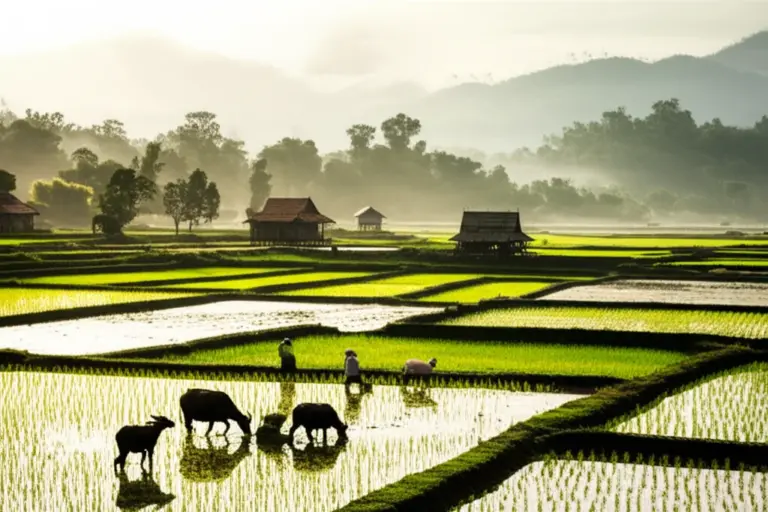
Luang Prabang provides the perfect backdrop for such an endeavor. Its location, surrounded by lush, fertile valleys fed by the Mekong and Nam Khan rivers, makes it agriculturally significant. The pace of life here is slower, allowing for a deeper appreciation of the labor-intensive processes involved in rice production.
The Unique Landscape and Climate
Laos’s tropical monsoon climate dictates the rhythm of rice farming. The wet season (May to October) is crucial for transplanting, while the dry season allows for harvest. This seasonal cycle is integrated into the Living Land experience, ensuring visitors see the authentic conditions under which Lao farmers operate throughout the year.
Preserving Tradition in a UNESCO World Heritage Site
As a protected heritage site, Luang Prabang emphasizes cultural preservation. The Living Land Company contributes significantly to this by showcasing traditional methods—such as using water buffalo for ploughing—that are rapidly being replaced by machines elsewhere. This commitment to traditional practices is what makes the experience so valuable and genuinely authentic.
The Authentic Rice Farming Experience Luang Prabang Offers: The 13 Steps
The highlight of the visit is the detailed, step-by-step participation in the rice cultivation process. Guides lead tourists through the 13 distinct stages necessary to transform a tiny seed into sticky rice, the national dish of Laos. This comprehensive approach differentiates Living Land from simpler farm visits.
Hands-on Stages of Rice Cultivation
| Step | Activity | Engagement |
|---|---|---|
| 1-3 | Seed Preparation & Nursery | Sowing seeds in the nursery bed. |
| 4-5 | Plowing and Harrowing | Working with the famous water buffalo, ‘Mr. Boun’, to prepare the muddy field. |
| 6-7 | Transplanting | Wading into the paddies to transplant young rice shoots—the quintessential authentic rice farming experience Luang Prabang activity. |
| 8-10 | Weeding, Harvesting, and Threshing | Learning traditional methods of cutting the stalks and separating the grain. |
| 11-13 | Milling, Winnowing, and Cooking | Grinding the husks and preparing the sticky rice for consumption. |
Interaction with the Water Buffalo
Perhaps the most memorable part of the tour is working alongside the water buffalo. These gentle giants are integral to Lao agriculture. Guests get to lead the buffalo through the mud, a truly immersive experience that highlights the physical demands of traditional farming before mechanization took hold. This direct interaction offers a glimpse into the heart of Lao rural life.
Why Choose Living Land for Your Lao Adventure?
For tourists interested in Laos Tourism, choosing The Living Land Company means opting for an experience that is ethical, educational, and genuinely engaging. It moves beyond passive observation, offering deep cultural insights that resonate long after the trip is over. It provides a unique lens through which to understand the significance of rice—not just as a food source, but as the foundation of Lao identity and culture.
- Cultural Immersion: Direct participation in the 13 steps of rice farming.
- Sustainability: Supporting an organic farm that prioritizes local employment and traditional methods.
- Family-Friendly: An engaging and memorable activity suitable for all ages.
- Authenticity: A chance to use traditional tools and interact with farm animals in a real working environment.
Location of The Living Land Company
The farm is easily accessible just outside of Luang Prabang town, making transportation simple for tourists staying in the central area. The serenity of the location adds to the overall peaceful and educational nature of the visit.
คำถามที่พบบ่อย (FAQ)
References
- Official Website of The Living Land Company
- UNESCO World Heritage Centre: Luang Prabang
- Laos Tourism Board Information on Eco-Experiences
- The Living Land Company: A Hands-On Rice Farming Experience in Luang Prabang — Complete Visitor’s Guide and What to Expect
- Step-by-step itinerary: a typical hands-on rice farming day, activities included, what to wear and what to bring
- Local culture, sustainable farming practices, and how the experience supports community-based tourism