Day 3–4: Haute Nature Trips Around Luang Prabang — Kuang Si Falls, Pak Ou Caves, River Cruises and Day-Trip Logistics
Welcome to the heart of Southeast Asian serenity. As you transition into the second half of your journey, laos Tourism reveals its most breathtaking natural assets. Luang Prabang is not just a city of temples; it is a gateway to turquoise cascades and mystical riverine caves. Over the next two days, we will venture beyond the UNESCO heritage town to explore the ‘haute nature’ that defines northern Laos, ensuring your logistics are seamless and your experiences are profound.
Day 3: The Turquoise Splendor of Kuang Si Falls
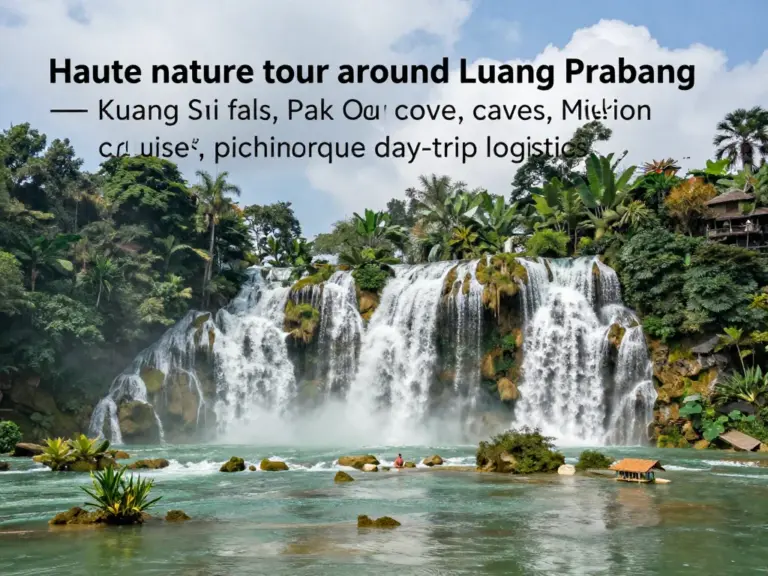
Kuang Si Falls is arguably the crown jewel of laos Tourism. Located approximately 29 kilometers south of Luang Prabang, these multi-tiered limestone waterfalls are famous for their vibrant milky-blue water. The color is a result of light reflecting off the calcium carbonate-rich pools.
Exploring the Falls and Bear Rescue Centre
Upon entering the park, your first stop will be the Tat Kuang Si Bear Rescue Centre. Operated by Free the Bears, this sanctuary houses Asiatic Black Bears (Moon Bears) rescued from the illegal wildlife trade. It is an excellent example of ethical conservation within the region.
- The Main Fall: A 60-meter drop that is spectacular during the wet season and elegant during the dry season.
- Swimming Areas: Specific lower pools are open for swimming. Look for the signs to ensure you are in a permitted area.
- Hiking: There is a steep trail to the top of the falls for those seeking a panoramic view and a quieter environment.
Day-Trip Logistics for Kuang Si
Getting to Kuang Si is straightforward. You have three main options:
| Transport Mode | Estimated Cost (LAK) | Best For |
|---|---|---|
| Shared Tuk-Tuk | 50,000 – 80,000 | Solo travelers & Budget |
| Private Minivan | 300,000 – 500,000 | Families & Groups |
| Motorbike Rental | 150,000 – 200,000 | Adventurous explorers |
Day 4: The Mystic Mekong — Pak Ou Caves and Sunset Cruises
On Day 4, we shift our focus to the mighty Mekong River. The Pak Ou Caves, located at the confluence of the Mekong and Nam Ou rivers, are a spiritual landmark. These two caves—Tham Ting and Tham Theung—house thousands of Buddha statues left by pilgrims over centuries.
The River Journey and ‘Whisky Village’
The most scenic way to reach the caves is by a traditional long-tail boat. The journey upstream takes about 1.5 to 2 hours, offering a front-row seat to the rural life of Laos. Most boat tours include a stop at Ban Xang Hai, commonly known as the ‘Whisky Village,’ where locals produce Lao-Lao (rice whiskey).
Evening: Sunset River Cruises
Conclude your haute nature experience with a luxury sunset cruise. Several operators offer dinner cruises that combine fine Laotian cuisine with the golden hour views of the Luang Prabang skyline. It is the pinnacle of relaxation and a must-do for any high-quality laos Tourism itinerary.
Essential Logistics for Day-Trips
To maximize your enjoyment, keep these logistical tips in mind:
- Currency: While some places accept USD or Thai Baht, Lao Kip (LAK) is preferred for small entrance fees and local snacks.
- Dress Code: When visiting Pak Ou Caves, dress respectfully (shoulders and knees covered) as it is a religious site.
- Hydration: The humidity can be intense. Always carry a reusable water bottle.
คำถามที่พบบ่อย (FAQ)
What is the best time of year to visit Kuang Si Falls?
The best time is during the dry season (November to April) when the water is a clear turquoise. During the monsoon season, the water can turn brown due to runoff.
How long does it take to visit Pak Ou Caves?
A round trip by boat typically takes 4 to 5 hours, including the time spent exploring the caves and the stop at the Whisky Village.
Is it safe to swim at Kuang Si Falls?
Yes, swimming is allowed in designated pools. Always follow the posted signs and be mindful of the slippery rocks.
Can I book these trips through my hotel?
Absolutely. Most hotels and guesthouses in Luang Prabang can arrange private or shared transport for both Kuang Si Falls and Pak Ou Caves.
References
- Official Laos Tourism Portal
- Free the Bears Sanctuary Information
- UNESCO World Heritage – Town of Luang Prabang
- The Perfect 10-Day Laos Itinerary: From Luang Prabang to the 4000 Islands — Complete Day-by-Day Plan, Must-See Sights, Logistics and Budget Tips
- Day 1–2: Discover Luang Prabang — Best Temples, Morning Alms Ceremony, Night Market Tips and Where to Stay
- Day 5–6: From Vientiane to Vang Vieng — Transport Options, Top Activities, Caving, Kayaking and Where to Eat