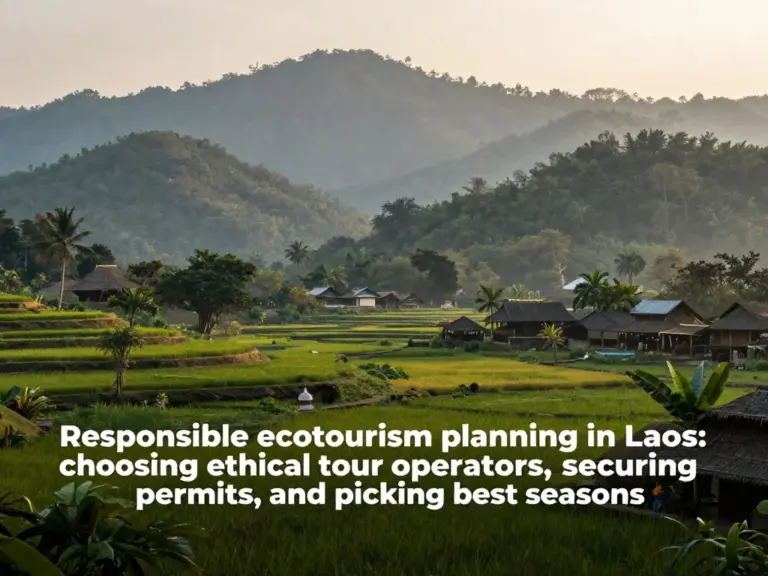
How to Plan a Responsible Trip to Laos: Choosing Ethical Operators, Permits, and Best Seasons
Laos, the land of a million elephants, remains one of Southeast Asia’s most enchanting and authentic destinations. As laos tourism continues to grow, the importance of traveling responsibly cannot be overstated. A responsible trip ensures that your visit supports local communities, preserves the delicate environment, and respects the rich cultural heritage of this landlocked nation. Planning such a journey requires a thoughtful approach to selecting operators, understanding legal requirements, and timing your visit to minimize your footprint while maximizing your experience.
Understanding the Best Seasons for Sustainable Travel
Timing is a crucial element of responsible laos tourism. By choosing the right season, you can help distribute tourism income throughout the year and avoid the strain of over-tourism in peak periods. Laos has two distinct seasons: the dry season and the wet season.
- Dry Season (November to April): This is the peak period. While weather is ideal, popular spots like Luang Prabang can become crowded. Consider visiting in the ‘shoulder’ months of November or March to reduce pressure on infrastructure.
- Wet Season (May to October): Often overlooked, the ‘green season’ offers lush landscapes and fewer crowds. Traveling now supports local businesses during their quietest months, though some rural roads may be challenging.
Choosing Ethical Tour Operators
Selecting the right partner is the cornerstone of ethical travel. In Laos, many operators claim to be ‘eco-friendly,’ but it is essential to look deeper. Ethical operators prioritize local employment, provide fair wages, and minimize environmental impact.
| Criteria | What to Look For |
|---|---|
| Community Support | Does the operator employ local guides from the specific villages you visit? |
| Animal Welfare | Avoid any tours offering elephant riding. Look for sanctuaries focused on observation and rescue. |
| Waste Management | Does the operator provide refillable water stations instead of single-use plastic? |
When booking treks in areas like Nam Et-Phou Louey or Luang Namtha, ensure the agency works directly with the Department of Forestry to ensure conservation fees are actually paid and used for park protection.
Permits and Legal Requirements for Remote Areas
To protect sensitive ecosystems and ethnic minority villages, the Lao government requires specific permits for certain activities. Being a responsible traveler means respecting these laws. Trekking without a licensed guide in protected areas is not only illegal but can also lead to accidental trespassing on sacred lands or unexploded ordnance (UXO) zones.
Most permits are handled by your registered tour operator. If you are exploring independently, always check with the local Provincial Tourism Office. For example, visiting certain caves or waterfalls in Khammouane may require a small entrance fee that funds local village maintenance.
Cultural Etiquette and Giving Back
Respecting Lao culture is a vital part of responsible laos tourism. Laos is a deeply Buddhist country with conservative social norms. Dress modestly (shoulders and knees covered), especially when entering temples. When participating in the morning Alms Giving ceremony in Luang Prabang, keep a respectful distance and avoid using flash photography.
Instead of giving candy or money to children in villages—which encourages begging—consider donating to reputable NGOs like Big Brother Mouse or the Lao Friends Hospital for Children.
คำถามที่พบบ่อย (FAQ)
Is it ethical to visit elephant sanctuaries in Laos?
It is ethical only if the sanctuary follows ‘no-riding’ and ‘no-performance’ policies. Look for centers that focus on rehabilitation, such as the Elephant Conservation Center in Sayaboury.
Do I need a special permit to go trekking?
Yes, most trekking in National Protected Areas requires a permit and a licensed local guide. This ensures your safety and that the fees benefit conservation and local communities.
What is the most eco-friendly way to travel around Laos?
The new high-speed train connecting Vientiane to the northern border is more carbon-efficient than flying. For local transport, using shared minivans or cycling is a great way to reduce your footprint.
How can I ensure my money stays in the local economy?
Eat at local markets, stay in locally-owned guesthouses (homestays), and purchase handicrafts directly from the artisans or certified fair-trade shops like Ock Pop Tok.