The Gibbon Experience: The Ultimate Guide to Treetop Adventures in Bokeo Nature Reserve
- The Gibbon Experience: The Ultimate Guide to Treetop Adventures in Bokeo Nature Reserve
Welcome to the ultimate guide for one of Southeast Asia’s most unique and exhilarating eco-tourism ventures: The Gibbon Experience. Nestled deep within the jungles of Laos’s Bokeo Nature Reserve (now officially the Nam Kan National Park), this is more than just an adventure—it’s a conservation project that puts you high into the canopy via a vast network of zip lines, offering an unparalleled stay in the world’s highest treehouses. For anyone planning Laos tourism, this multi-day treetop journey is an absolute must-do, blending adrenaline with a profound appreciation for nature.
Discovering Bokeo Nature Reserve and The Gibbon Experience
The Bokeo Nature Reserve, now the Nam Kan National Park, is a sprawling, mountainous region in northwestern Laos, bordering Thailand. Established to protect one of the last remaining habitats of the critically endangered Black-Crested Gibbon, the park spans over 1,360 square kilometers of pristine tropical forest. The project began in 1996 as a radical idea to fund conservation through high-value, low-impact tourism. The result? A network of treehouses and zip lines that allow visitors to experience the forest from the gibbons’ perspective—the canopy.
What is The Gibbon Experience?
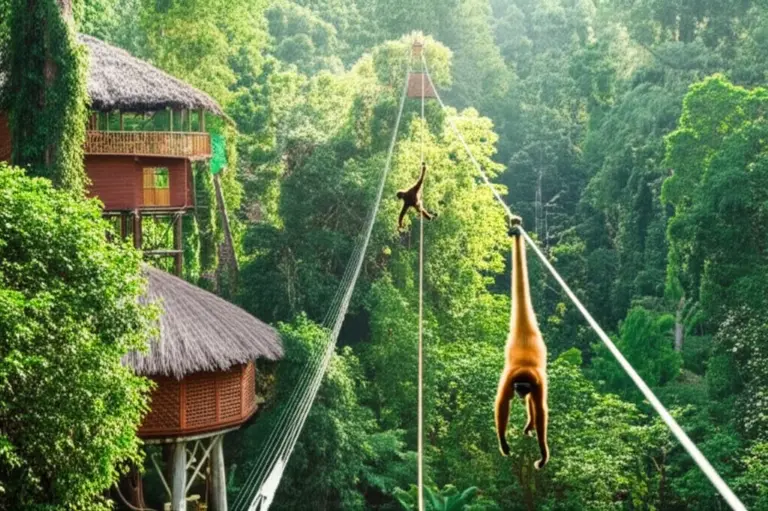
At its core, The Gibbon Experience is a 3-day, 2-night adventure (though shorter options exist) involving intense jungle trekking and exhilarating ziplining. The zip lines act as the primary mode of transportation across the valleys, connecting you to the spectacular treehouses. These houses are engineering marvels, built high into the giant trees—some reaching over 40 meters—and offer basic but comfortable overnight accommodation with arguably the best views in all of Laos.
Life in the Canopy: Treehouses and Ziplines
The World’s Highest Treehouses
The treehouses are the heart of the experience. Each is uniquely designed, built with local materials, and secured safely to the massive trees without harming them. They offer a simple, rustic charm with stunning panoramic views. You’ll wake up to the sounds of the jungle, and with a bit of luck, the haunting, melodic calls of the gibbons themselves. Meals are provided and delivered directly to your treehouse by the local guides, often arriving via their own zip line delivery system! The accommodation is basic—think comfortable mattresses, mosquito nets, and simple bathroom facilities—but the experience of sleeping 100 feet above the forest floor is pure magic.
The ziplines are not just for fun; they are your pathway. The network spans kilometers, with some lines stretching several hundred meters across deep valleys. Before you start, professional guides provide a mandatory, thorough safety briefing and a practice session. No prior experience is necessary. Once you gain confidence, gliding through the canopy is an exhilarating rush, offering a unique, bird’s-eye view of the dense jungle below and the surrounding Laotian hills. This is truly what makes the adventure an unforgettable part of Laos tourism.
Preparing for Your Treetop Adventure
Tour Options: Classic vs. Express
| Tour Option | Duration | Focus | Trekking Level |
|---|---|---|---|
| Classic Tour | 3 Days / 2 Nights | Gibbon spotting, deep jungle immersion, relaxation. | Moderate (suitable for most fitness levels). |
| Express Tour | 2 Days / 1 Night | Adrenaline, maximum ziplining, shorter time commitment. | Light to Moderate. |
| Waterfall Tour | 3 Days / 2 Nights | Intense trekking, remote treehouse location near a waterfall. | High (for experienced trekkers). |
Essential Packing List and Safety
It is crucial to pack light, as you will carry your own backpack during the trek and ziplining. Guides will store your main luggage at the office in Huay Xai. Essentials include:
- Sturdy hiking shoes with good grip (the trails can be muddy).
- Insect repellent (essential, especially for the evenings).
- Headlamp or flashlight (no electricity in the treehouses besides a small solar light).
- Reusable water bottle (water is provided).
- Light, quick-drying clothing and a light sweater for cool mornings.
The Gibbon Experience: Conservation and Wildlife
While the ziplining is the main draw, the true purpose is conservation. The project has been instrumental in stopping illegal logging and poaching in the region. The guides, many of whom are former hunters, are now dedicated conservationists, employed to protect the park. While seeing a gibbon is never guaranteed—they are shy and rare—the best chance is often early in the morning when their calls echo through the valley. Even without a sighting, the sheer biodiversity of the forest, from colorful birds to exotic insects, makes the experience worthwhile. This unique model of sustainable tourism is a shining example for Laos tourism and ecotourism worldwide.
Planning Your Trip: Booking and Logistics
Getting to Huay Xai
Huay Xai is easily accessible, making it a key gateway for northern Laos tourism. Most travelers arrive from Thailand, crossing the border from Chiang Khong via the Fourth Thai–Lao Friendship Bridge. You can also arrive by slow boat from Luang Prabang, a picturesque two-day journey on the Mekong River. It is highly recommended to book The Gibbon Experience well in advance, sometimes months ahead, as spaces are limited to maintain the low-impact ethos of the project.
Best Time to Visit
The dry season, running roughly from October to May, is generally considered the best time to visit. Trails are less muddy, and the weather is cooler and more pleasant, especially from November to February. Visiting during the wet season (June to September) means lush, vibrant greenery, but also muddier trails, rougher travel conditions to the park, and a higher chance of rain in the treehouse.
คำถามที่พบบ่อย (FAQ)
References
The Gibbon Experience Official Website
Visit Laos Official Tourism Site
YouTube – The Gibbon Experience 3-Day Classic Tour Review