Top Must-Try Lao Dishes Explained: Lao Larb, Khao Niaw, Tam Mak Hoong, Mok Pa, and Regional Variations
- Top Must-Try Lao Dishes Explained: Lao Larb, Khao Niaw, Tam Mak Hoong, Mok Pa, and Regional Variations
- Larb: The Quintessential Lao National Dish
- Khao Niaw: The Heart of Every Lao Meal (Sticky Rice)
- Tam Mak Hoong: The Bold and Funky Lao Papaya Salad
- Mok Pa: A Steamed Parcel of Aromatic Delight
- Exploring Regional Variations and Other Lao Culinary Gems
- Conclusion: Savor the Flavors of Laos
- คำถามที่พบบ่อย (FAQ)
Embark on a captivating culinary journey through the heart of Southeast Asia, where the vibrant and often underrated cuisine of Laos awaits. For anyone planning a trip focused on Laos tourism, understanding the local gastronomy is key to a truly immersive experience. This guide delves into the Top Must-Try Lao Dishes Explained: Lao Larb, Khao Niaw, Tam Mak Hoong, Mok Pa, and Regional Variations, offering insights into their flavors, cultural significance, and unique preparation. Prepare to tantalize your taste buds with the bold, fresh, and aromatic delights that define Lao food culture. Laos’s cuisine is a harmonious blend of spicy, sour, salty, and sweet, often characterized by fresh herbs, fermented ingredients, and the ubiquitous sticky rice.
Larb: The Quintessential Lao National Dish
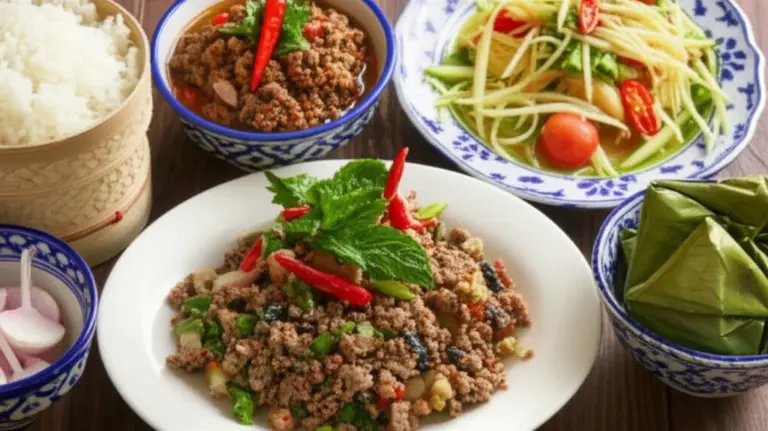
No exploration of Lao food is complete without sampling Larb (also spelled Laap or Laab), the country’s national dish and a true culinary emblem. Larb is a vibrant minced meat salad, typically made with pork, chicken, beef, or fish, though duck and mushroom versions also exist. The protein is finely minced, cooked (or sometimes served raw in traditional settings), and then tossed with an invigorating dressing of fresh lime juice, pungent fish sauce, and a fiery kick of dried or fresh chilies. Crucially, it’s the generous inclusion of fresh herbs like mint, coriander, and spring onions, along with toasted ground sticky rice (khao khua), that gives Larb its distinctive texture and aromatic depth. [1]
Khao Niaw: The Heart of Every Lao Meal (Sticky Rice)
If Larb is the soul, then Khao Niaw, or sticky rice, is undoubtedly the heart of Lao cuisine. This glutinous rice varietal is the staple food of Laos, consumed at virtually every meal. Unlike regular rice, sticky rice is steamed in a bamboo basket and served in a small woven basket (tip khao). Its unique, chewy texture makes it perfect for rolling into small balls and using as an edible utensil to scoop up other dishes, from spicy Larb to savory stews. [1]
The act of eating sticky rice by hand is a deeply ingrained cultural practice, symbolizing the communal and humble nature of Lao dining. It provides a comforting and neutral base that perfectly complements the strong, complex flavors of other Lao dishes, absorbing their sauces and balancing their intensity. [1]
Tam Mak Hoong: The Bold and Funky Lao Papaya Salad
While Thailand has its famous Som Tum, Laos proudly claims Tam Mak Hoong, its own distinct and arguably bolder version of papaya salad. This dish features shredded green papaya pounded in a mortar and pestle with a potent mix of chilies, garlic, lime juice, tomatoes, long beans, and a generous amount of *padaek* – a fermented fish sauce that is funkier and richer than its Thai counterpart. [1, 2]
Mok Pa: A Steamed Parcel of Aromatic Delight
Mok Pa is a testament to the elegant simplicity of Lao cooking, showcasing how fresh ingredients and traditional techniques can create an incredibly flavorful dish. This dish involves steaming fish (often Mekong river fish) with a rich paste of herbs and spices, all wrapped snugly in a banana leaf parcel. [1]
The paste typically includes dill, lemongrass, galangal, kaffir lime leaves, chilies, and coconut milk, which infuses the fish with a delicate yet complex aroma as it steams. The banana leaf not only imparts a subtle earthy flavor but also keeps the fish incredibly moist and tender. Mok Pa is a harmonious, fragrant, and healthy dish, often enjoyed with, you guessed it, sticky rice. [1]
Exploring Regional Variations and Other Lao Culinary Gems
Lao cuisine is diverse, with regional variations adding exciting dimensions to its flavor profile. While the dishes above are staples, many other culinary treasures await discovery for those on a Laos tourism adventure:
- Sai Oua (Lao Sausage): A succulent, herb-packed grilled pork sausage bursting with lemongrass, galangal, and chili. A must-try street food. [1]
- Or Lam (Luang Prabang Stew): Hailing from the ancient capital, this unique stew features wild forest ingredients, eggplant, and a distinctive peppery, numbing sensation from *sakhaan* (a woody vine). It’s a true taste of northern Laos. [1]
- Nam Khao (Crispy Rice Salad): A delightful salad made from deep-fried crispy rice balls, fermented pork sausage (*som moo*), peanuts, and herbs. It offers a wonderful contrast of textures and flavors. [3]
- Jeow (Lao Dips): Essential condiments served with almost every meal, these chili dips come in various forms, such as *Jeow Bong* (sweet and spicy chili paste with buffalo skin) or *Jeow Mak Len* (tomato dip). They are perfect for dipping sticky rice and grilled meats. [1, 3]
- Khao Piak Sen (Lao Noodle Soup): A comforting, thick, and hearty noodle soup, often with chicken, hand-cut rice noodles, and a rich broth flavored with galangal and lemongrass. [1]
These regional specialties highlight the ingenuity and resourcefulness of Lao cooks, utilizing local produce and traditional fermentation techniques to create dishes that are both deeply satisfying and uniquely Lao. Exploring these variations offers a deeper insight into the country’s rich culinary tapestry.
Conclusion: Savor the Flavors of Laos
Lao cuisine, with its emphasis on freshness, bold flavors, and communal dining, offers an unforgettable experience for any traveler. From the zesty kick of Larb to the comforting embrace of Khao Niaw, the pungent punch of Tam Mak Hoong, and the aromatic elegance of Mok Pa, these top must-try Lao dishes are more than just meals; they are an integral part of the country’s cultural identity. As you plan your Laos tourism adventure, make sure to seek out these culinary gems and allow your palate to truly explore the authentic tastes of this beautiful nation.
คำถามที่พบบ่อย (FAQ)
| Question | Answer |
|---|---|
| What is the national dish of Laos? | Larb (also spelled Laap or Laab) is widely considered the national dish of Laos. It is a minced meat salad typically seasoned with lime juice, fish sauce, chilies, and fresh herbs, often served with sticky rice. [1] |
| How is Lao papaya salad (Tam Mak Hoong) different from Thai papaya salad (Som Tum)? | The main difference lies in the use of *padaek*, a fermented fish sauce, which gives Tam Mak Hoong a much funkier, deeper, and more pungent flavor compared to the generally sweeter and tangier Thai Som Tum. Lao versions also often include more fermented ingredients. [1, 2, 3] |
| Why is sticky rice (Khao Niaw) so important in Lao cuisine? | Khao Niaw is the staple food of Laos, central to almost every meal. It’s eaten by hand, serving as an edible utensil to scoop up other dishes, and its communal consumption is a significant part of Lao dining culture. [1] |
| Are Lao dishes generally spicy? | Yes, many Lao dishes, especially Larb and Tam Mak Hoong, are known for their significant spice levels, often featuring fresh and dried chilies. However, spice levels can often be adjusted when ordering, especially in tourist-friendly establishments. [1, 2, 3] |
| What is Mok Pa and how is it prepared? | Mok Pa is a traditional Lao dish consisting of fish (often river fish) mixed with a paste of herbs and spices like dill, lemongrass, galangal, and chilies, then wrapped in a banana leaf and steamed. This cooking method infuses the fish with rich aromas and keeps it moist and tender. [1] |
References
- Top 10 Laos Foods You Must Try When you visited LAOS!
- 5 Authentic Lao Dishes From A Lao Chef
- Lao Food 101: The Best Of Lao Cuisine In 10 Dishes – Saeng’s Kitchen
- A Culinary Journey Through Laos: Must-Try Dishes and Where to Find Them
- Why Lao Cuisine Matters: Flavors, Cultural Context, and What to Expect as a First-Time Eater in Laos
- Where to Find Authentic Lao Food: Best Markets, Street Stalls, Restaurants, and Food Tours in Vientiane, Luang Prabang, and Luang Namtha