Why Vang Vieng Changed: History, Policy Shifts, and How the Town Reinvented Its Tourism Model
- Why Vang Vieng Changed: History, Policy Shifts, and How the Town Reinvented Its Tourism Model
Vang Vieng, a small town nestled amidst the dramatic limestone karsts of Laos, has undergone one of the most significant transformations in the history of Southeast Asian travel. Once synonymous with hedonistic parties and dangerous river activities, the town has pivoted toward a more sustainable, nature-focused Laos Tourism model. This shift wasn’t accidental; it was the result of firm government intervention and a collective desire to preserve the region’s breathtaking natural beauty.
The Wild Era: A History of Unregulated Growth
In the late 1990s and early 2000s, Vang Vieng transformed from a quiet farming village into a global epicenter for backpacker revelry. The primary draw was ‘tubing’ down the Nam Song River, punctuated by numerous riverside bars offering cheap alcohol and ‘happy’ substances. By 2011, the town was attracting nearly 150,000 visitors annually, but the cost was high. The lack of regulation led to numerous fatalities and a reputation that alienated higher-value travelers and locals alike.
The 2012 Policy Shift: A Turning Point for Laos Tourism
The year 2012 marked a definitive change. Following a series of international headlines regarding tourist safety, the Lao government took decisive action. Authorities ordered the closure of most riverside bars and dismantled the dangerous swings and zip lines. This policy shift was designed to reclaim the town’s identity and pivot Laos Tourism toward a more respectable and safe environment. The crackdown was swift, and for a moment, the town fell silent, leading many to wonder if Vang Vieng could survive without its party reputation.
Reinventing the Model: From Party Hub to Adventure Capital
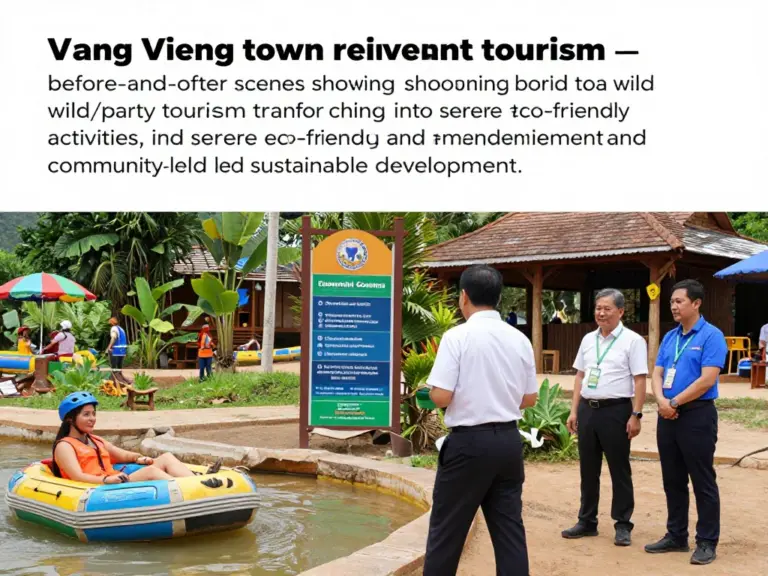
Vang Vieng did more than just survive; it reinvented itself. The town began focusing on its greatest assets: the Nam Song River, the vast cave systems, and the iconic karst mountains. Today, the tourism model emphasizes outdoor adventure and eco-tourism. Activities like hot air ballooning, paramotoring, professional rock climbing, and high-end kayaking have replaced the chaotic bars of the past. This transition has attracted a more diverse demographic, including families and luxury travelers from across Asia and Europe.
| Aspect | The Old Vang Vieng (Pre-2012) | The New Vang Vieng (Current) |
|---|---|---|
| Primary Activity | Riverside Partying & Tubing | Kayaking, Hiking, & Lagoons |
| Target Audience | Budget Backpackers | Adventure Seekers & Families |
| Safety Standards | Minimal/Unregulated | Regulated & Professional |
| Economic Focus | Volume & Alcohol Sales | Value & Sustainable Experiences |
Infrastructure and Connectivity: The Role of the High-Speed Rail
The recent opening of the Vientiane-Boten Railway (China-Laos Railway) and the Vientiane-Vang Vieng Expressway has further solidified the town’s transformation. What used to be a grueling four-hour bus ride from Vientiane is now a comfortable 50-minute train journey. This accessibility has integrated Vang Vieng into a broader Laos Tourism circuit, making it a viable weekend getaway for locals and international tourists alike. The influx of investment has led to the development of boutique hotels and upscale resorts that blend seamlessly with the landscape.
Conclusion: A Sustainable Future
The story of Vang Vieng is a powerful case study in tourism management. By choosing long-term sustainability over short-term profit, the town has successfully preserved its natural heritage while building a more resilient economy. As Laos Tourism continues to grow, Vang Vieng stands as a testament to the fact that it is never too late to change course and prioritize quality over quantity.
คำถามที่พบบ่อย (FAQ)
Is Vang Vieng still a party town?
While you can still find bars and a nightlife scene, the wild, unregulated riverside party atmosphere of the past is gone. The town is now much quieter and focused on outdoor activities.
What is the best way to get to Vang Vieng?
The most efficient way is via the high-speed train from Vientiane or Luang Prabang, or by using the expressway for a faster car/bus journey compared to the old mountain roads.
Are the Blue Lagoons safe to visit?
Yes, the Blue Lagoons are popular swimming spots. They are generally safe, though it is recommended to wear life jackets (usually available for rent) if you are not a strong swimmer.
What activities are popular in Vang Vieng now?
Popular activities include kayaking on the Nam Song River, hiking to the Nam Xay viewpoint, visiting Tham Chang cave, and taking hot air balloon rides over the karsts.
References
- Vang Vieng Reimagined: From Party Town to Adventure Hub — A Traveler’s Guide to Responsible Adventure, Culture, and Safety
- Top Adventures in Vang Vieng: Tubing Alternatives, Rock Climbing, Caving, and Eco-Friendly River Activities
- Where to Stay, Eat, and Experience Local Culture: Responsible Accommodation, Community-Based Tours, and Sustainable Dining