Exploring Laos’ Ethnic Diversity: A Traveler’s Guide to the Country’s Hill Tribes and Cultural Encounters
- Exploring Laos’ Ethnic Diversity: A Traveler’s Guide to the Country’s Hill Tribes and Cultural Encounters
Welcome to the heart of Southeast Asia, where the gentle pace of life meets a vibrant cultural mosaic. This guide delves into **Laos’ Ethnic Diversity**, offering insights into the country’s rich tapestry of peoples, traditions, and the respectful ways travelers can engage with them.
Laos, often called the ‘Land of a Million Elephants,’ is home to over 60 distinct ethnic groups, officially classified into four main ethno-linguistic families. This incredible diversity is not just a statistical fact; it is the living, breathing soul of the nation. For those interested in cultural immersion, understanding these groups—particularly the resilient hill tribes—is essential to appreciating the depth of Laotian heritage.
The Cultural Tapestry of Laos: Understanding the Groups
The government traditionally classifies the population based on the altitude at which they historically reside, a helpful but simplistic way to categorize the complex network of languages and customs. These classifications are the Lao Loum, Lao Theung, and Lao Soung.
The Lowland Lao (Lao Loum): The Majority
The Lao Loum (Lowland Lao) make up the majority (about 60%) of the population. They inhabit the fertile plains and river valleys, primarily along the Mekong River. They are the culturally dominant group, practicing Theravada Buddhism and speaking the Lao language, which is the official language of the country. Cities like Vientiane and Luang Prabang are the heartlands of the Lao Loum culture.
The Hill Peoples (Lao Soung and Lao Theung)
The Lao Theung (Midland Lao) and Lao Soung (Upland Lao) comprise the country’s fascinating hill tribes. These groups often maintain animistic or spirit-based belief systems, alongside unique languages and highly distinctive traditional clothing. Many of these communities were historically marginalized, but their cultures are now increasingly recognized as vital parts of **Laos’ Ethnic Diversity** and national identity.
Key Ethnic Groups for Travelers to Meet
While dozens of groups exist, three stand out for their prominence in northern Laos and their distinctive traditions:
The Hmong People: Resilience and Tradition
- Classification: Lao Soung (Upland Lao)
- Location: High mountainous regions (Phongsali, Luang Prabang, Xieng Khouang).
- Distinguishing Feature: Intricate textile work (Paj Ntaub) and vibrant New Year celebrations.
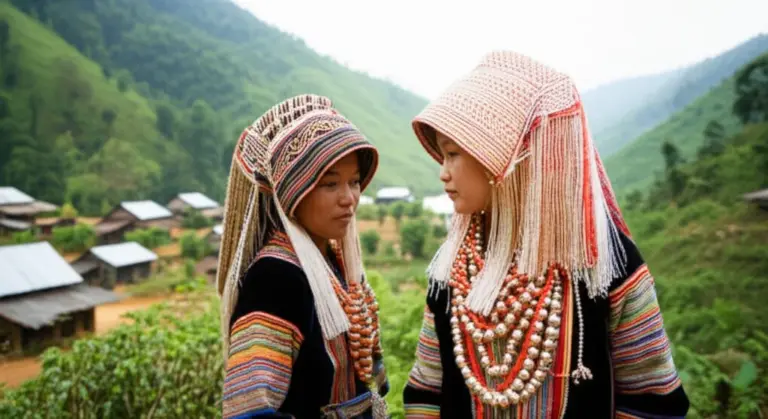
The Hmong are one of the most visible and widely dispersed hill tribes. Known for their resilience and strong sense of community, they historically practiced swidden (slash-and-burn) agriculture. Visiting a Hmong village offers a chance to witness traditional silver jewelry making and the famous Hmong embroidery, which tells stories through geometric patterns. Their traditional attire is breathtakingly elaborate, especially during festivals.
The Khmu People: Masters of the Forest
The Khmu are the second-largest ethnic group in Laos and are classified as Lao Theung. They are often found in mid-mountainous areas, particularly around Luang Prabang and Oudomxay. Historically, they were skilled hunters and gatherers, and their knowledge of the jungle remains profound. Khmu culture is characterized by their distinct musical instruments and their use of natural resources for crafting baskets and tools. Many Khmu communities are now actively involved in ecotourism projects, providing travelers with authentic trekking experiences.
The Akha: Distinctive Dress and Beliefs
The Akha, found mostly in Phongsali and Luang Namtha provinces, are perhaps the most visually striking due to the elaborate silver headdresses worn by the women. Their culture is governed by the ‘Akha Zang’ (Akha Way), a complex set of traditional laws and customs that dictate everything from hygiene to social interactions. Travelers should note that Akha villages often have a highly symbolic entrance gate (a ‘spirit gate’) which holds deep religious significance and should be treated with utmost respect.
Visual Insight into Laotian Culture
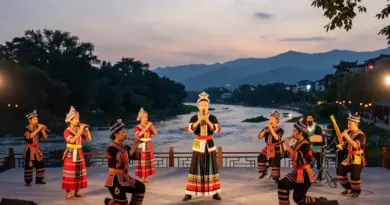
Dive deeper into the daily life and traditions of the people of Laos.
Responsible Tourism and Cultural Encounters
Cultural tourism provides essential income for many remote Laotian communities. However, responsible interaction is paramount to preserving their way of life. Always travel with a reputable, locally-based guide who understands the protocols of the specific village you are visiting. Never treat a village visit as a zoo; remember these are homes, not exhibits.
- Photography: Always ask permission before taking pictures of individuals, especially elders or children. Be prepared for them to decline.
- Dress Code: Dress conservatively, particularly when visiting temples or important community areas. Shoulders and knees should be covered.
- Gifts & Money: Avoid giving candy or pens directly to children, as it encourages begging. If you wish to donate, give supplies or money to the village chief or school.
- Purchasing Crafts: Buy local handicrafts directly from the village. This ensures the money directly supports the community and helps preserve traditional skills.
Must-Visit Regions for Cultural Immersion
While ethnic groups are scattered across the country, certain provinces in Northern Laos offer particularly rich opportunities for cultural trekking and homestays:
| Region | Primary Ethnic Groups | Recommended Activity |
|---|---|---|
| Luang Namtha | Akha, Khmu, Tai Dam | Sustainable ecotourism treks and village homestays. |
| Phongsali | Akha, Phou Noy, Tai Lue | Remote village exploration and tea plantation visits. |
| Oudomxay | Khmu, Hmong, Phouthai | Market visits to observe trade between different groups. |
| Xieng Khouang (Plain of Jars area) | Hmong, Khmu | Cultural festivals and historical site tours. |
Exploring **Laos’ Ethnic Diversity** is a deeply rewarding experience that moves beyond typical sightseeing. By approaching these encounters with curiosity, respect, and a commitment to responsible tourism, travelers can contribute positively to the preservation of these unique cultures.
คำถามที่พบบ่อย (FAQ)
References
- UNESCO World Heritage Centre on Laos Culture
- Lao National Tourism Administration Official Website
- Guidelines for Responsible Cultural Tourism in Southeast Asia