Top Temples and Architectural Highlights: Must-See Wats, Royal Palace, and Distinctive Lao-French Colonial Buildings
Laos is a land where time seems to slow down, offering a spiritual and visual feast for travelers. As a cornerstone of Laos tourism, the country’s architecture tells a story of deep Buddhist devotion intertwined with a complex colonial past. From the gilded stupas of Vientiane to the UNESCO-protected streets of Luang Prabang, the architectural landscape is a unique blend of traditional Southeast Asian design and elegant European influences.
The Spiritual Heart: Must-See Wats of Laos
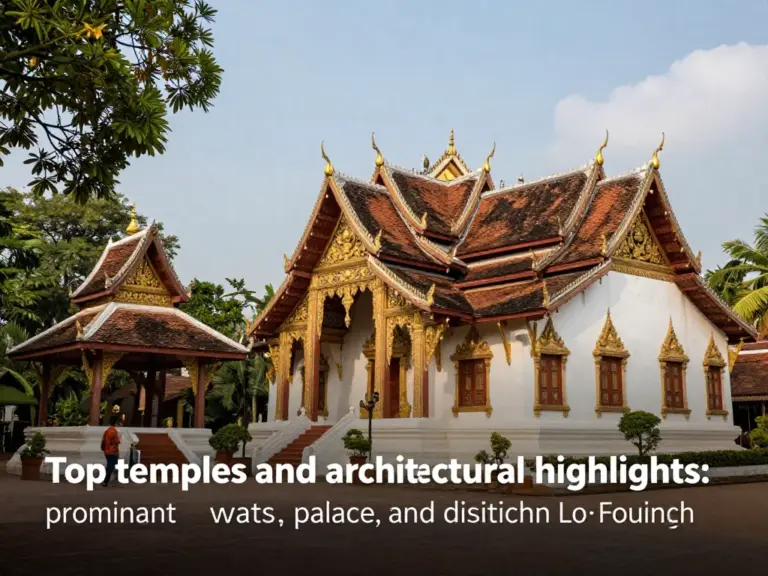
The ‘Wat’ or temple is the center of community life in Laos. In Luang Prabang, Wat Xieng Thong stands as the pinnacle of Lao temple architecture. Built in 1560, its sweeping roofs that nearly touch the ground represent the classic Luang Prabang style. The intricate ‘Tree of Life’ mosaic on its rear wall is a masterpiece of glasswork that captivates every visitor.
In the capital city of Vientiane, Pha That Luang serves as the national symbol. This gold-covered large Buddhist stupa is believed to enshrine a breastbone of the Buddha. Its fortress-like walls and high golden spire are a testament to the resilience and faith of the Lao people. Nearby, Wat Si Saket offers a different vibe with its cloister wall housing over 2,000 ceramic and silver Buddha images.
The Royal Palace Museum: A Fusion of Eras
Located in Luang Prabang, the Royal Palace (Haw Kham) was built in 1904 during the French colonial era for King Sisavang Vong. The architecture is a fascinating hybrid: the structural layout follows a French Beaux-Arts influence, while the rooflines and decorative motifs are quintessentially Lao. Inside, the throne room is decorated with vibrant glass mosaics depicting Lao festivals and traditional life.
Distinctive Lao-French Colonial Buildings
One of the most charming aspects of Laos tourism is wandering through streets lined with colonial-era villas. These buildings feature thick masonry walls, louvered shutters, and high ceilings designed to combat the tropical heat. In Luang Prabang, many of these structures have been meticulously restored into boutique hotels and cafes, preserving the yellow-ochre facades and dark timber balconies that define the town’s aesthetic.
| Building Type | Key Features | Best Location |
|---|---|---|
| Traditional Wat | Multi-tiered roofs, gold leaf, mosaics | Luang Prabang |
| Colonial Villa | Louvered shutters, balconies, pastel colors | Vientiane / Savannakhet |
| Royal Architecture | Throne rooms, religious relics, French layout | Luang Prabang |
Exploring the Southern Charm
Further south in Champasak, the Wat Phou temple complex offers a glimpse into the ancient Khmer Empire. This UNESCO World Heritage site predates Angkor Wat and is nestled at the base of a sacred mountain. The stone carvings and processional walkways provide a stark, majestic contrast to the wooden and brick structures found in the north.
คำถามที่พบบ่อย (FAQ)
Q: What is the best time to visit Laos for architectural tours?
A: The best time is during the dry season from November to February when the weather is cool and pleasant for walking through heritage sites.
Q: Are there entrance fees for the temples?
A: Yes, most major temples like Wat Xieng Thong and the Royal Palace charge a small fee (usually between 20,000 to 30,000 Kip) which goes toward maintenance.
Q: Can I take photos inside the temples?
A: Photography is generally allowed in the courtyards, but many temples prohibit taking photos of the main Buddha image inside the inner sanctum. Always look for signs.
References
- Luang Prabang’s UNESCO World Heritage: A Complete Visitor’s Guide to Temples, Architecture, and Cultural Etiquette
- History and Significance: How Luang Prabang Earned UNESCO World Heritage Status and What It Means Today
- Visitor Planning and Practical Tips: Best Times to Visit, Guided Tours, Dress Code, and Photography Etiquette at Sacred Sites