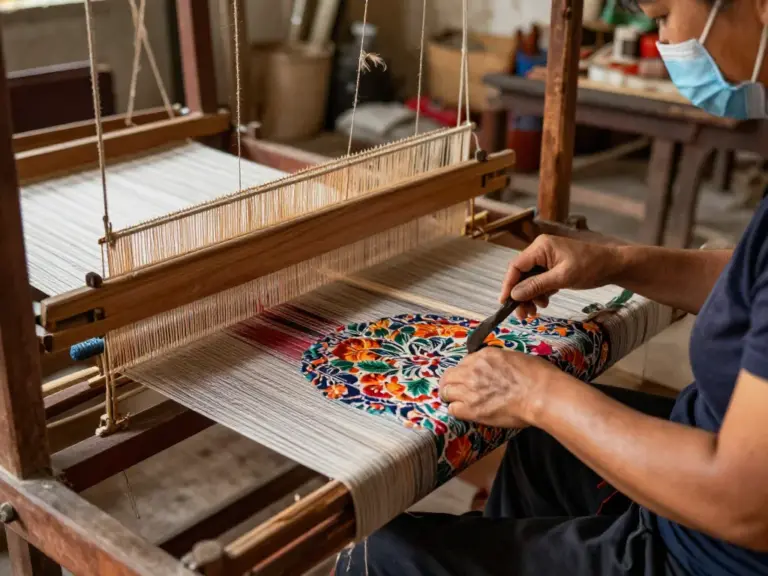
Materials, Tools, and Step-by-Step Process of Traditional Lao Silk Weaving
Traditional Lao silk weaving is more than just a craft; it is a profound expression of cultural identity, spirituality, and artistic heritage. For centuries, the women of Laos have passed down the intricate techniques of sericulture and weaving from mother to daughter, ensuring that every thread tells a story of the land. In the context of Laos tourism, experiencing the rhythmic click-clack of the wooden loom is a highlight for many travelers seeking an authentic connection with local traditions.
The Essential Materials of Traditional Lao Silk Weaving
The journey of a Lao textile begins long before the loom is touched. The primary material is, of course, raw silk. In Laos, the ‘Bombyx mori’ silkworm is cultivated, feeding exclusively on mulberry leaves. This process, known as sericulture, produces two types of silk: the fine inner thread and the textured outer thread (often referred to as ‘raw silk’).
- Mulberry Leaves: The sole food source for silkworms, grown in local gardens.
- Natural Dyes: Traditional Lao silk weaving relies heavily on nature. Indigo provides deep blues, lac (an insect resin) creates vibrant reds, and turmeric or jackfruit wood yields brilliant yellows.
- Mordants: Natural substances like wood ash or lime are used to fix the dyes to the silk fibers.
Traditional Tools Used by Lao Artisans
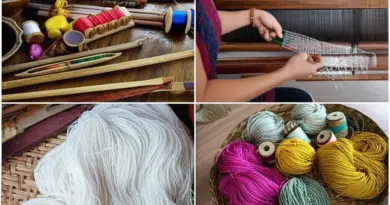
The tools used in traditional Lao silk weaving are often handmade from local timber and bamboo. These instruments have remained largely unchanged for generations.
| Tool Name | Function |
|---|---|
| The Loom (Khi) | The heavy wooden frame where the weaving takes place. |
| The Shuttle (Khao) | A wooden tool that carries the weft thread across the warp. |
| Spinning Wheel (Lha) | Used to wind the raw silk onto bobbins. |
| Reed (Fuem) | A comb-like tool used to push the threads together tightly. |
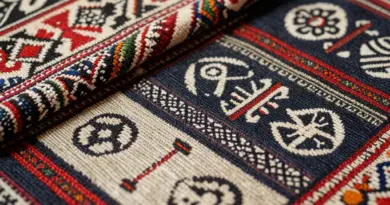
The complexity of the loom depends on the technique. For intricate patterns like ‘Chok’ (discontinuous supplementary weft), the loom may feature hundreds of vertical strings to manage the design.
The Step-by-Step Process of Traditional Lao Silk Weaving
Creating a single piece of silk can take anywhere from a few weeks to several months. The process is meticulous and requires immense patience.
1. Harvesting and Reeling
Once the silkworms spin their cocoons, they are placed in boiling water to soften the sericin (silk glue). The artisan then carefully reels the fine filaments onto a spindle.
2. Dyeing the Silk
The silk is washed and then submerged into vats of natural dye. For complex ‘Ikat’ (Matmii) patterns, the threads are tied with plastic or hemp strings to resist dye in specific areas, creating a pre-planned pattern before the weaving even begins.
3. Setting the Loom (Warping)
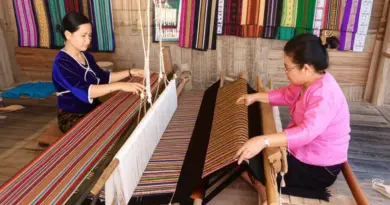
The vertical threads (warp) are stretched onto the loom. This is a critical stage; if the tension is not perfect, the final fabric will be uneven.
4. The Weaving Phase
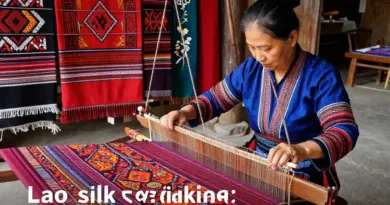
The weaver sits at the loom, using foot pedals to lift specific warp threads while throwing the shuttle across. In traditional Lao silk weaving, supplementary weft techniques are used to create raised, embroidery-like patterns directly into the cloth.
Where to Experience Silk Weaving in Laos
For those interested in Laos tourism, Luang Prabang and Vientiane are the primary hubs. Villages like Ban Phanom or the Ock Pop Tok Living Crafts Centre offer hands-on workshops where you can try your hand at the loom.
คำถามที่พบบ่อย (FAQ)
What makes Lao silk different from other silks?
Lao silk is often handmade from start to finish using traditional floor looms and natural dyes. It is known for its supplementary weft technique, which creates intricate, raised patterns that look like embroidery.
How long does it take to weave a traditional Lao skirt (Sinh)?
Depending on the complexity of the pattern, a traditional Sinh can take anywhere from two weeks to three months to complete.
Are natural dyes still used in Laos?
Yes, many artisan cooperatives and village weavers strictly use natural dyes derived from plants, minerals, and insects to maintain the authenticity and eco-friendly nature of the craft.
Can tourists learn weaving in Laos?
Absolutely. Many centers in Luang Prabang and Vientiane offer classes ranging from half-day introductions to multi-day intensive courses in dyeing and weaving.