Traditional Lao Arts and Crafts: A Guide to Silk Weaving
- Traditional Lao Arts and Crafts: A Guide to Silk Weaving
- The History and Cultural Significance of Silk Weaving
- The Journey from Silkworm to Fabric
- Mastering the Techniques: Matmii and Continuous Weft
- Where to Experience Silk Weaving in Laos
- The Future of Lao Textiles
- คำถามที่พบบ่อย (FAQ)
- Why is Lao silk different from other types of silk?
- What is a ‘Sinh’?
- Where is the best place to buy authentic silk weaving in Laos?
- How can I tell if silk is naturally dyed?
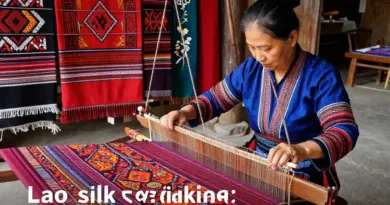
Traditional Lao arts and crafts are a window into the soul of the nation, with silk weaving standing as the most prestigious and intricate of them all. For centuries, the rhythmic sound of the wooden loom has been the heartbeat of Lao villages. This guide explores how silk weaving in Laos is more than just a textile production; it is a complex language of storytelling, a rite of passage, and a vital part of the cultural identity for the diverse ethnic groups across the country. Whether you are a textile enthusiast or a curious traveler, understanding the nuances of this craft will deeply enrich your journey through the Land of a Million Elephants.
The History and Cultural Significance of Silk Weaving
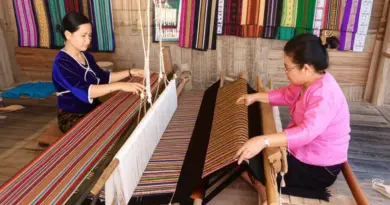
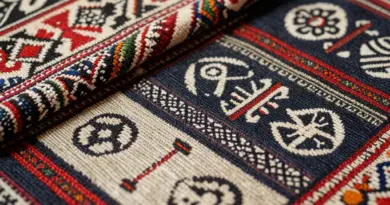
In Laos, silk weaving is traditionally a female-dominated craft, passed down from mother to daughter over generations. Historically, a young woman’s skill at the loom was a measure of her patience and suitability for marriage. The textiles produced, particularly the sinh (the traditional Lao wrap-around skirt), are worn daily and during significant life events, such as weddings and religious ceremonies. Each pattern woven into the fabric often holds spiritual meaning, representing mythical creatures like the Naga (river serpent) or the Siho (half-lion, half-elephant), which are believed to provide protection and prosperity to the wearer.
The Journey from Silkworm to Fabric
The production of Lao silk is a labor-intensive process that begins with the humble mulberry silkworm. Unlike industrial silk, traditional Lao silk is hand-reeled, resulting in a slightly textured, ‘raw’ feel that is highly prized for its durability and unique appearance. The process involves several distinct stages, summarized in the table below:
| Stage | Process Description |
|---|---|
| Sericulture | Raising silkworms on a diet of fresh mulberry leaves. |
| Reeling | Extracting the silk filament from the cocoons by hand. |
| Dyeing | Using natural pigments from plants, bark, and insects (like indigo and lac). |
| Warping | Preparing the vertical threads on the loom frame. |
| Weaving | The intricate process of interlacing the weft threads to create patterns. |
Mastering the Techniques: Matmii and Continuous Weft
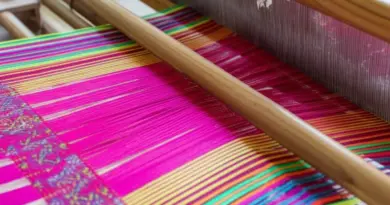
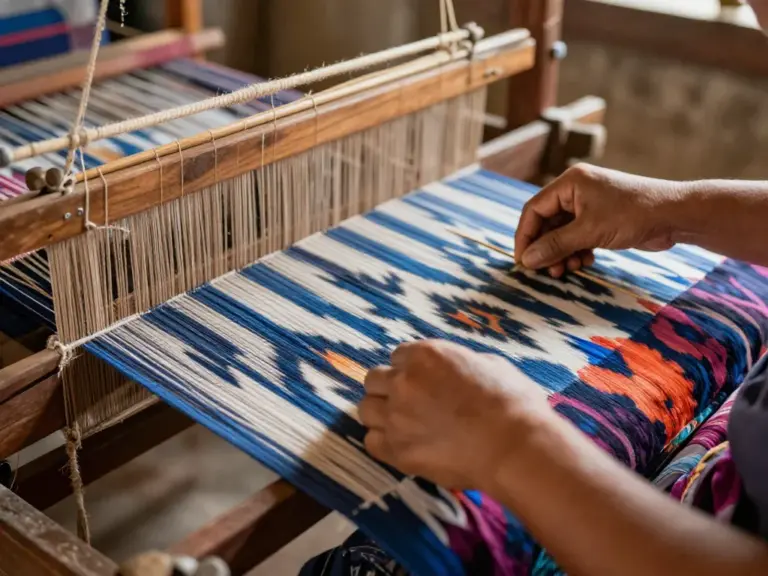
Lao weavers are masters of several complex techniques. The most famous is Matmii (or Ikat), where the threads are tie-dyed before silk weaving begins to create blurred, geometric patterns. Another hallmark of Lao craftsmanship is the ‘discontinuous supplementary weft’ technique, which functions like embroidery on the loom. This allows weavers to create highly detailed and colorful motifs that appear to be floating on the surface of the base fabric. Because these techniques are done entirely by hand, a single meter of complex silk can take a master weaver several weeks to complete.
Where to Experience Silk Weaving in Laos
For travelers, the best place to witness this art form is in Luang Prabang. Many social enterprises and craft centers offer workshops where you can try your hand at natural dyeing or basic weaving. The village of Ban Phanom is historically famous for its weaving, while centers like Ock Pop Tok provide an immersive look at the entire lifecycle of Lao textiles. In the south, the Bolaven Plateau and the island of Don Kho are also renowned for their unique tribal weaving styles, often using back-strap looms rather than the floor looms found in the north.
The Future of Lao Textiles
As the world moves toward fast fashion, the tradition of silk weaving in Laos faces challenges. However, a growing global interest in sustainable and ethical fashion has sparked a revival. Many young Lao designers are now blending traditional motifs with modern silhouettes, ensuring that these ancient skills remain relevant in the 21st century. By purchasing authentic Lao silk, visitors contribute directly to the preservation of this heritage and the economic empowerment of rural women.