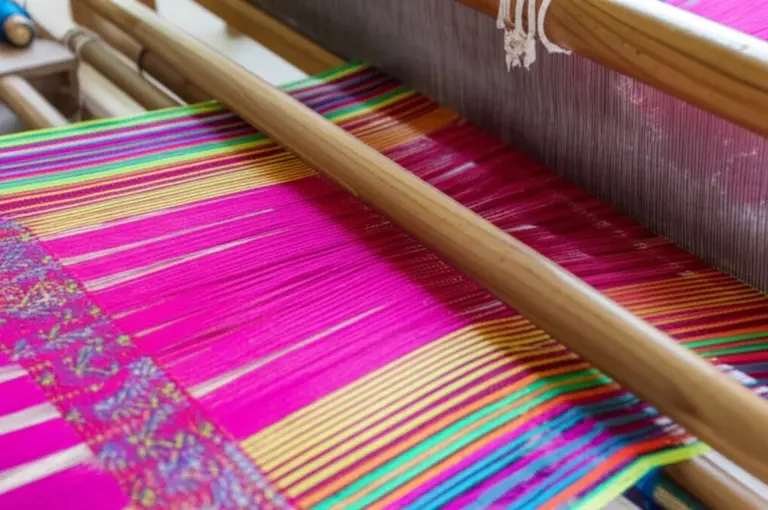
Step-by-step silk weaving techniques and patterns: warp/weft setup, ikat (mudmee) resist-dyeing, and common pattern constructions
- Step-by-step silk weaving techniques and patterns: warp/weft setup, ikat (mudmee) resist-dyeing, and common pattern constructions
Laos, a landlocked gem in Southeast Asia, is renowned not only for its breathtaking landscapes and serene temples but also for its rich cultural heritage, vividly expressed through its traditional crafts. Among these, silk weaving stands out as a centuries-old art form, intricately linked to the nation’s identity and a significant draw for Laos tourism. This article delves into the fascinating world of Laos silk weaving techniques, guiding you through the meticulous processes from preparing the warp and weft to the enchanting resist-dyeing method of ikat (mudmee), and the symbolic patterns that adorn these exquisite textiles.
The Enduring Art of Lao Silk Weaving
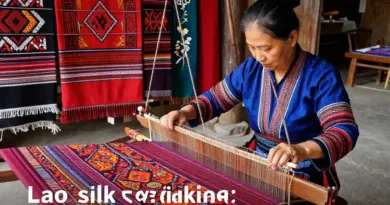
Lao silk weaving is more than just a craft; it is a profound cultural expression, a narrative woven into every thread. Passed down through generations, often from mother to daughter, these skills preserve ancient traditions and stories. The process is labor-intensive, with some complex designs taking months to complete, yet the resulting textiles are highly prized for their beauty, durability, and unique patterns [3].
A Legacy Woven Through Generations
In many Lao communities, the ability to weave was historically seen as an essential skill for women, deeply embedded in their social fabric [3]. Young girls often begin learning the basics from a tender age, mastering the intricate steps from silk production to the final weave. This intergenerational transfer of knowledge ensures the continuity of distinct regional styles and patterns, making each piece a testament to a living heritage.
Cultural Significance and Tourism
For tourists, witnessing the creation of Lao silk textiles offers a unique glimpse into the country’s soul. Artisans often work in open-air workshops or dedicated centers, providing an opportunity for visitors to observe the painstaking process firsthand. This direct engagement not only supports local economies but also fosters a deeper appreciation for the artistry and cultural value of these handmade goods. The demand for Lao silk on the international market has also played a crucial role in its resurgence and preservation [10].
Understanding the Fundamentals: Warp and Weft Setup
At the heart of all weaving lies the interplay of warp and weft threads. The warp threads are the longitudinal (lengthwise) yarns held under tension on the loom, forming the basic structure, while the weft threads are the transverse (crosswise) yarns that are interlaced through the warp to create the fabric. Understanding this fundamental setup is crucial to appreciating the complexity of Laos silk weaving techniques.
Preparing the Warp
The journey begins with preparing the warp. This involves carefully winding silk threads onto a large frame or warping mill, ensuring each thread is of uniform length and tension. The number of threads and their arrangement dictate the width and density of the final fabric. Precision at this stage is paramount, as any error can affect the entire weaving process and the integrity of the pattern. For intricate designs, individual warp threads may be counted and arranged in specific sequences [5, 8].
Setting Up the Loom
Once the warp is prepared, it is carefully transferred to the loom. Traditional Lao looms often include backstrap looms, common among some ethnic groups, and upright looms, which are more widely used [10]. Each warp thread is individually attached to the loom’s heddles and then to the loom’s front beam. This setup allows the weaver to manipulate specific warp threads, creating an opening (shed) through which the weft thread will pass. This stage demands immense patience and skill, as hundreds or even thousands of threads must be perfectly aligned [5, 8].
Introducing the Weft
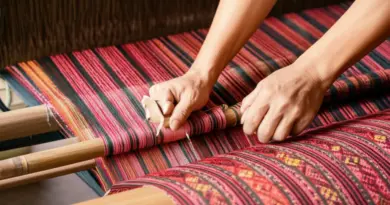
The weft threads, wound onto shuttles, are then passed through the shed created by lifting alternate warp threads. After each pass, a reed or batten is used to ‘beat’ the weft firmly into place, compacting the weave and creating a dense, strong fabric. The continuous repetition of shedding, picking (passing the weft), and beating gradually builds the textile, row by row [7].
The Mystical Beauty of Ikat (Mudmee) Resist-Dyeing
One of the most captivating and intricate Laos silk weaving techniques is Ikat, known locally as Mudmee. This resist-dyeing method creates stunning, often blurred-edge patterns by dyeing the yarns before they are woven, a technique that truly sets Lao silk apart.
What is Ikat?
Ikat is a dyeing technique where patterns are created by binding sections of the warp or weft threads (or sometimes both, in double ikat) with a resist material, traditionally palm leaves or plastic, before dyeing. The bound sections resist the dye, remaining their original color, while the unbound sections absorb the dye. This process is repeated for multiple colors, with different sections being bound or unbound each time, to build up complex, multi-colored patterns [13, 15].
The Mudmee Technique in Laos
In Laos, the predominant form is weft ikat, known as Mudmee. This means the patterns are created on the weft threads. The weaver meticulously plans the design, then ties bundles of weft threads according to the pattern before immersing them in dye baths. The quality of Mudmee silk is often judged by the clarity and intricacy of its patterns and the richness of its colors [12, 15].
The Dyeing Process
Natural dyes, derived from plants, roots, and insects, are traditionally used, producing a spectrum of vibrant and earthy tones. Indigo for blues, lac for reds, and jackfruit wood for yellows are common examples [10]. The tied bundles of silk are repeatedly dyed, dried, and re-tied for each color. This multi-stage dyeing process requires immense skill and an understanding of how colors will layer and interact.
Unveiling the Pattern
After the final dyeing, the resist bindings are removed, revealing the intricate patterns that were hidden beneath. These pre-dyed weft threads are then carefully wound onto bobbins and woven into the warp. The slight variations in the resist-dyeing process give Ikat its characteristic ‘feathered’ or ‘blurred’ edges, which are highly prized and signify a handmade textile [13].
Common Lao Silk Weaving Patterns and Their Meanings
Lao silk patterns are not merely decorative; they are imbued with deep cultural, spiritual, and historical meanings. Many motifs are unique to specific ethnic groups or regions, telling stories of ancestry, beliefs, and the natural world.
Naga (Serpent) Patterns
Perhaps the most iconic and revered motif in Lao weaving is the Naga, a mythical serpent-like creature believed to be a protector of waters and a benevolent ancestor [8, 10]. Naga patterns are often complex and appear on ceremonial textiles, believed to offer protection and bring good fortune. The intricate weaving of Naga motifs requires immense concentration, with weavers often counting individual threads to ensure the pattern’s accuracy [8].
Animal Motifs (Elephants, Birds)
Elephants, symbols of strength and royalty, and various birds, representing freedom or messengers, are also frequently depicted in Lao silk. These animal motifs often reflect the natural environment and the spiritual connection Lao people have with their surroundings. Each animal carries specific symbolism, adding layers of meaning to the textile.
Geometric and Floral Designs
Beyond mythological creatures and animals, Lao textiles feature a rich array of geometric patterns and floral designs. These can range from intricate diamonds and zigzags to stylized depictions of flowers, leaves, and other natural elements like clouds, stars, and rainbows [10]. These patterns often represent abstract concepts, natural beauty, or historical narratives, contributing to the diverse visual language of Lao silk.
Step-by-Step Weaving: Bringing it All Together
After the warp and weft threads are prepared, including any resist-dyeing for Ikat, the actual weaving process unfolds on the loom. This stage combines rhythmic movements with precise hand-eye coordination, transforming individual threads into a cohesive fabric.
The Weaving Process Explained
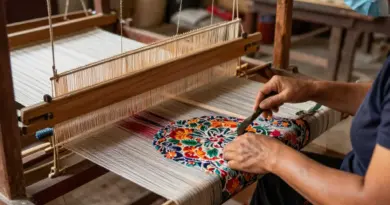
The weaver operates foot pedals or hand levers to raise and lower sets of warp threads, creating the ‘shed’. A shuttle, carrying the weft thread, is then passed through this opening. Once the weft is laid, the shed is changed, and the weft is pushed firmly into place with a batten. This continuous cycle of shedding, picking, and beating builds the fabric. For complex patterns, weavers may also use supplementary weft techniques, where additional weft threads are manually inserted to create raised or embroidered-like designs [7, 8]. The weaving process is a meditative dance, where each movement contributes to the unfolding masterpiece.
Tools and Materials
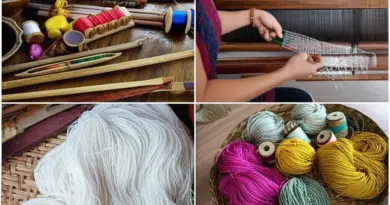
The primary materials for Lao silk weaving are, of course, silk threads, often cultivated from local mulberry farms [2, 10]. Natural dyes, as mentioned earlier, play a crucial role in creating the vibrant color palette. The looms themselves are typically made from wood, often handcrafted, reflecting the ingenuity and resourcefulness of the artisans. Shuttles, bobbins, and various bamboo tools are also essential for manipulating threads and patterns [4].
The intricate Laos silk weaving techniques represent a profound connection to history, culture, and nature. From the careful preparation of the warp and weft to the mesmerizing art of ikat (mudmee) resist-dyeing, and the rich symbolism embedded in every pattern, Lao silk textiles are true masterpieces of craftsmanship. For anyone interested in Laos tourism, exploring this vibrant art form offers an unforgettable and enriching experience, highlighting the resilience and creativity of the Lao people. Supporting these traditional crafts helps preserve a vital part of the world’s cultural heritage for future generations.
คำถามที่พบบ่อย (FAQ)
References
- This is How Silk is Made | Mulberry Farm in Laos | Empowering Lao Women – YouTube
- Laos Story on Traditional Textile Weaving Cultural Heritage – YouTube
- Carol Cassidy Explains Creativity in Lao Weaving – YouTube
- Silk Weaving — studio time lessons from Laos – YouTube
- Laos Weaving Skirts: The Art Behind the Threads How Is It Made? – YouTube
- Traditional craft of Naga motif weaving in Lao communities – YouTube
- The Ancient Art of Lao Silk Weaving – Pure Breaks
- How is Ikat made? ການຕ່ຳຜ້າແພມັດມີ່ – YouTube
- The art of Ikat weaving – YouTube
- What Is Ikat Weaving And How Is It Used In Lao Silk? – Exploring Southeast Asia – YouTube
- Traditional Lao Arts and Crafts: A Guide to Silk Weaving — An Introduction to History, Techniques, and Cultural Significance
- History and cultural context of Lao silk weaving: origins, ethnic influences, and traditional motifs
- Materials and tools used in Lao silk weaving: silk types, natural dyes, looms, and preparation processes