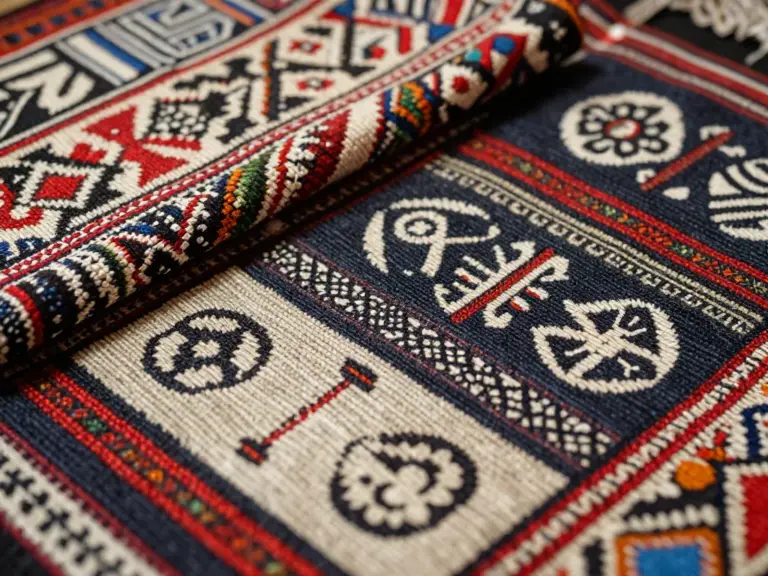
Patterns, Motifs, and Symbolism in Lao Textiles: Meaning and How to Identify Authentic Designs
- Patterns, Motifs, and Symbolism in Lao Textiles: Meaning and How to Identify Authentic Designs
Lao textiles are far more than just beautiful fabrics; they are a woven language that tells the story of the nation’s history, spirituality, and diverse ethnic identities. For any traveler exploring Laos, understanding the intricate world of Lao textiles is essential to appreciating the country’s deep-rooted cultural heritage. From the shimmering silks of Luang Prabang to the sturdy cotton weaves of the southern provinces, every thread carries a meaning, and every motif serves as a symbol of protection, prosperity, or ancestral connection.
The Cultural Heart of Laos: Why Textiles Matter
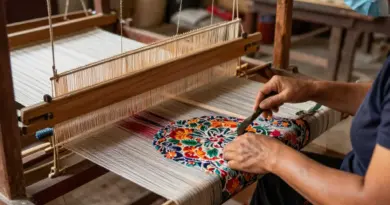
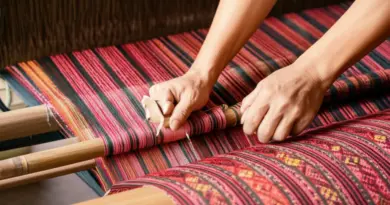
In Laos, weaving is traditionally a female art form, passed down from mother to daughter for generations. A woman’s skill at the loom was historically seen as a measure of her patience, creativity, and readiness for marriage. Textiles play a central role in daily life and ritual, used in everything from birth ceremonies and weddings to Buddhist festivals and funeral rites. The use of natural dyes derived from plants, minerals, and insects further connects these fabrics to the Lao landscape, making them a true embodiment of the environment.
Common Motifs and Their Sacred Meanings
The patterns found in Lao textiles are rarely purely decorative. They are often inspired by nature, mythology, and Buddhist teachings. Recognizing these motifs allows you to ‘read’ the fabric like a book.
1. The Naga (River Serpent)
Perhaps the most iconic motif in Lao weaving is the Naga, a mythical water serpent believed to protect the Mekong River and the Lao people. In textiles, the Naga is often depicted with a crested head and a serpentine body. It is believed that wearing Naga patterns offers protection from evil spirits and brings fertility and rain for the harvest.
2. The Siho (Lion-Elephant)
The Siho is a mythical creature with the body of a lion and the trunk of an elephant. This powerful hybrid symbolizes strength and wisdom. It is a common motif in the intricate ‘pha biang’ (shoulder sashes) worn during important religious ceremonies.
3. The Hong (Mythical Bird)
The Hong, or swan-like bird, represents elegance and spiritual transcendence. It is frequently woven into wedding silks to wish the couple a harmonious and noble life together.
Regional Variations and Techniques
Lao textiles vary significantly depending on the ethnic group and region. Understanding these differences is key to identifying authentic designs:
| Region/Group | Primary Material | Key Technique | Common Characteristics |
|---|---|---|---|
| Luang Prabang | Silk | Tapestry & Discontinuous Weft | Intricate gold and silver threads, royal patterns. |
| Houaphan (Sam Neua) | Silk/Cotton | Shamanic Motifs | Dense, complex patterns featuring mythical creatures. |
| Southern Laos (Bolaven) | Cotton | Beadwork & Ikat | Heavy cotton, dark colors, often decorated with lead or glass beads. |
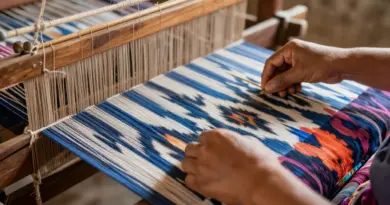
| Tai Dam | Silk | Matmii (Ikat) | Distinctive black and red color palettes with geometric shapes. |
How to Identify Authentic Lao Hand-Woven Textiles
With the rise of factory-produced imitations, identifying genuine Lao textiles is a vital skill for the conscious traveler. Here are a few tips to ensure you are supporting local artisans:
- Check the Reverse Side: On a hand-woven piece, the back should show the intricate ‘messiness’ of the weaver’s work—loose threads or slight variations where new colors were introduced. Machine-made fabrics are often perfectly smooth on both sides.
- Look for Natural Imperfections: Hand-spun silk and cotton have slight irregularities in the thickness of the thread (slubs). Uniform, perfectly smooth fabric is usually a sign of industrial production.
- Smell and Feel: Naturally dyed silk has a slightly earthy scent. Authentic silk also warms up quickly when held in the hand, whereas synthetic fibers often feel cold or overly slippery.
- Price Point: Hand-weaving a single ‘sinh’ (Lao skirt) can take weeks or even months. If the price seems too good to be true, it is likely a machine-made import.
Preserving the Craft: Where to Visit
To see these masters at work, visit centers dedicated to textile preservation. The Traditional Arts and Ethnology Centre (TAEC) in Luang Prabang is an excellent starting point for learning about the diverse ethnic groups and their weaving traditions.
คำถามที่พ่อย (FAQ)
What is a ‘Sinh’ in Lao culture?
The ‘Sinh’ is the traditional wrap-around skirt worn by Lao women. It consists of three parts: the ‘hua sinh’ (waistband), the ‘phuen sinh’ (main body), and the ‘teen sinh’ (the heavily decorated foot or border).
Are natural dyes still used in Lao textiles?
Yes, many artisan cooperatives still use indigo for blues, jackfruit wood for yellows, and lac (an insect resin) for reds. However, chemical dyes are also common, so look for ‘natural dye’ certifications if that is your preference.
How should I care for my authentic Lao silk?
Hand-woven silk should be hand-washed in cool water with a mild, pH-neutral soap or dry-cleaned. Avoid direct sunlight when drying to prevent the natural colors from fading.
What does the diamond pattern represent?
The diamond or lozenge shape often represents the ‘eye’ of the Naga or a protective spirit, acting as a talisman to ward off negative energy.