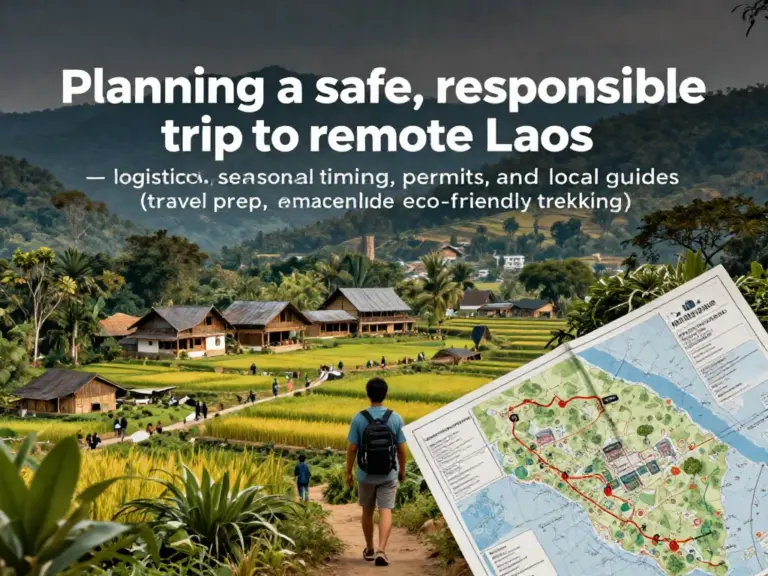
How to Plan a Safe and Responsible Trip to Remote Laos: Logistics, Best Times, Permits, and Local Guides
- How to Plan a Safe and Responsible Trip to Remote Laos: Logistics, Best Times, Permits, and Local Guides
Laos, the land-locked jewel of Southeast Asia, offers a rare glimpse into a world largely untouched by the rapid pace of modern globalization. For those venturing beyond the well-trodden paths of Luang Prabang and Vang Vieng, laos Tourism reveals its true heart in the rugged mountains of the north and the mystical river islands of the south. Planning a trip to these remote regions requires more than just a backpack and a sense of adventure; it demands meticulous logistics, a deep respect for local customs, and a commitment to responsible travel practices.
Best Times to Visit Remote Laos
Timing is everything when it comes to remote laos Tourism. The country experiences two distinct seasons: the dry season and the wet season. For remote exploration, the dry season (November to April) is generally preferred. During these months, dirt roads are navigable, and the weather is pleasantly cool. However, the ‘burning season’ (March to April) can lead to poor air quality in the north.
- Cool Dry Season (November – February): Ideal for trekking and river travel.
- Hot Dry Season (March – May): Very warm, but good for seeing local festivals like Pi Mai.
- Wet Season (June – October): Challenging for logistics as roads often wash out, but the landscape is stunningly green and waterfalls are at their peak.
Transportation in remote Laos is an adventure in itself. While the new high-speed railway has revolutionized travel between major cities, reaching remote villages still involves ‘songthaews’ (converted pickup trucks), slow boats, or motorbikes. When planning your logistics, always double the estimated travel time. Landslides and mechanical breakdowns are common occurrences in the mountainous provinces of Phongsaly and Houaphanh.
Essential Permits and Regulations
While most of Laos is open to tourists, certain remote areas—particularly those near sensitive borders or areas with Unexploded Ordnance (UXO) history—may require special permits. Engaging with laos Tourism authorities or local provincial offices is necessary for restricted zones like the Annamite Range. Always carry multiple copies of your passport and visa, as local police in remote districts will frequently request to see your documentation.
The Role of Local Guides in Responsible Travel
Hiring a local guide is not just about navigation; it is the cornerstone of responsible laos Tourism. A guide acts as a cultural bridge, ensuring you don’t inadvertently disrespect local taboos (such as touching someone’s head or entering a spirit house). Furthermore, hiring guides from the specific village you are visiting ensures that your tourism dollars directly benefit the local economy rather than external agencies.
Health and Safety in the Wilderness
Remote Laos lacks sophisticated medical facilities. Travelers should carry a comprehensive first-aid kit, including rehydration salts and antibiotics. Malaria and Dengue are present in rural areas, so high-quality insect repellent and long-sleeved clothing are essential. Ensure your travel insurance covers emergency medical evacuation, as the nearest high-standard hospital may be across the border in Thailand.
คำถามที่พบบ่อย (FAQ)
References
- Official Laos Tourism Portal
- Mines Advisory Group (MAG) Laos – UXO Safety
- World Health Organization – Laos Health Profile
- Off-the-Beaten-Path Laos: Uncovering Hidden Gems and Secret Spots for Authentic Travel Experiences
- Why Visit Laos Beyond the Tourist Trail: Understanding the Appeal of Off-the-Beaten-Path Adventures and Local Culture
- Top Hidden Gems in Laos by Region: Secret Waterfalls, Remote Villages, Caves, and Underrated Natural Wonders