How to choose responsible CBT experiences in Laos: certifications, ethical operators, and red flags to avoid
- How to choose responsible CBT experiences in Laos: certifications, ethical operators, and red flags to avoid
- Understanding Community-Based Tourism (CBT) in Laos
- Key Certifications and Standards for Responsible CBT
- Identifying Ethical Operators: What to Look For
- Red Flags to Avoid: Warning Signs of Irresponsible Tourism
- Practical Tips for Choosing Your Responsible CBT Experience
- Exploring Laos Responsibly
- คำถามที่พบบ่อย (FAQ)
Laos, with its serene landscapes, rich cultural tapestry, and genuinely warm populace, is increasingly becoming a sought-after destination for travelers looking for authentic experiences. Amidst this growing popularity, Community-Based Tourism (CBT) has emerged as a powerful way to connect visitors with local traditions while directly benefiting rural communities. However, the rise of CBT also brings the crucial responsibility of ensuring these experiences are genuinely beneficial and not exploitative. Choosing responsible CBT experiences in Laos is paramount for both the traveler seeking meaningful engagement and the communities striving for sustainable development. This guide will equip you with the knowledge to navigate the CBT landscape in Laos, highlighting certifications, characteristics of ethical operators, and critical red flags to avoid, ensuring your journey contributes positively to the Kingdom of a Million Elephants.
Understanding Community-Based Tourism (CBT) in Laos
Community-Based Tourism, often abbreviated as CBT, is a form of sustainable tourism where local communities play a central role in its development and management. It’s designed to provide travelers with authentic cultural immersion while ensuring that the economic benefits directly reach the community, supporting livelihoods and conservation efforts. In Laos, where many rural areas face economic challenges, CBT offers a vital pathway to sustainable development, preserving cultural heritage and natural environments. It’s more than just a visit; it’s an opportunity for mutual learning and exchange. [8]
Key Certifications and Standards for Responsible CBT
While a universal, government-mandated CBT certification for Laos is still evolving, several international and local initiatives promote responsible tourism practices. Understanding these can help you identify legitimate operators committed to ethical standards.
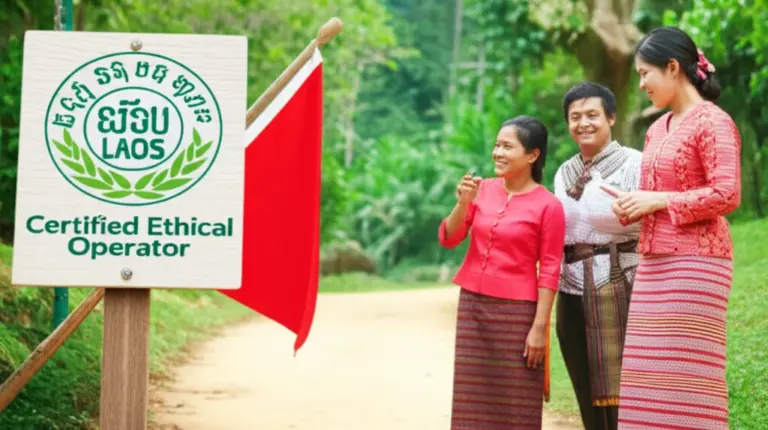
- Travelife Certification: An international certification body that assesses tour operators and accommodations based on sustainability criteria. Operators with Travelife certification demonstrate a commitment to environmental protection, fair labor practices, and community engagement.
- Green Globe Certification: Another globally recognized certification for sustainable tourism. While less common for small CBT projects, if an operator or accommodation holds this, it signifies a high level of environmental and social responsibility.
- Local Partnerships and Endorsements: Some reputable local NGOs or government tourism bodies might endorse or partner with CBT projects that meet certain ethical guidelines. Look for mentions of collaborations with organizations like the Lao National Tourism Administration (LNTA) or specific provincial tourism departments.
- ChildSafe Certification: Important for any tourism involving children. Operators with this certification are trained to protect children from abuse and exploitation, a crucial aspect of responsible travel. [7]
Always verify these certifications and seek independent reviews to ensure their authenticity and adherence to standards. A truly responsible operator will be transparent about their practices and impacts.
Identifying Ethical Operators: What to Look For
Beyond formal certifications, several characteristics distinguish ethical CBT operators committed to fostering responsible CBT experiences in Laos.
| Characteristic | Description |
|---|---|
| Transparency in Fund Distribution | Ethical operators are open about how profits are shared with the community. They should clearly articulate what percentage goes to villagers, for what projects (e.g., schools, healthcare), and how decisions are made. |
| Genuine Community Involvement | The community should be actively involved in the planning, management, and operation of the tourism activities. This ensures that the experiences offered are culturally appropriate and meet local needs. |
| Fair Wages and Working Conditions | Local guides, porters, hosts, and other staff should receive fair wages, training, and safe working conditions. Avoid operators who seem to exploit cheap labor. |
| Environmental Sustainability | Look for practices like waste reduction, responsible water and energy use, and efforts to protect local biodiversity. Operators should educate visitors on minimizing their environmental footprint. |
| Cultural Sensitivity and Preservation | Ethical operators respect local customs, traditions, and beliefs. They provide guidelines for respectful interaction and ensure that cultural exchanges are authentic and not commodified. |
| Positive Reviews and Reputation | Check independent travel forums, blogs, and review sites for feedback. Look for consistent praise regarding their ethical practices and positive community impact. |
Red Flags to Avoid: Warning Signs of Irresponsible Tourism
Being aware of warning signs can help you steer clear of detrimental tourism experiences. These red flags often indicate practices that harm local communities or environments, undermining the very purpose of CBT.
- Lack of Transparency: If an operator is vague about where your money goes or how the community benefits, it’s a major red flag.
- Unrealistically Low Prices: Extremely cheap tours might indicate that local staff are underpaid, or corners are being cut on safety and ethical practices.
- Animal Exploitation: Any activity involving riding elephants, posing with captive wildlife, or animal performances should be avoided. These practices often involve cruelty and are not sustainable.
- Disregard for Local Customs: Operators who encourage disrespectful behavior or don’t provide cultural guidelines are not ethical.
- No Local Engagement: If all guides and staff are foreign, or if the experience feels purely transactional with no genuine interaction with locals, it’s likely not true CBT.
- Overcrowding and Commercialization: Mass tourism disguised as CBT can overwhelm small communities, eroding authenticity and sustainability.
Your choices have power. By avoiding these red flags, you contribute to a more ethical tourism industry in Laos. [5]
Practical Tips for Choosing Your Responsible CBT Experience
Making an informed decision about your CBT experience requires a bit of homework. Here’s how to ensure you’re making the most responsible choice:
- Research Thoroughly: Before booking, delve into the operator’s website, read their mission statement, and look for details on their community impact. Check if they explicitly mention sustainability and ethical practices.
- Ask Direct Questions: Don’t hesitate to contact operators and ask specific questions about their community engagement, how funds are distributed, and their environmental policies. A reputable operator will be happy to provide detailed answers.
- Read Independent Reviews: Go beyond the operator’s testimonials. Check platforms like TripAdvisor, responsible travel blogs, and social media for unbiased traveler feedback on their experiences and the operator’s ethical conduct.
- Prioritize Small Group Tours: Smaller groups tend to have a lower impact on communities and the environment, allowing for more intimate and meaningful interactions.
- Be Mindful of Your Impact: Even with a responsible operator, your behavior matters. Practice responsible waste disposal, conserve resources, and always ask permission before taking photos of people.
By following these steps, you can confidently choose responsible CBT experiences in Laos that enrich your journey and empower local communities.
Exploring Laos Responsibly
Laos offers a wealth of incredible sights and sounds, from the ancient temples of Luang Prabang to the stunning karst landscapes of Vang Vieng and the tranquil 4,000 Islands. When planning your trip, consider how you can make every aspect of your travel responsible. Support local artisans, dine at family-run eateries, and choose accommodations that demonstrate a commitment to sustainability. Your travel choices have a ripple effect, and by opting for responsible CBT, you’re investing in the future of Laos’s people and its pristine natural beauty. Embrace the opportunity to learn, share, and contribute positively to this extraordinary country.
คำถามที่พบบ่อย (FAQ)
References
- Responsible Travel – Laos Responsible Tourism Issues
- Explore Laos – Community Based Tourism Tag
- Laos CBT Official Website
- Community-Based Tourism in Laos: How Your Trip Can Support Local Villages and Preserve Traditions
- What is Community-Based Tourism (CBT) in Laos and Why it Matters for Local Development and Cultural Preservation
- What to expect on a CBT visit: typical activities, accommodation standards, cultural etiquette, and how to prepare