Why Choose Ethical Elephant Sanctuaries in Laos — Understanding Welfare-Focused Tourism and How to Spot Red Flags
- Why Choose Ethical Elephant Sanctuaries in Laos — Understanding Welfare-Focused Tourism and How to Spot Red Flags
- The Rise of Ethical Elephant Tourism in Laos
- What Defines an Ethical Elephant Sanctuary?
- How to Spot Red Flags in Elephant Tourism
- Benefits of Choosing Welfare-Focused Tourism
- Finding Reputable Sanctuaries in Laos
- คำถามที่พบบ่อย (FAQ)
- Q: Can I ride elephants at an ethical sanctuary in Laos?
- Q: How can I tell if an elephant sanctuary is truly ethical?
- Q: What kind of activities can I expect at an ethical elephant sanctuary?
- Q: Does visiting an ethical elephant sanctuary help local communities?
Laos, often called the ‘Land of a Million Elephants,’ holds a profound connection with these magnificent creatures. For centuries, elephants have been integral to Laotian culture, spirituality, and economy. However, with the decline of traditional roles like logging, elephant tourism has surged, bringing with it both opportunities and ethical dilemmas. As a responsible traveler, understanding the nuances of elephant welfare is crucial. This guide will help you navigate the landscape of elephant tourism, highlighting the importance of choosing genuine Ethical Elephant Sanctuaries in Laos and empowering you to spot red flags.
Your choices have a direct impact on the lives of these gentle giants. By supporting welfare-focused initiatives, you contribute to their protection, rehabilitation, and the sustainable future of elephant populations in Laos.
The Rise of Ethical Elephant Tourism in Laos
The tourism sector in Laos has grown significantly, and with it, the demand for elephant encounters. Historically, many elephants were used in the timber industry or for traditional ceremonies. As these roles diminished, many found themselves repurposed for tourism, often in ways that compromised their welfare. Fortunately, there’s a growing global awareness and a concerted effort within Laos to shift towards more humane practices, giving rise to truly Ethical Elephant Sanctuaries in Laos.
The Shift from Traditional Practices
For decades, elephant riding was a common tourist activity across Southeast Asia, including Laos. While seemingly harmless, the training methods (known as ‘phajaan’ or ‘crushing’) often involved severe cruelty to break an elephant’s spirit, and the physical act of carrying tourists can cause long-term spinal damage. As global understanding of animal sentience and welfare improved, pressure mounted to end these practices. This led to a crucial paradigm shift, with many operators transitioning from riding camps to more responsible, observation-based models.
Why Ethical Sanctuaries Matter
Ethical sanctuaries provide a haven for elephants rescued from exploitative industries, offering them a chance to live out their lives in a natural, respectful environment. They focus on rehabilitation, allowing elephants to express natural behaviors like foraging, socializing, and bathing without human interference. By choosing these establishments, you directly support elephant conservation efforts, help fund their care, and promote a humane standard for animal tourism in the region.
What Defines an Ethical Elephant Sanctuary?
Distinguishing a genuinely ethical sanctuary from a commercial venture masquerading as one is vital. A true sanctuary prioritizes the elephants’ well-being above all else. When you are seeking Ethical Elephant Sanctuaries in Laos, look for these core principles.
Key Principles of Elephant Welfare
- No Riding: This is the absolute golden rule. Any establishment offering elephant riding, even bareback, is not an ethical sanctuary.
- Natural Habitat: Elephants should have ample space to roam, forage, and socialize in a natural environment, mimicking their wild behavior. Small, barren enclosures are a red flag.
- Proper Diet & Medical Care: A good sanctuary ensures a nutritious diet suited to elephants’ needs and provides regular veterinary check-ups and necessary medical treatment.
- Respectful Interaction: Interaction should be minimal and always on the elephants’ terms. This means observing from a distance, assisting with food preparation, or walking alongside them, rather than forced bathing or close-up selfies.
Daily Life in a True Sanctuary
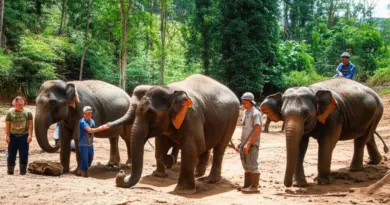
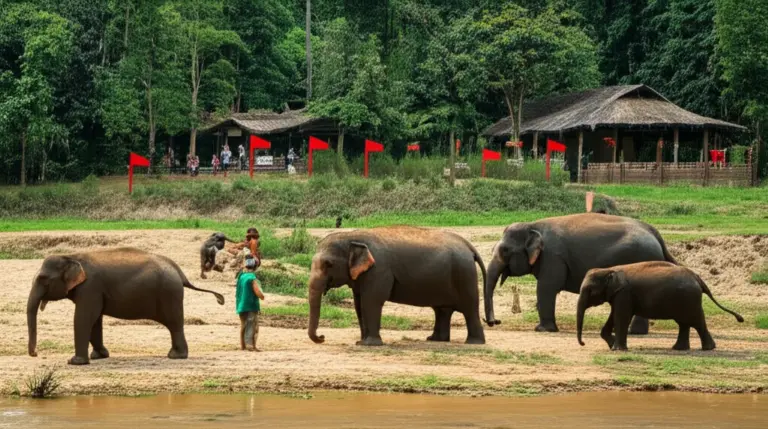
At an ethical sanctuary, you’ll witness elephants engaging in their natural behaviors: dust bathing, mud wallowing, foraging for food, and interacting with their herd. The focus is on allowing them to simply ‘be elephants,’ free from human demands or performances. Visitors typically participate in educational programs, learn about elephant biology and conservation, and observe the elephants from a safe, respectful distance.
The Role of Mahouts and Local Communities
Mahouts, traditional elephant caretakers, play a vital role in ethical sanctuaries. Their relationship with the elephants is built on trust and understanding, not dominance. Ethical sanctuaries also often integrate local communities, providing employment, education, and fostering a sense of ownership in conservation efforts. This ensures that the benefits of responsible tourism extend beyond the elephants to the people who live alongside them.
How to Spot Red Flags in Elephant Tourism
Activities to Avoid
- Elephant Riding: As mentioned, this is a non-negotiable red flag. Even if advertised as ‘bareback’ or ‘no saddle,’ it still involves practices detrimental to the elephant.
- Performances/Tricks: Elephants painting, playing musical instruments, or performing other unnatural acts are signs of exploitation. They are trained through coercion, not voluntary participation.
- Forced Bathing: While some ethical sanctuaries allow observation of elephants bathing themselves, any activity where tourists are encouraged or required to scrub, wash, or forcefully interact with elephants in water is problematic.
Signs of Exploitation
Beyond specific activities, look for broader indicators of poor welfare. These include elephants chained for extended periods, especially by a single leg; visible bullhooks (sharp, pointed tools) or other implements of control; small, barren enclosures; elephants exhibiting repetitive, stressed behaviors (swaying, head-bobbing); or a general lack of transparency about the elephants’ history or care routines. Lone elephants, or those without visible social interaction, can also be a concern as they are highly social animals.
Questions to Ask Before You Visit
Before booking, don’t hesitate to ask critical questions: Where do their elephants come from? What is their policy on riding and interaction? What are the elephants’ daily routines? Do they have veterinary care? How do they involve and benefit local communities? A truly ethical sanctuary will be transparent and proud to share this information. This due diligence is paramount when searching for Ethical Elephant Sanctuaries in Laos.
Benefits of Choosing Welfare-Focused Tourism
For the Elephants
Your support directly translates into improved health, psychological well-being, and a life free from exploitation for the elephants. Ethical sanctuaries provide a safe haven for rescued, injured, or elderly elephants, allowing them to recover and thrive. By allowing them to live in natural social groups and forage freely, these sanctuaries foster environments where elephants can express their full range of natural behaviors, contributing significantly to their long-term conservation.
For Tourists
Visiting an ethical sanctuary offers a far more authentic, educational, and rewarding experience. You gain a deeper understanding of elephant behavior, conservation challenges, and the vital role these animals play in their ecosystem. The peace of mind that comes from knowing your visit supports a truly benevolent cause enriches your travel experience, creating meaningful memories without contributing to animal cruelty.
For Laos’s Future
By choosing ethical tourism, you help promote a sustainable model for the entire country. This encourages other operators to adopt welfare-friendly practices, boosts the local economy through responsible means, and enhances Laos’s reputation as a destination committed to animal protection and responsible travel. It’s an investment in the nation’s natural heritage and its standing on the global stage.
Finding Reputable Sanctuaries in Laos
While we cannot endorse specific organizations here, the key to finding reputable Ethical Elephant Sanctuaries in Laos lies in thorough research. Look for establishments that are transparent about their operations, have positive reviews on independent platforms (focusing on animal welfare aspects), and are recognized or recommended by international animal welfare organizations like World Animal Protection. Prioritize places that emphasize observation over interaction, focus on rehabilitation, and clearly state their ‘no riding’ policy. Your thoughtful research is the first step in ensuring your visit truly benefits these magnificent animals.
คำถามที่พบบ่อย (FAQ)
Your journey to Laos can be an incredible adventure, made even more meaningful by making responsible choices. By opting for genuine Ethical Elephant Sanctuaries in Laos, you not only ensure a memorable experience for yourself but also contribute directly to the welfare and conservation of these magnificent animals. Be informed, be discerning, and let your tourism dollars support a future where elephants can thrive in peace and dignity.
- Ethical Elephant Encounters in Laos: Sanctuaries That Don’t Offer Rides
- Top Ethical Elephant Sanctuaries in Laos — Profiles, Locations, Admission, and What to Expect During a Visit
- What Activities Are Truly Ethical? — Feeding, Bathing, Observation, Volunteer Programs, and Responsible Photography Tips