Planning Your Responsible Nam Ou Boat Trip: Best Times, Permits, and Local Customs to Know
- Planning Your Responsible Nam Ou Boat Trip: Best Times, Permits, and Local Customs to Know
- Understanding the Nam Ou River Journey
- Timing Your Voyage: Best Seasons and Water Levels
- Navigating Bureaucracy: Essential Permits and Documentation
- Embracing E-E-A-T: Safety and Responsible Travel Practices
- Cultural Compass: Local Customs and Etiquette on the Water
- Essential Gear Checklist for Your River Adventure
- คำถามที่พบบ่อย (FAQ)
The Nam Ou River, often called the lifeline of Northern Laos, offers one of Southeast Asia’s most breathtaking slow-travel experiences. Connecting cultural hubs like Luang Prabang with the dramatic karst landscapes near Nong Khiaw and Muang Ngoi Neua, this journey is a must-do for adventurous travelers. However, navigating this majestic waterway requires more than just a ticket; it demands foresight and respect. Successful travel hinges on thorough preparation, especially concerning logistics and cultural sensitivity. This comprehensive guide focuses specifically on **Planning Your Responsible Nam Ou Boat Trip**, ensuring your adventure is not only memorable but also adheres to local regulations and supports sustainable tourism practices.
Understanding the Nam Ou River Journey
The Nam Ou (Ou River) flows north to south, eventually joining the mighty Mekong near Luang Prabang. The most popular tourist segment runs between Luang Prabang and Nong Khiaw, often involving a transfer or stopover in the remote village of Muang Ngoi Neua. The journey showcases stunning limestone cliffs, terraced rice paddies, and traditional riverside life. Travelers generally choose between two main options: the slower, multi-day trek/boat combination or the faster, direct longtail boat service.
The Two Main Routes
For those interested in deep immersion, the longer route allows for overnight stays in villages like Ban Sopkong, offering unparalleled insight into village life. For efficiency, the direct route from Luang Prabang usually involves a minivan transfer to a pier further upstream, followed by a 4-5 hour longtail boat ride to Nong Khiaw.
Timing Your Voyage: Best Seasons and Water Levels
The river’s condition dictates travel feasibility and comfort. Local operators rely entirely on the monsoon cycle, making seasonal awareness crucial for **Planning Your Responsible Nam Ou Boat Trip**.
The Dry Season (November to April)
This is widely considered the optimal time. The weather is cooler, drier, and the water levels are stable and relatively low. While low water can sometimes expose sandbars, experienced captains easily navigate these sections. Visibility is excellent, and the landscape is lush from the previous wet season rains.
The Wet Season (May to October)
Heavy monsoon rains cause the Nam Ou to swell dramatically. This means faster currents and higher water, which can sometimes allow for smoother passage over submerged obstacles. However, the trade-off is frequent, heavy downpours, reduced visibility, and increased risk of flash flooding in tributaries. Travel during the peak monsoon months (August/September) should be approached with caution and flexibility.
Unlike international border crossings, permits for domestic river travel on the Nam Ou are generally less formalized for standard tourist routes (Luang Prabang to Nong Khiaw). However, demonstrating responsibility means understanding when official checks occur.
| Document | Requirement | Notes |
|---|---|---|
| Passport/Visa | Mandatory at all times | Keep photocopies separate from originals. |
| Local Entry Fees | Varies by village/checkpoint | Small fees (often 10,000 – 20,000 LAK) are common in remote areas like Muang Ngoi. |
| Boat Registration | Handled by operator | Ensure your operator confirms passenger lists with local authorities if traveling to highly regulated areas. |
For the standard tourist route, you generally do not need to apply for a special permit yourself. Your tour operator or the boat captain handles manifest logging. The key is ensuring you are traveling on registered, licensed boats. Always confirm that the boat company is recognized by the Luang Prabang Tourism Department.
Embracing E-E-A-T: Safety and Responsible Travel Practices
As an expert guide to Lao travel, I stress that safety on the Nam Ou is intrinsically linked to responsibility. An experienced traveler prioritizes safety protocols over speed or cost savings.
Life Jackets and Capacity
This is non-negotiable. Always verify that life jackets are present for every passenger, even if the captain seems relaxed. Overcrowding is a common issue, particularly when local transport intersects with tourist demand. Do not board a boat that is visibly overloaded beyond its safe capacity. This is a core tenet of responsible travel on Lao rivers.
Choosing Your Operator
Whenever possible, book through established guesthouses or agencies in Luang Prabang that have long-standing relationships with reliable boat services. Avoid unofficial touts offering suspiciously cheap, last-minute deals, as these often compromise safety standards.
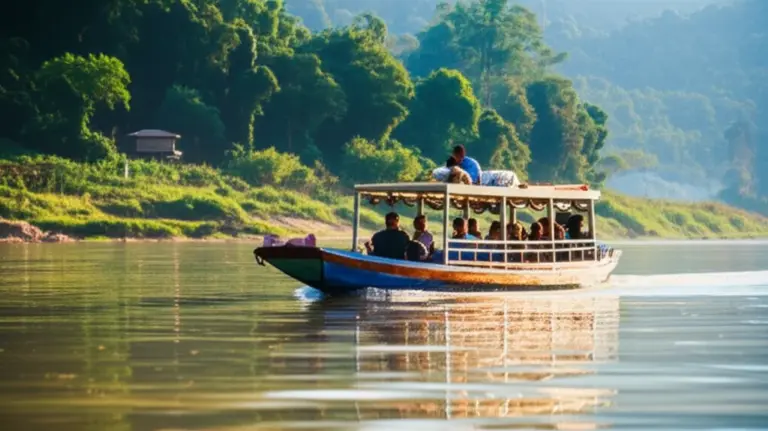
Witnessing the stunning karsts along the Nam Ou River route.
Cultural Compass: Local Customs and Etiquette on the Water
Respecting the local culture enhances your experience and ensures positive interactions with the communities who depend on the river. Lao culture is inherently gentle and hierarchical.
- Greetings: A simple ‘Sabaidee’ (Hello) goes a long way. A slight nod or Wai (palms pressed together) is appreciated when greeting the captain or local villagers.
- Temple Visits: If stopping at a riverside temple, remember to remove your shoes before entering. Dress modestly (shoulders and knees covered).
- Waste Management: The Nam Ou is a vital resource. Pack out everything you pack in. Never throw plastic or non-biodegradable waste into the river. This is crucial for responsible tourism.
- Patience: Lao time operates differently. Delays, stops for mechanical checks, or waiting for other passengers are standard. Reacting with frustration is considered rude. Embrace the slower pace required for effective **Planning Your Responsible Nam Ou Boat Trip**.
Essential Gear Checklist for Your River Adventure
Prepare for sun, spray, and variable temperatures. A well-packed bag minimizes hassle.
- Waterproof dry bag for electronics.
- High-SPF, reef-safe sunscreen and a wide-brimmed hat.
- Lightweight, quick-drying clothing (avoid heavy cotton).
- Cash (LAK) for small purchases, tips, and unexpected checkpoint fees. ATMs are non-existent outside major towns.
- Personal first-aid kit, including motion sickness remedies.
คำถามที่พบบ่อย (FAQ)
Addressing common queries to finalize your journey planning.
How long does the boat trip usually take?
The direct longtail boat journey from the main Luang Prabang departure point to Nong Khiaw typically takes between 4 to 6 hours, depending on water levels and the number of stops. The slower, multi-day trekking route is significantly longer.
Are life jackets mandatory/provided for the Nam Ou crossing?
While life jackets should always be provided on licensed tourist boats, it is your responsibility to check their condition and ensure one is available for every person onboard before departing. Do not hesitate to insist on this safety measure.
What is the best way to hire a private longtail boat?
Hiring privately offers flexibility but costs more. Arrange this through your established hotel or a reputable travel agent in Luang Prabang. Always agree on the final price, route, and expected duration *before* boarding to avoid disputes upon arrival.
Is tipping expected for the boat captain?
Tipping is not mandatory but is highly appreciated, especially for captains who ensure a safe and informative journey. A small token of appreciation (equivalent to $2-$5 USD, depending on the length of the trip) for excellent service is customary.
References
- How to Travel the Nam Ou by Local Boats Responsibly: Complete Guide for Eco-Conscious Travelers
- Choosing the Right Local Boat and Operator: Safety, Sustainability Practices, and Fair Pricing Tips
- Responsible On-Boat Behavior and Environmental Practices: Waste, Wildlife, and Cultural Respect Guidelines